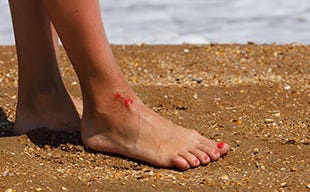
A 49-year-old Pensacola woman almost lost her life to the “flesh-eating” bacteria vibrio vulnificus after swimming with her daughter in Santa Rosa Sound on July 27.
Three days after she went boating with her family and swimming near Quietwater Beach, Genevieve Gallagher started feeling unwell at work, her leg swelling and bubbling with blisters.

How was she infected? Gallagher believes through a small cut on her left leg. Vibrio infections are rare, but can result in tissue damage, spreading blisters, low blood pressure, fever, organ damage, sepsis and death. Read more to learn about the “flesh-eating” bacteria that tends to naturally live in certain coastal waters.
What is Vibrio vulnificus? Why is it called the ‘flesh-eating’ bacteria?
Infections are rare, but they can result in tissue damage, spreading blisters, low blood pressure, fever, organ damage, sepsis and death.
Vibrio vulnificus is often called “flesh-eating” because infections can lead to necrotizing fasciitis, a severe infection that destroys muscle and skin tissue. Without treatment, death can occur in just a few days.
Infections are most commonly caused by eating raw or undercooked seafood, especially oysters, or by exposing cuts or wounds to floodwaters which spread brackish water into places it doesn’t usually get to.
People with compromised immune systems, liver disease, or open wounds are at higher risk for Vibrio vulnificus, the FDOH said.
Where is Vibrio most commonly found?
Vibrio are bacteria that naturally live in certain coastal waters. They are found in higher numbers in May through October, when water temperatures are warmer, according to the CDC.
Coastal waters include salt water and brackish water, the government agency says. Vibrio vulnificus bacteria thrives in brackish water, which is created when fresh water from a river or lake meets the salty water of the sea.
What are the symptoms of Vibrio vulnificus or ‘flesh-eating bacteria’?
Symptoms of a Vibrio vulnificus infection begin suddenly and quickly, usually less than 24 hours after exposure, according to the CDC. Common symptoms may include:
If you experience these symptoms after eating raw seafood or being exposed to floodwaters, seek medical attention immediately. Healthcare professionals can treat the infection with antibiotics, but in extreme cases arms and legs may need to be amputated to remove dead or infected tissue.
“Many people with Vibrio vulnificus infection require intensive care or limb amputations,” the CDC said on their site, “and about 1 in 5 people with this infection die, sometimes within a day or two of becoming ill.”
Where is Santa Rosa Sound in Pensacola, Florida?
How many people have died from flesh-eating bacteria in Florida?
According to the FDOH, five people have died so far in 2025, as of Thursday, Aug 28:
Between 2008 and 2025, 179 people in Florida have died from Vibrio vulnificus, according to FDOH records.
Cases of flesh-eating bacteria have been reported in Florida
According to the FDOH, 23 cases have been reported so far in 2025, as of Thursday, Aug. 28:
Contributing: Mollye Barrows, Pensacola News Journal
This article originally appeared on Pensacola News Journal: Vibrio vulnificus Florida 2025 cases now at 23, with 2 in Escambia and Santa Rosa counties
Reporting by Ashley Ferrer and C. A. Bridges, USA TODAY NETWORK – Florida / Pensacola News Journal
USA TODAY Network via Reuters Connect