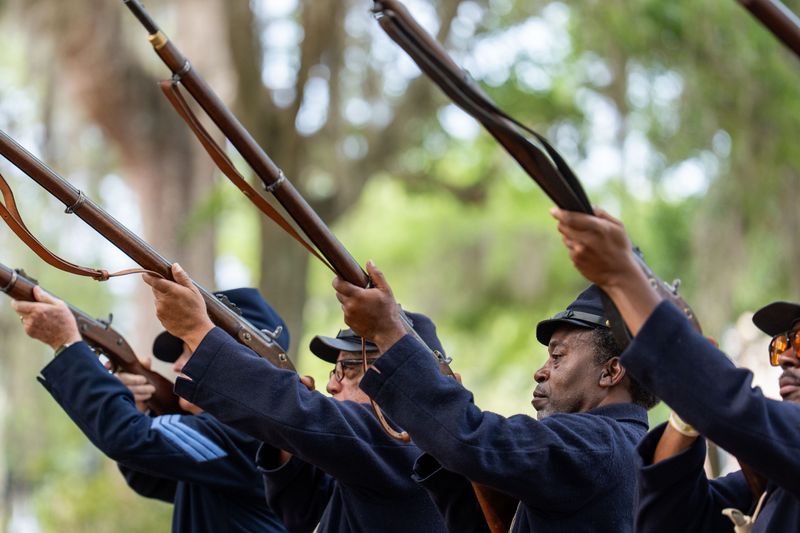
Re-enactors representing the 2nd Infantry Regiment United States Colored Troops and Union soldiers lined up under the shade of the tall, moss covered oak trees while dressed in replica Civil War uniforms to conduct an honorary gun salute on Florida Emancipation Day.
As the loud bang from the half dozen firearms echoed through the air, dozens of community members stood in silence as “TAPS” was performed and they paid their respects to the lives that were lost.

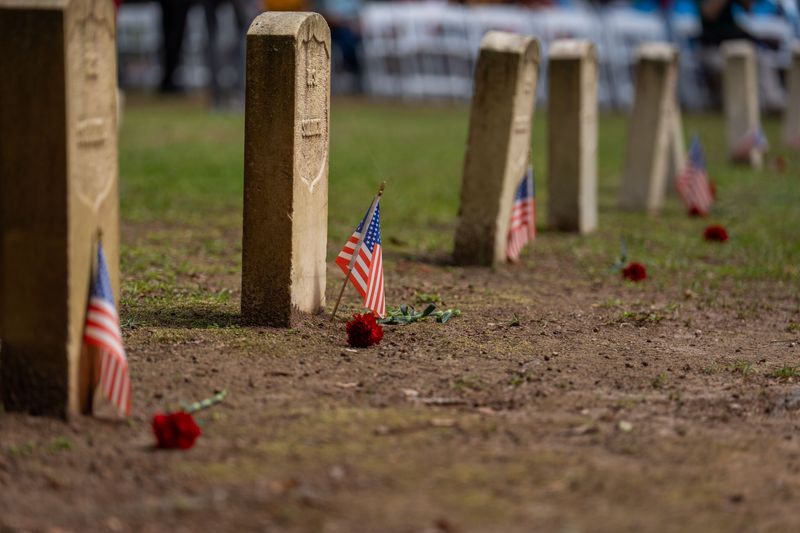
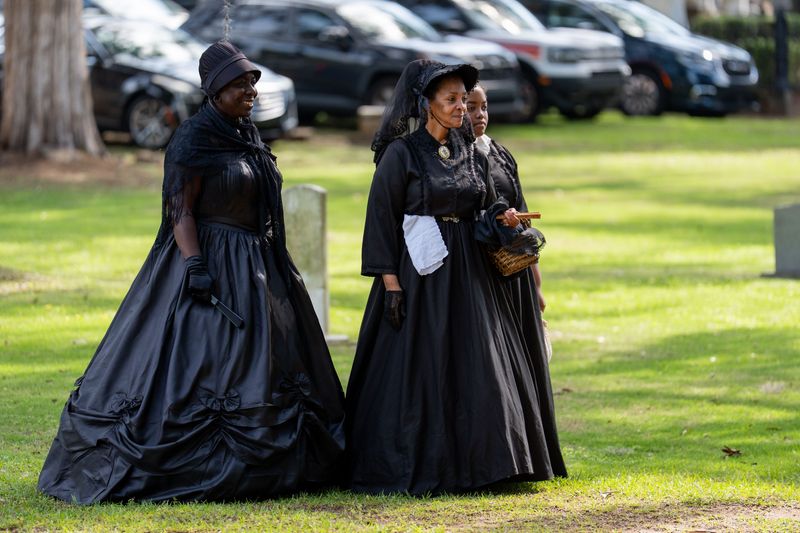
Just a few moments prior, local grade school students joined re-enactors in elaborate black mourning dresses to place red carnations at the base of each of the graves of the Union soldiers in the Old City Cemetery, while others sang “Amazing Grace.” Small American flags that had already been placed next to each headstone, waved in the soft summer breeze.
The goal of the ceremony was “knitting the generations to the history and its meaning.” The day held extra significance as the nation marks its 250th anniversary.
Jarvis Rosier, a historical reenactor in a Union soldier uniform, noted how those buried behind him died not far from there, some while fighting in the Battle of Natural Bridge.
“We did this not just for show. We do this because it has a purpose,” he told about 200 hundred gathered for the ceremony. “We are here because we can not, will not, shall not and must not forget the battlefield that was saturated with the blood by African Americans and others.”
The recognition for the historic day continued just a few blocks away at the Knott House where the Emancipation Proclamation was read — where it was first read aloud in Florida in 1865 — in front of hundreds.
When the word first spread over 160 years ago, it was two years after President Abraham Lincoln had made the declaration that the enslaved had been freed.
The program held at the Knott House featured State Historic Preservation Officer Alissa Lotane and Dr. Larry E. Rivers, distinguished professor of history at Florida A&M University.
Music was performed by Christopher White and Brownsville Preparatory Institute students.
How Florida does it differently
Emancipation Day, May 20, marks the day in 1865 when the Emancipation Proclamation was first read in Tallahassee. The day is also sometimes called “Mayteenth.”
Juneteenth commemorates the day in Galveston, Texas in 1866 when the last enslaved people in the U.S. were finally informed that they were free, two and a half years after President Abraham Lincoln signed the Emancipation Proclamation. President Joe Biden made Juneteenth a federal holiday in 2021.
Despite that, Florida — along with states like California, Hawaii, Pennsylvania and more than two dozen others — does not officially recognize Juneteenth as a state holiday. It is included in the list of state public holidays and some county commissions and city councils in recent years have closed offices for Juneteenth. Whereas, local government offices in Tallahassee were closed in honor of Florida Emancipation Day.
This story contains previous reporting by Chris Bridges.
This article originally appeared on Tallahassee Democrat: Florida Emancipation Day marked in Tallahassee with tributes
Reporting by Alicia Devine, Tallahassee Democrat / Tallahassee Democrat
USA TODAY Network via Reuters Connect