A Milwaukee police officer’s invasive questioning of a sexual assault survivor shows the need for urgent change, victim advocates say.
A Common Council member wants to review training and explore adding more victim advocates to respond to police calls. And the city’s mayor says the woman’s experience fell short of his expectations for how any city employee should treat a member of the public.

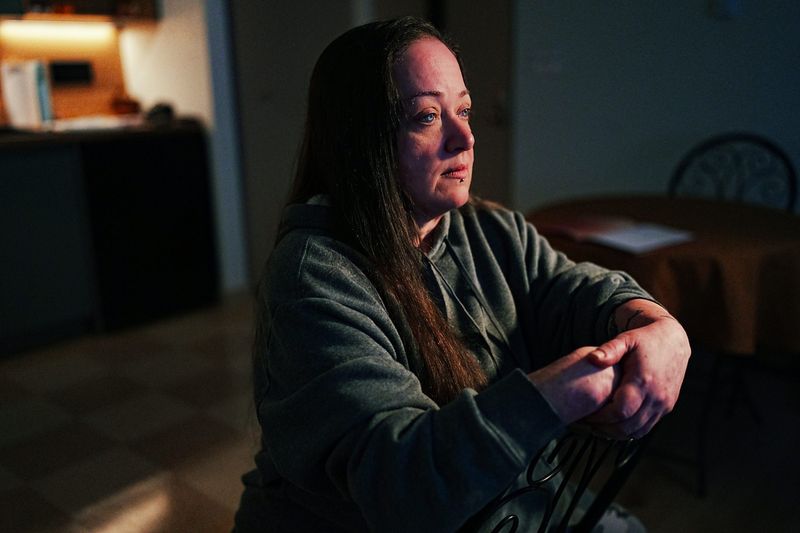
Their comments came in response to a recent Milwaukee Journal Sentinel investigation that detailed the treatment of Charlotte Nozar, 54, when she reported being raped by a stranger in her apartment elevator in December 2024.
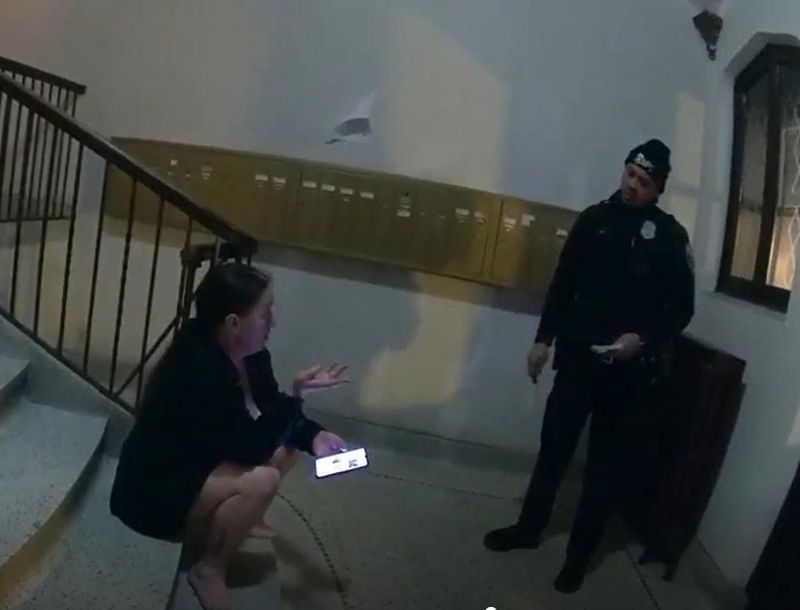
Body camera footage showed officer Nicolas Ornelas asking her pointed and repeated questions about the assault in a public apartment lobby, including how a suspect who was much taller than her could have raped her and how she could have been raped while wearing shorts.
“Charlotte Nozar deserved compassion and respect following her assault eighteen months ago, and I understand the distress she felt following her initial police contact,” Mayor Cavalier Johnson said in a statement May 29.
Johnson said the Police Department is committed to improvement and he expects future interactions “between police and victims show a higher level of proficiency.”
Three outside experts told the Journal Sentinel the officer appeared to violate Nozar’s rights as a crime victim and his department’s own policies for investigating sexual assault.
In addition to those experts, a detective in Milwaukee’s Sensitive Crimes Division interviewed by the Journal Sentinel said the officer “did not follow best practices, did not follow what we would usually teach in an academy setting or in field training.”
The case shows the “urgent need for continued training, accountability, and specialized responses to sexual violence,” said Antonia Drew Norton, founder and executive director of Asha Family Services, a culturally specific victim service provider for African American women.
“Accountability cannot simply mean acknowledging that ‘mistakes were made,’ said Drew Norton, referring to a message a Milwaukee detective wrote to Nozar.
“It must include meaningful corrective action, transparency, supervision, and a commitment to ensuring that no survivor experiences this type of treatment again,” she said in a statement to the Journal Sentinel.
The Police Department opened an internal investigation into Nozar’s treatment after she filed an official complaint in May. That investigation remains ongoing.
The department initially told the Journal Sentinel in April that the incident was not under internal review because Nozar had not filed a complaint, “nor was any misconduct identified internally that warranted an investigation into Officer Ornelas.”
The body camera footage deeply troubled Carmen Pitre, chief executive of Sojourner Family Peace Center, the largest service provider for domestic violence victims in the state.
“It was painful to watch,” she said in an interview.
She consulted Wisconsin’s constitutional crime victim rights amendment, which outlines the right to dignity, respect and privacy, among other protections.
“I watch the body cam, and I ask myself what about those questions – what about the entire interview – guarantees that?” Pitre said.
“There’s nothing about the interview that gave dignity or respect,” she said.
City leader wants to review training, add advocacy services in response
In the aftermath of the reporting, Alderwoman Larressa Taylor outlined several steps she wants the city to take.
Taylor, who leads the city’s Commission on Domestic Violence and Sexual Assault, said she wants to review police training, explore adding more advocacy services and make sure officers use the “soft rooms” in every district.
Soft rooms are private interview areas designed to be more inviting than traditional police interrogation rooms.
Although Taylor said there was a need for accountability, she said after speaking with the officer’s supervisor, Capt. Raymond Bratchett, she did not think that should fall on Ornelas, the individual officer.
“I’m not seeing, after reviewing things with the captain for this officer, Capt. Bratchett, that we need to penalize someone for lack of experience,” Taylor said in an interview.
Ornelas was hired in 2022. He responded to Nozar’s call in December 2024, when he made comments including: “I’m trying to get an image in my head how physically it’s possible for someone who’s tall, you know, to insert a penis in you.”
The Police Department confirmed Bratchett met with Taylor.
“They are exploring additional training opportunities and will be meeting again on this topic,” the department said in a statement released June 1.
In addition, the department said it recently incorporated trauma-informed care into mandatory training sessions and hopes to provide supplemental training in the future.
The Police Department also said its Sensitive Crimes Division has specialized training and knowledge “to best serve survivors and the community.”
“The Milwaukee Police Department understands that we have a great responsibility to the public and must handle every response and interaction with professionalism, care and concern for the public that we serve,” according to the statement. “We recognize that sexual assaults are one of the most traumatic experiences a survivor can endure.”
In her role on the commission, Taylor said she wants to identify advocates who can respond with police on-scene to sexual assault calls.
“We can create a list of round-the-clock advocates that can be brought into cases like this regardless of the time,” she said.
Asked about the capacity of the commission’s partners to provide that staffing, Taylor said she believed it was possible.
Still, it may be a difficult task. Organizations across the state, including Milwaukee, are still reeling from federal funding cuts to crime victim services. Many have eliminated positions or reduced hours as a result.
The Milwaukee Police Department’s Sensitive Crimes Division has one dedicated victim advocate on staff. The department also partners with Sojourner Family Peace Center to have an in-person advocate in each police district. But the advocates are not available at all hours, and they respond to domestic violence calls, which can include sexual assault allegations. They do not respond to stranger sexual assault cases, such as what Nozar experienced.
For the last two years, a team that includes a police officer, prosecutor, forensic nurse and victim advocate from Sojourner has responded on-scene to domestic abuse calls at high risk for lethal violence for limited hours in certain parts of the city.
Currently, Sojourner and the department are working on a new pilot project that pairs advocates with sensitive crimes detectives for 24-hour response to domestic violence calls in Districts 3 and 4, in the central and northwest parts of the city. The pilot is funded through federal pandemic aid, which ends this year.
Pitre, Sojourner’s executive director, said pairing officers and detectives with advocates has had long-term benefits, as “they educate and teach each other through relationship all the time.”
When systems break down, it is important for everyone involved to make sure it does not happen again, she said.
Above all, she commended Nozar for her courage in sharing her story.
“Her bravery and her coming forward is really critical and important,” Pitre said.
Where to find help after sexual assault
This article originally appeared on Milwaukee Journal Sentinel: What a city leader wants to change after officer’s questioning of rape survivor
Reporting by Ashley Luthern, Milwaukee Journal Sentinel / Milwaukee Journal Sentinel
USA TODAY Network via Reuters Connect