Long before Kodak revealed it might go out of business, the first Trump administration in 2020 touted a glorious rebirth ahead for the iconic American brand.
At the time, Kodak, the struggling Rochester company that had revolutionized photography, was promised a $765 million federal loan to expand its chemical making and become a major producer of ingredients for generic drugs. It was part of a COVID-era push to boost domestic manufacturing and wean the U.S. off foreign factories — not unlike today’s industrial drive by the second Trump administration.

Expectations were so high that the White House trade advisor likened Kodak’s new venture to the repurposing of American factories to crank out planes and tanks for World War II.
“What we are trying to do with Kodak … is to become an arsenal of medicine,” Peter Navarro, the trade advisor, told reporters in a media call in July 2020. “What we have with this project and Kodak may be one of the greatest second acts in American industrial history.”
Those hopes were dashed within days. Suspicions of insider trading at Kodak had surfaced, and the loan was put on hold. And five years later, the great second act heralded in 2020 has moved closer instead to a finale, with the company warning on Aug. 11 about its $470 million debts and “substantial doubt” it can continue to operate.
Here’s a look back at the plans announced in 2020 and what came in its wake:
A push for American manufacturing
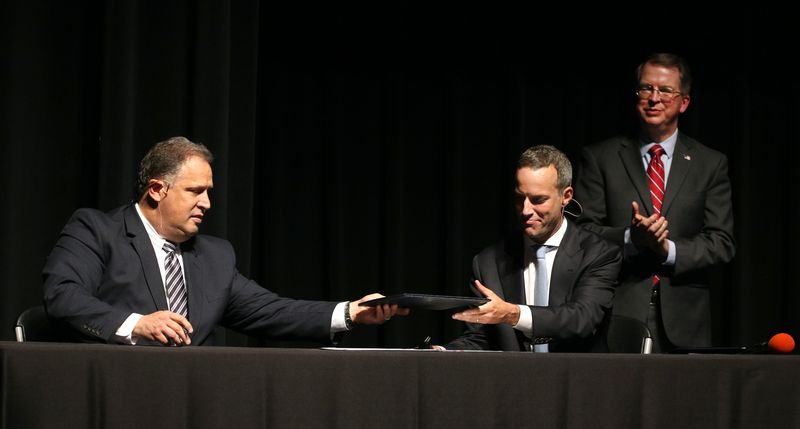
The Kodak loan came as Trump invoked the Defense Production Act, a federal law that gives presidents emergency powers over industrial policy. Enacted 50 years earlier during the Korean War, the law was now being used to stoke domestic drug production as a deadly pandemic spread and derailed global trade.
“We must never be reliant on a foreign nation for America’s medical or other needs,” Trump said at a July 2020 press conference about the loan, where he praised Kodak as “one of the great brands in the world.”
The money would fund an expansion of Kodak’s existing chemical-making complex, vaulting it into a major role in pharmaceuticals. Once completed, the company was expected to produce 25% of the active ingredients needed to make generic drugs in the U.S.
“That’s a big number: 25 percent,” Trump said then.
The expansion was projected to create 350 jobs, 300 of them in Rochester. One of the drugs the company was going to help produce was hydroxychloroquine, an antimalarial drug Trump was promoting as a COVID remedy at the time.
But allegations soon arose that Kodak executives profited by buying up stock shortly before the loan announcement, which initially caused the company’s share price to jump to $60 from $2.62 in two days. And less than two weeks after that triumphant news, the lending agency — the U.S. International Development Finance Corp. — declared it was putting the project on hold until the claims were resolved.
“VERY disappointed last week’s great deal with Kodak tarnished by allegations,” Navarro tweeted in response. “Absolutely RIGHT move by DFC!”
The investigations would continue for years. And Kodak never got the loan, which turned out to have been based on an uncertain plan even without the insider-trading flap.
A pair of guilty pleas in insider trading probe
An initial target of the probe was Kodak CEO Jim Continenza, who had bought 47,000 shares a few weeks before the announcement. From the outset, the company denied any wrongdoing, saying Continenza regularly bought Kodak stock and couldn’t sell his shares until he left the company. But almost 17 months later, state Attorney General Letitia James’s office was still investigating the matter and had questioned Continenza.
The CEO ultimately was cleared of any misdeeds. But federal investigators had been conducting a separate probe that turned up other culprits. And their search culminated in a pair of guilty pleas in April 2024, almost four years after the loan announcement.
Pleading guilty to securities fraud were Andrew Stiles and his cousin Gray Stiles, who had learned about the Kodak loan in advance and reaped big sums from their timely stock purchases and sales. Andrew Stiles was a vice president at a Virginia company that was working with Kodak and was involved in the medicine supply chain.
The cousins had netted a combined $1.2 million from their trading.
Chris McKenna covers government and politics for The Journal News and USA Today Network. Reach him at cmckenna@gannett.com.
This article originally appeared on Rochester Democrat and Chronicle: Kodak was promised ‘greatest second act’ with Trump’s COVID-era loan. How it fell apart
Reporting by Chris McKenna, New York State Team / Rochester Democrat and Chronicle
USA TODAY Network via Reuters Connect