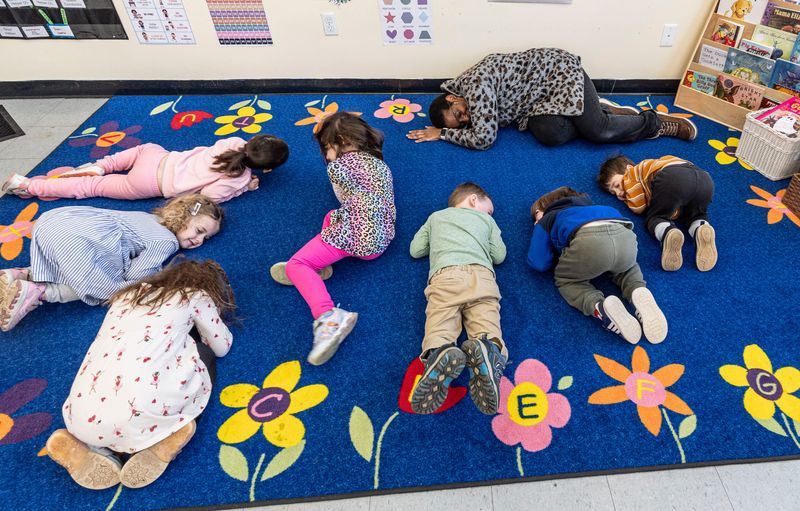
Universal pre-kindergarten programs have grown across the Lower Hudson Valley in recent years, but access gaps persist across the region as some districts struggle to provide these crucial educational services.
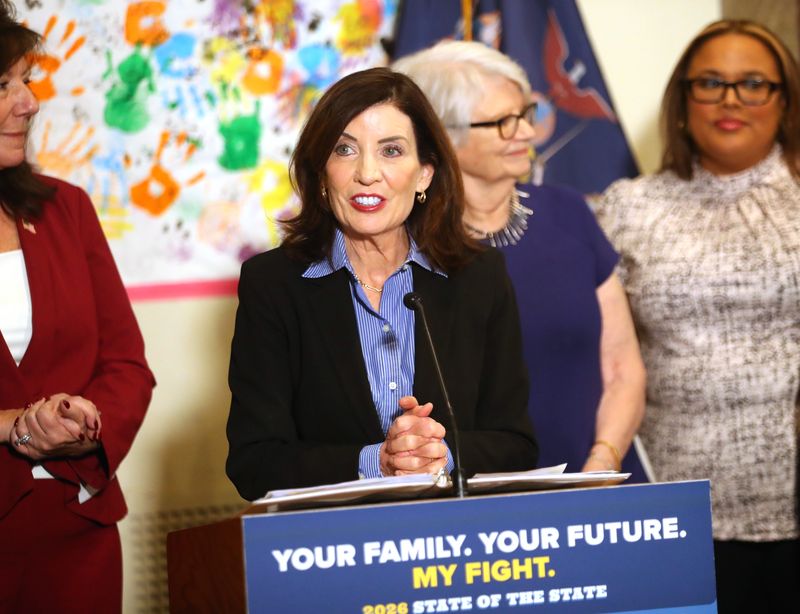
Gov. Kathy Hochul’s recent proposal to nearly double long-stagnant state aid rates, however, is being viewed as a potential lifeline to sustain and create more programs, district leaders said.

Unveiled in January, the plan would increase funding to $10,000 per seat for full-day pre-K or the equivalent of a district’s state aid levels for each pupil, whichever is higher. The goal is to make universal pre-K (UPK) available for 4-year-olds in every district in the state by the start of 2028-29 school year.
The plan must still win approval from the state Legislature, but the anticipated boost in funding has sparked hope among parents, educators and school officials, many of whom are counting on additional aid to stabilize existing programs and support expansion.
Assemblymember Amy Paulin, a Westchester County Democrat who serves on the education committee, said she is confident the proposal will pass and noted some districts are already weighing how they would implement UPK under the looming mandate.
“Districts will still have space issues, and some worry the increased funding may not be enough because of the inflation,” Paulin said. “But there’s a commitment on the governor to have UPK available statewide, and we’ll work out those problems.”
UPK successes and struggles in Lower Hudson Valley schools
New York’s UPK program has existed since 1997, but it has never achieved true universality, largely because of funding constraints.
State and federal funding provides about $1.2 billion annually to serve more than 190,000 4-year-olds in New York, according to state data. While the percentage of 4-year-olds served grew from 61% to 76% between 2020 and 2025, the state reimbursement rates have remained unchanged since 2008.
In Westchester and Rockland, the typical rates are $2,700 per child annually for half-day pre-K and $5,400 for full-day.
Some state lawmakers and advocates argue the funding formula is outdated and unfairly disadvantages Westchester because of its relative wealth. While those reimbursement levels often fall short of covering the full cost of operating pre-K programs in the region, the number of districts offering UPK in Westchester has nearly doubled from 13 to 25 since 2020. All eight Rockland school districts and four of six Putnam districts offer UPK programs.
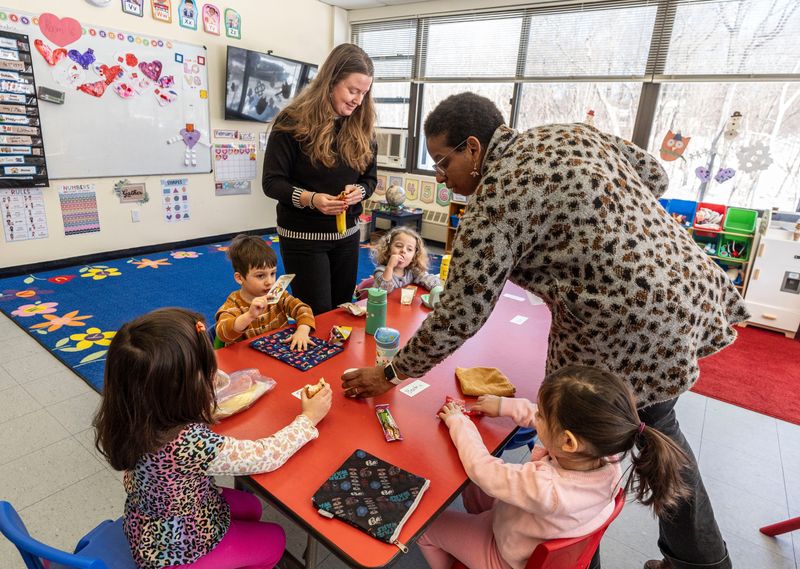
Most programs rely heavily on state aid, with few districts supplementing the funding. Some districts contract with outside providers, while others house pre-K classrooms within elementary school buildings.
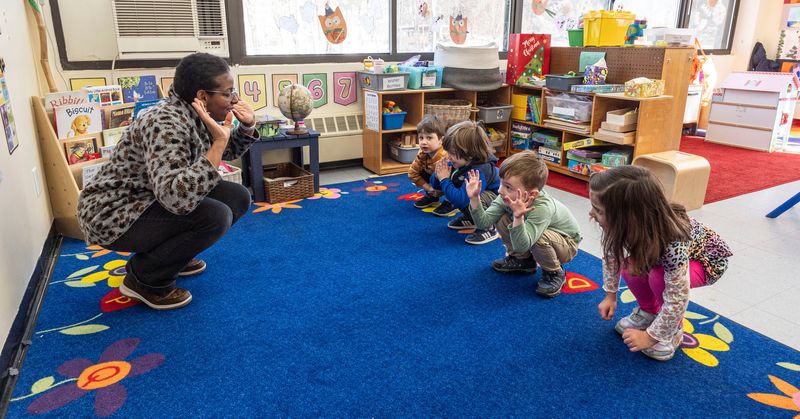
A typical class enrolls 18 students and is staffed by a certified teacher and a teaching assistant. In some districts, students are selected through a lottery system, while others can accommodate all interested families.
How many 4-year-olds served by UPK programs in New York?
The story of progress towards universal pre-K, in many ways, is told by numbers. They include:
The burdensome costs of pre-K and benefits of UPK in NY
Early childhood education has long been touted for supporting children’s language, cognitive and social development.
Yet for many families, the cost of care remains a burden. In Westchester, the average annual cost of pre-K programs outside of UPK was $14,500, according to a 2025 report by the Child Care Council of Westchester. By contrast, UPK programs are provided at no cost for families, regardless of income.
A majority of UPK programs in Westchester only serve 4-year-olds, except in Mount Vernon and Yonkers that also offer to children ages 3.
Many UPK programs rely heavily on state aid that falls short of the actual cost of providing a seat, districts say. As a result, some programs are supported by district subdivision or charge modest fees to families for extended-day care, others operate at a loss.
Tarrytowns expanded its program last year, adding 18 seats to bring the total to 144 and eliminating its waiting list. To make the expansion possible, the district contributed $59,000.
But that still fell short of the true cost to provide a seat, which can cost between $6,454 and $6,714, according to the district.
Superintendent Ray Sanchez described seeing clear benefits in students’ academic readiness as they enter kindergarten and progress through the school system.
“With the new funding coming in, it will help us not to use local funds,” Sanchez said.
Yonkers School District provides 1,500 seats to all 3- and 4-year-olds, with about 10% of those seats operated by outside agencies. The $21 million program offers a full experience that includes bus transportation and two meals. The state provides $8,400 per student, while the district subsidizes about $11 million to cover the gap.
Superintendent Aníbal Soler, Jr. said the decade-long investment in UPK program has contributed to the district’s recent 91% graduate rate. Although the proposed funding increase would still not fully cover program costs, he said it would help ease some of the strain on the district’s budget.
“We understand the impact child care costs have on families,” Soler said. “But the biggest thing is that the earlier we start with kids, the better off they’ll be. If we can give our kids additional years before kindergarten, they’re more likely to be on track when they come in.”
How will UPK funding help a struggling program in Croton-on-Hudson?
Most UPK programs in the region are funded solely through state aid, and some at a loss.
In Croton-on-Hudson, Childrenspace North, a center provides 44 seats on the site of the Temple Israel of Northern Westchester, has faced a financial shortfall since taking over the program two years ago. The cost to provide each seat is about $7,500.
Owner Sarah Forth, a Croton-on-Hudson resident, said she has had to offset the deficit with revenue from private child care programs and sometimes rely on parents’ contributions of supplies. After sustaining losses in the first year, the center relinquished 10 seats to another agency to maintain operations. Even so, she said, the model is not sustainable.
Before the governor’s announcement, the provider and dozens of community members unsuccessfully sought additional support from the district. Now, they’re counting on the proposed funding increases as a lifeline. The additional aid would allow the center to raise salaries to retain teachers, add enrichment programs and hire additional staff.
“The reason we opened in Croton is that we love what we are doing and want to offer universal preschool for more families,” Forth said.
Superintendent Steve Walker said the additional funding would help bring the district in line with others that were able to access grants Croton-Harmon School District was ineligible for because it chose to participate in the UPK program earlier. The district joined the program in 2021.
Jake Day, a Croton-on-Hudson parent whose child attends Childrenspace North, has organized a campaign to support the program. His efforts included launching a website, speaking at school board meetings and organizing a petition to Albany that garnered 714 signatures.
As a working parent, he said UPK gives him peace of mind knowing his child is in a safe, nurturing environment. He has seen his son become more expressive and independent. While he is hopeful about the governor’s proposal, he believes the district should step in to bridge the gap in the interim.
“There’s a lot of uncertainty of what’s going to happen,” Day said. “If the state money doesn’t come through, we’d like to see the district provide a backup plan.”
UPK funding proposal spurs expansion and evaluation
The forecasted increase in funding has already prompted some districts to consider expanding their programs, while others are still evaluating their options.
In Chappaqua, the district has proposed adding four sessions to the two existing classes as part of its 2026-27 budget. The program runs from 9 a.m. to 2 p.m., with extended hours available for an additional fee. Parents are responsible for transportation, lunch and snacks.
Districts that have not previously participated in UPK are now weighing the feasibility of launching programs. For some district leaders, that means grappling with space limitations and the added administrative responsibilities that come with overseeing outside agencies.
Harrison superintendent Louis Wool, president of the Lower Hudson Council of School Superintendents, said the district is re-examining the feasibility of participating in UPK in light of the new proposal. Two major obstacles are limited space and financial realities of staffing.
He suggested that one potential model would be to establish regional centers serving students from multiple districts, ensuring greater program integrity and oversight.
“I would have to accept responsibility for supervising all those places because once I give the money to an organization, those children become my responsibility,” Wool said.
How does the UPK pilot program work in NY?
The state is currently partnering with three counties — Dutchess, Monroe and Broome — to launch a $60 million pilot program as part of Hochul’s $4.5 billion investment to expand statewide access to childcare.
The initiative includes a commitment to universal pre-K for 4-year-olds by the 2028-29 school year, additional subsidies to low-income families as well as the launch of free childcare to 2-year-olds and expanded universal 3K access in New York City.
While the program structure varies by county, in Dutchess County the model combines $20 million in state funding with $2 million from the county to create 1,000 seats for children from birth to age 3.
Hochul, who faces re-election in November, has said previously the goal is to create a ripple effect.
“I don’t want to waste any more time — families have waited too long, they need this certainty,” Hochul said.
Helu Wang covers economic growth, real estate and education for The Journal News/lohud and USA Today Network. Reach her at hwang@gannett.com and follow her @helu.wangny on Instagram.
This article originally appeared on Rockland/Westchester Journal News: Hochul funding proposal to make pre-kindergarten universal
Reporting by Helu Wang, Rockland/Westchester Journal News / Rockland/Westchester Journal News
USA TODAY Network via Reuters Connect