Inflation rates are on the rise again, as are energy, housing, gas and food costs.
How is New York State, particularly the Mohawk Valley region, being impacted?

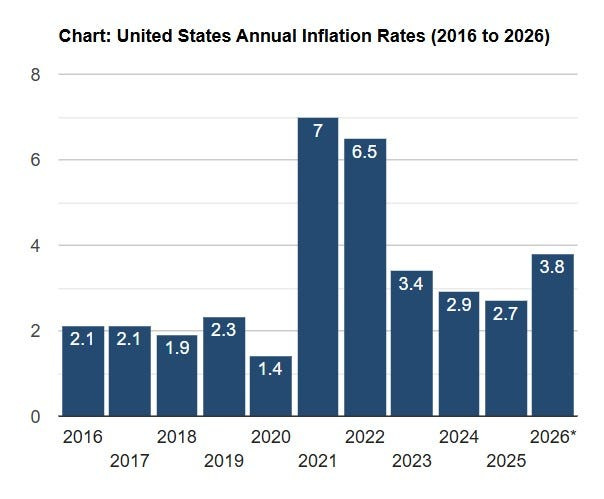
According to USinflationcalculator.com, inflation reached a low point in 2020 due to the COVID-19 pandemic, then sharply spiked during 2021, rising 5.6 points, then declining half a point in 2022.
The spike in inflation at that time was being felt globally as nations worldwide went into recovery from the pandemic, suffering acute supply chain issues and re-employment. In 2023, America saw a 3.1 point dip in its inflation rate as it led the world in pandemic recovery. 2024 saw another .5 drop in the inflation rate, now just over half a point from returning to its pre-pandemic rate in 2019, where it had begun to rise prior to the pandemic.
Last year, 2025, continued the three-year trend of lowering inflation rates, though slowed to just a .2 dip, less than half the reduction rate the year prior. This was followed in 2026 by a 1.1 point spike in the nation’s inflation rate, with the rate currently rising monthly.
The trend of rising inflation, according to the U.S. Bureau of Labor Statistics, is a result primarily of rising energy costs – including fossil fuels used for home heating and to power automobiles, followed by inflated food and housing costs, both impacted by rising gasoline prices in the transport of goods.
The tariff policies of the current U.S. presidential administration are also culprit, in that those costs have effectively been passed down to the American consumer.
Fossil fuel costs are being impacted by supply chain interruptions resulting from foreign wars, currently in the Ukraine and Iran. Both of these conflicts have also impacted food security worldwide.
While food costs also began to dip down to pre-Covid levels in 2023, “food-at-home” costs just saw the largest increase since 2022, jumping .7% between March and April. 2026 is looking at a 2.9% increase in food costs year-on-year.
According to David Ortega, a food economist and professor at Michigan State University, rising food costs are in tandem with spiking gasoline prices, up 28.4% over 2025 prices, creating a remarkable financial strain for average Americans.
Impact on New York State
The “downstate” metropolitan area is seeing an inflation rate of 4.6%, higher than the national average.
New York State Comptroller Thomas P. DiNapoli reports growth in household income in the Empire State has failed to keep pace with the 23.1% rise in inflation during the same period, resulting in a decline in “real income” in 23 of New York’s 62 counties.
In the Mohawk Valley region, Madison County counted itself among the 23 New York State counties experiencing a decline in real income at -.5%.
Herkimer and Oneida Counties saw a less than 2% raise in real income due to steadily rising costs of living.
Mohawk Valley Chambers of Commerce give voice to small businesses
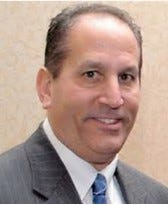
Ray Durso, founder and president of the Genesis Group and chairman of the Chamber Alliance of the Mohawk Valley – representing two chambers and 10 affiliates across Oneida, Herkimer, and Madison Counties – responded to the current impact of affordability to say, “It’s all about community!”
Durso sees the agenda of the Mohawk Valley community breaking down to key sectors including government, arts and culture, education, healthcare, and agribusiness.
Durso, who’s been “at this” for 26 years, works to “stay aligned with the community’s agenda.”
Durso reminded of the recent wins, including Chobani expansion, Wolfspeed, and nanotech, while crediting agribusiness as a top industry in the State of New York, and the top industry in the Mohawk Valley region.”
“A company like Chobani is building a billion-dollar facility in Rome,” said Durso, “so fuel costs and the costs of their product could be impacted.”
“I’m not a farmer, so I don’t know what a farmer goes through,” said Durso, “but I can only imagine that, to run their tractors, their machinery, they’re probably being impacted by fuel costs like every other business.”
Durso believes that “every business out there” – large and small – are being impacted in some way.
“More and more, they have to be prudent,” said Durso, “they have to be cautious, be aware of how these challenges impact them, now more than ever.”
Executive Director of the Herkimer County Chamber of Commerce Kathy V. Glanovsky confirms her organization is definitely hearing from local small businesses across Herkimer County about the challenges they are facing due to rising operational costs.
“Increased fuel and transportation costs, higher utility expenses, rising food and supply prices, insurance increases, and tariff costs on equipment and the cost of goods are all impacting businesses to varying degrees depending on the industry,” said Glanovsky, who shared that small businesses are struggling to absorb those costs in order to remain competitive and maintain affordability for consumers.
Glanovsky noted industries sharing the greatest concerns are construction, manufacturing, retail, and small businesses “that rely heavily on shipping, equipment, or imported products and materials.”
Executive Director, Greater Utica Chamber of Commerce Kari Puleo echoed her peer in Herkimer County, citing broad concerns among small businesses around energy, utility, food, supply, insurance, and tariff costs.
“Even businesses that are not directly involved in international trade,” said Puleo, “are feeling the ripple effect through increased shipping and vendor costs.”
Puleo listed industries feeling the greatest impact as restaurant and food (dealing with rising food, packaging, and utility expenses), manufacturing and construction-related businesses (material and transportation costs, as well as tariff concerns), retail (navigating labor shortages, higher wholesale costs and cautious consumer discretionary spending), and logistics and transportation companies (strained by fuel and operational expenses).
“One common theme we continue to hear is that many small businesses have already streamlined operations as much as possible over the past several years,” said Puleo, “leaving little room to absorb additional increases without either reducing services, delaying growth plans, or passing costs on to consumers.”
Mohawk Valley state, congressional representatives respond
The office of U.S. Congressman John Mannion, who represents New York’s 22nd Congressional District, shared how he is currently a member of the House Agriculture Committee and the Democratic co-lead of the bi-partisan “Rural Microentrepreneur Assistance Program Act,” which seeks to strengthen a U.S. Department of Agriculture program supporting rural entrepreneurs and small businesses in securing financing and technical help.
Mannion is also a member of the Lowering Utility Bills Caucus, at work to lower current energy costs.
Mannion is also focused on protecting New York State producers from “erratic trade decisions that hurt market access,” as well as preventing American families from absorbing the related costs.
In the interest of restoring money to American workers and their families, Mannion has supported increasing the Child Tax Credit, guaranteeing seven days of paid sick leave per year to American workers, gradually raising the federal minimum wage, the Home Energy Relief Act, and the Stop Price Gouging in Grocery Stores Act.
“Inflation, gas, groceries, energy – Americans are paying more across the board because of Donald Trump’s economic policies and war with Iran. Agriculture is taking a major hit, and that impact is felt across the entire economy — from processors and haulers to restaurants, retailers, and families at the grocery store,” said Mannion. “I’m working across the aisle to expand access to capital for rural entrepreneurs, support family farms, strengthen local supply chains, lower utility bills, and push back against bad trade policies and erratic tariffs that are making life more expensive for everyday New Yorkers.”
New York State Senator Joe Griffo, R-Rome, called for “meaningful action and reasonable, realistic policies that will make it easier to do business in New York,” supporting initiatives that “promote job creation and economic opportunity.”
“This is what I continue to advocate for,” said Griffo, “because I recognize that this approach will help businesses grow and thrive in New York.”
State Assemblywoman Marianne Buttenschon, D-Marcy, chairs the Assembly Small Business Committee and looks to support small businesses throughout the state.
“As a legislator and the Chair of the Assembly Small Business Committee, it is my responsibility to support small businesses throughout the state,” said NYS Assemblywoman Marianne Buttenschon (D 119). “Pursuant to that responsibility, the Assembly has proposed the inclusion of the below legislation in the state budget to help provide relief and financial flexibility to the entrepreneurs and small business owners that drive our state and local economies.”
The legislation Buttenschon referenced is:
While the Small Business Subtraction Modification was included in the state budget that was ultimately passed by the legislature, the Small Business Hardship Savings Account was not.
“We need each other to succeed”
Durso sees local Chambers of Commerce as a resource, a source of support for local businesses.
“Small businesses are the backbone of the economy in every community,” said Durso. “We need them.”
What he sees through the Mohawk Valley Chamber Alliance are local chambers and affiliates “learning from each other.”
“We are stronger when we work together,” said Durso. “When things are great? Great. But during times of challenge – like these – we as a community are much stronger when we pick up the phone – call your neighbor.”
Get help. Give help.
Concluded Durso, “We work together, we win together.”
This article originally appeared on Observer-Dispatch: Biggest rise in Inflation since 2021 felt by Mohawk Valley businesses
Reporting by Cara Dolan Berry, Utica Observer Dispatch / Observer-Dispatch
USA TODAY Network via Reuters Connect