There have been more injuries from e-bikes and e-scooters in the Des Moines metro in the first half of this year than in all of 2025, according to data collected by UnityPoint Health.
In 2026, between January and the end of June, there have been 125 injuries from e-bikes and e-scooters that came through the doors of UnityPoint’s ERs across the metro. In 2025, there were a total of 123 injuries, according to updated numbers from the hospital system.

E-bikes and e-scooters have been a point of concern for many metro cities as the devices become more popular and more people are getting seriously injured in crashes and accidents.
“As we continue to see more devices come out there, obviously your incidents and your rates are going to go up,” Ankeny police spokesperson Sgt. Trevor McGraw told the Register. “I think it’s just something that’s becoming popular and being purchased more and being ridden more.”
Dr. Rick Sidwell, a trauma surgeon with UnityPoint Health, said e-bike and e-scooter incidents aren’t just a nuisance, but they are “a real problem.”
“I know they look fun, but I don’t think people truly grasp how dangerous they actually are,” Sidwell said.
E-bike, e-scooter injuries exponentially increase year over year
In 2020, there were 16 injuries related to e-bike and e-scooter incidents, according to data from UnityPoint. In 2021, the number increased to 28. In 2022, 29. In 2023, 61. In 2024, 85.
Since 2020, 208, or 44.5%, of those calls have been pediatric cases, while 259, or 55.5%, have been adult.
Until this year, adult cases outnumbered pediatric cases. However, 57.6%, or 72, of this year’s cases have been pediatric, while 53, or 42.4%, have been adult.
The increase in cases is indicative of more and more Iowans taking to the sidewalks and the streets on e-bikes and e-scooters.
“They’re dangerous vehicles, and people really underappreciate that these are dangerous vehicles,” Sidwell said. “Nobody thinks of these as motorized vehicles. They’re thought of as bikes and as scooters, but these can be dangerous vehicles.”
There is no minimum age for riding e-scooters under Iowa law, as well as on e-bikes that only assist a rider up to 20 mph. You must be 16 years old or older to ride an e-bike that assists a rider up to 28 mph.
E-bike and e-scooter injuries are on an upward trend in the United States, according to a 2023 report from the Consumer Product Safety Commission.
“We know that the injuries are skyrocketing, but I would offer that what we know about is only a small percentage simply because we don’t know about all the crashes out there,” Waukee police Chief Chad McCluskey told the Register.
Between 2017 and 2022, an estimated 360,800 emergency department visits were associated with e-bikes and e-scooters across the U.S., according to the report.
“If you look back five years, people coming to the emergency department with injuries from e-bikes or e-scooters was not really very common at all. It was something that was maybe once a month or so,” Sidwell said. “Now, it’s something that we see two to four times every single week.”
Injuries associated with e-bikes and e-scooters are the “most rapidly increasing way that people are injured,” Sidwell said.
“Are we surprised by what we’re seeing? No,” McCluskey said. “And it’s just a function of the rapid popularity and growth.”
What’s the difference between an e-bike and e-moto?
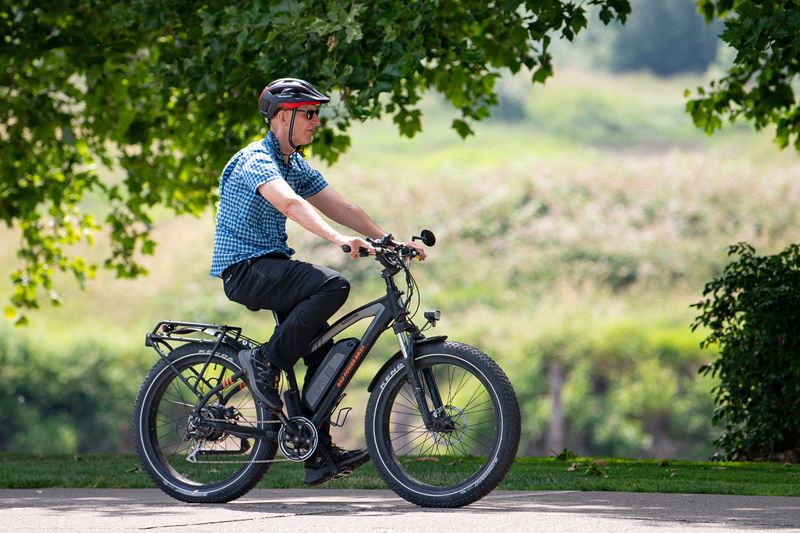
Iowa Code first defined e-bikes in 2019 and classifies them as having operational pedals and an electric motor of less than 750 watts. The state’s three classifications include:
E-bikes do not require licensing, registration or even helmet use. Class 3 e-bikes do require riders to be at least 16 years old. According to Iowa law, e-bikes of all classifications can be on the road in bike and vehicle lanes, but it’s up to local ordinances for use on sidewalks and multi-use trails.
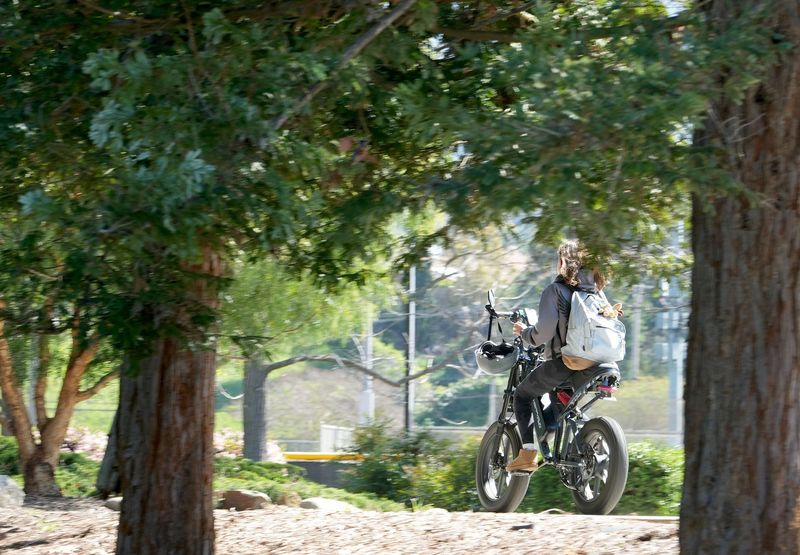
E-motos, such as mopeds and motorized bikes, can be gas or electric, and are categorized as going up to 39 mph, require a moped permit or driver’s license, and must be driven by someone of 14 years of age or older. They are only allowed in vehicle lanes on the road.
Bumps, bruises and fractures among most common e-bike and e-scooter injuries
Most injuries from e-scooter and e-bike incidents include bumps, bruises and bone fractures.
Sidwell told the Register he has seen broken arms and legs, skull fractures, broken ribs, broken necks and backs, as well as internal injuries to organs like the liver and spleen. E-bike crashes also often lead to brain injuries.
“It’s really a whole spectrum of injuries that we see,” Sidwell said.
Sidwell said the most common causes for injury while riding e-bikes and e-scooters include riders getting into road traffic and being hit by another vehicle or striking another vehicle, as well as riders losing control and crashing. Some riders even strike and injure pedestrians.
Metro cities moving to stricter regulations on e-bikes, e-scooters
In April, Ankeny moved to limit e-bike speed to 20 mph on bicycle lanes, paths and sidewalks.
West Des Moines allows e-bikes on streets, trails and most sidewalks with a speed limit of 20 mph.
Clive recently approved a 20 mph limit for e-bikes and e-scooters on sidewalks and trails, as well as on residential streets. Waukee, after updating its proposed ordinance after community feedback in June, is moving to limit e-bikes and e-scooters to trails and sidewalks with a speed limit of 20 mph.
How to stay safe while riding e-bikes and e-scooters
Prevention is the best way to stay safe while riding e-bikes and e-scooters.
“The time to talk about e-bike safety isn’t after you’ve been injured,” Sidwell said. “The time to talk about e-bike safety is before the injury occurs.”
Ankeny, along with other metro police departments, is pushing the “Ride Safe ‘n Smart” campaign, which aims to keep riders safe and prevent injuries while riding e-bikes and e-scooters.
“Our officers have been stopping and conversing with the people that they’ve seen in violation (of city ordinance),” McGraw said. “And then almost every time that we’re able to, we hand out a card that has basically the Ride Safe n’ Smart literature.”
Ankeny police are also working with area schools to teach kids about riding etiquette, “and a lot of the problems go away from there,” McGraw said.
According to the Iowa Department of Transportation, e-bikes are beholden to the same safety rules and regulations as human-powered bicycles, including wearing helmets.
“We can put laws in place all day long around these, and we can enforce things all day long around them,” McCluskey said. “But truly, until the parents take responsibility for what they’re putting their kids on… and the kids have to be responsible and accountable for their actions… we’re going to continue to see injuries from it.”
Kyle Werner is the breaking news and public safety reporter for the Register. Reach him at kwerner@registermedia.com.
This article originally appeared on Des Moines Register: As e-bike popularity surges in the Des Moines metro, so do injuries
Reporting by Kyle Werner, Des Moines Register / Des Moines Register
USA TODAY Network via Reuters Connect

By Kyle Werner, Des Moines Register | USA TODAY Network