It’s easy to list all the things afflicting rural Iowa and its residents. Population loss, with its many causes and far-reaching consequences, is well-documented. The Register contributes plenty to that literature as part of its mission to describe Iowa and to share potential solutions.
A topic that probably gets short shrift in those discussions is explaining exactly why the future of rural Iowa is so important to so many people, including people who left the state long ago, or urban residents a generation or more removed from farm life.

The short answer is that plenty is worth treasuring and preserving ― in the tangible 50,000-odd square miles outside the bigger cities, and in the intangible, the history and ethos accumulated by those who’ve lived and created in rural Iowa. People care about rural Iowa because it’s exceptional.
For over 50 years, the staff of the Register has been a conduit to the world for what makes the state special. The state is the star; the Register’s Annual Great Bicycle Ride Across Iowa is a two-wheeled vehicle for spreading the stories. Iowa deserved an up-close showcase beyond the State Fair, even if Register columnists John Karras and Donald Kaul were probably (OK, definitely) the only pair with the imagination to invite readers to join them bicycling from the Missouri to the Mississippi rivers. That whim has become a half-century tradition involving tens of thousands of riders annually. Coincidentally, part of rural Iowa’s appeal is a practical factor in making RAGBRAI work as well as it does: no matter what road riders follow, another unique small town is just 10 or 15 miles away, stocked with hospitality and local pride.
It’s a cliché because it’s true: Each little town is a vital part of the state’s lifeblood. That became apparent in June to one of World Cup tourists from Europe who became a minor social media celebrity through travelogue posts. “Tommo” from England detoured through the state during a Kansas City-to-Chicago drive in an RV because of a severe weather forecast in mid-June. He drank in Des Moines, photographed a purplish night sky, sampled Casey’s breakfast pizza and took swings at the “Field of Dreams” movie site before concluding, “You’ll forever be known as the “Unscheduled State” to us … But we are so glad we passed through.”
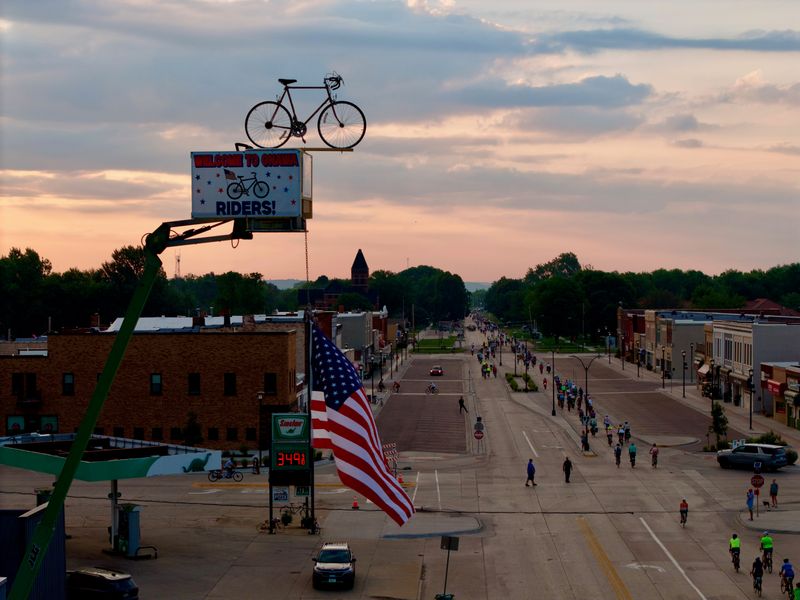
RAGBRAI visitors from throughout the world this year will start on the state’s widest main street in Onawa and encounter a trove of other claims to fame over the ride’s seven days. Danish heritage sites in and around Elk Horn. The intersection of the transcontinental Lincoln and Jefferson highways at Colo. And, yes, the Field of Dreams Movie Site outside Dyersville. Besides those local landmarks, each mile of the route is tied to decades of a community’s story. Those stories share such themes as neighbors helping neighbors during hard times, downtown gathering places, and cherished runs to reach state basketball tournaments in Des Moines.
Those memories and the pride of explaining that you come from Alta or Andrew or Columbus Junction or Farley or Sidney are part of what we all have in mind when we talk in worried tones about school consolidations, hospital closures and barriers to entry in farming.
Ensuring a brighter future for rural Iowa matters because of the bright past that makes up so much of the state’s tapestry. The hunt for the answers to provide that brighter future continues – after the wonderful excuse to celebrate that is RAGBRAI.
Lucas Grundmeier, on behalf of the Register’s editorial board
This editorial is the opinion of the Des Moines Register’s editorial board: Rachel Stassen-Berger, executive editor; Lucas Grundmeier, opinion editor; and Richard Doak and Rox Laird, editorial board members.
This article originally appeared on Des Moines Register: Strengths of rural Iowa explain the passion to revitalize it | Opinion
Reporting by The Register’s editorial, Des Moines Register / Des Moines Register
USA TODAY Network via Reuters Connect
By The Register's editorial, Des Moines Register | USA TODAY Network