Michigan is leading the U.S. in cyclosporiasis cases, and in the last few weeks, consumers have tried to follow rapidly evolving guidance about the risks of everything from lettuce to cilantro.
In some grocery stores, lettuce heads sit forlorn, left on shelves out of concern for the parasitic illness causing diarrhea and other gastrointestinal symptoms.

Late last week, the U.S. Food and Drug Administration narrowed its suspicions to one major grower, urging consumers to avoid eating lettuce at Taco Bell locations in Indiana, Kentucky, Michigan, Ohio and West Virginia. It’s a good indication that the federal agency may be closing in on the source of the outbreak, even if other food items have not been entirely ruled out.
In the meantime, the consensus among small urban growers in metro Detroit: Business is booming.
At Detroit’s Eastern Market and local farm stands, sales are up, as shoppers look for reliable sources of uncontaminated produce. Though some farmers say customers are shopping for fruits and vegetables with trepidation ‒ as of July 16, the Michigan Department of Health and Human Services had reported 5,002 cases ‒ the concern is not resulting in a decline in sales, but rather the opposite.
Small farms see big gains
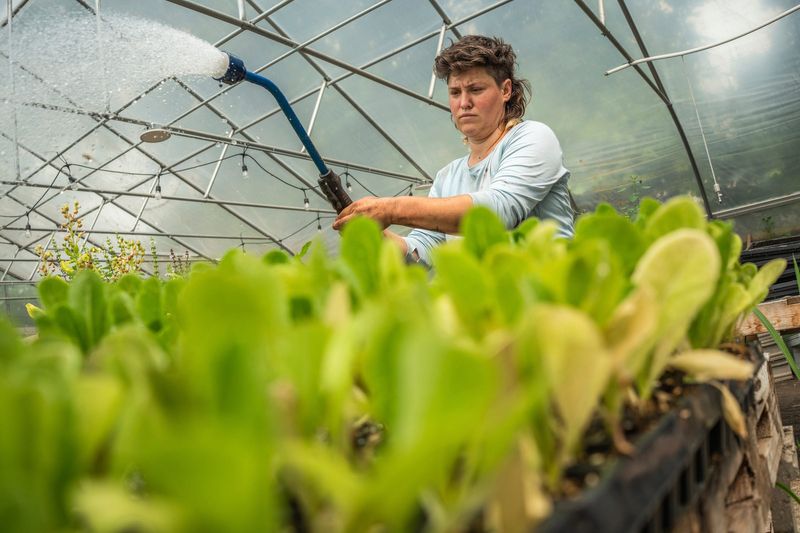
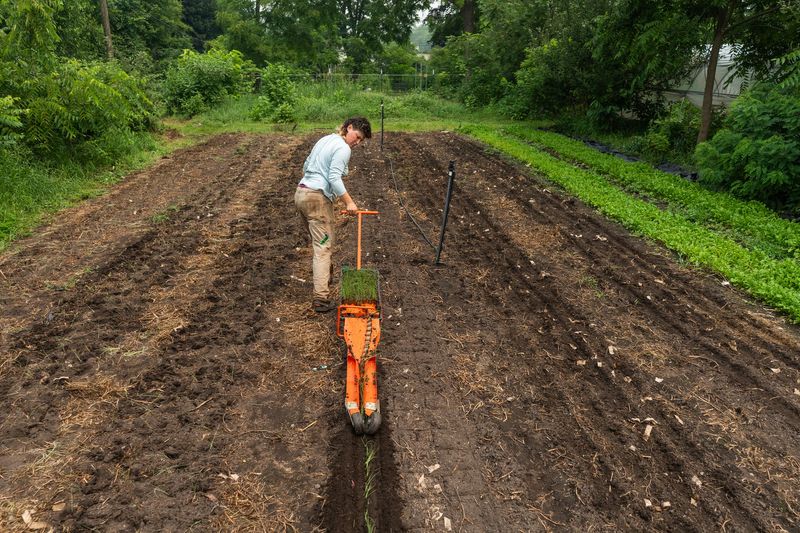
At Beaverland Farms, a three-acre farm in Detroit’s Brightmoor neighborhood, lead farmer Brittney Rooney and her team operate a weekly farm stand selling a range of vegetable varieties from cherry tomatoes to bagged lettuce. The team also operates a community supported agriculture program (CSA), and sells produce to local restaurant partners.
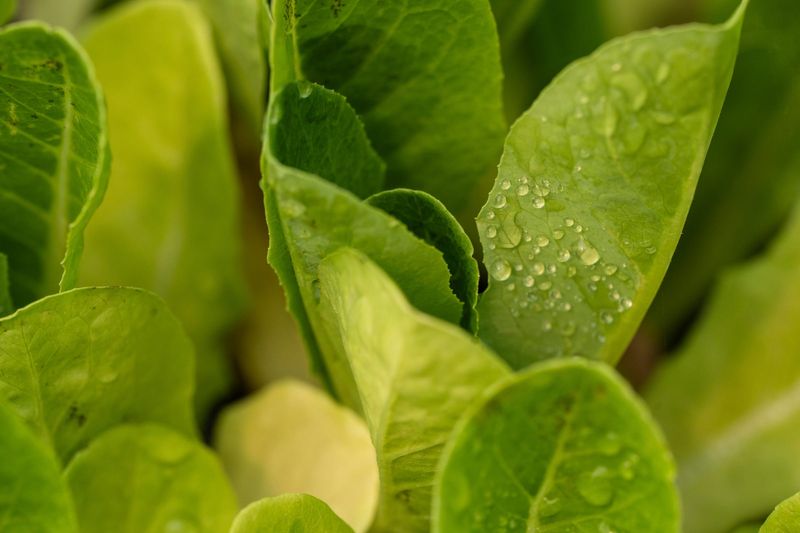
“At the farm stand, if anything, our sales have gone up slightly because people are looking for a safe alternative to grocery store lettuce,” Rooney said, estimating a 20% to 30% uptick in sales. “I think people are starting to realize, for a lot of reasons, that produce can be trusted more just depending on the scale of it. We didn’t know there was going to be an outbreak, but if we did, we would have a whole farm full of salad mix right now to be able to feed it to people safely.”
Rooney’s confidence in small, community-centered farms is shared among Detroit’s urban gardening community. It’s even reflected more broadly on social media, backyard gardeners holding heads of lettuce like trophies.
Customer behavior seemingly follows suit.
According to Amanda Brezzell, co-founder of Fennigan’s Farms on Detroit’s west side, lettuce and salad greens are so in demand, some growers are making adjustments to their sales, saying they’ve heard of some small farms limiting the amount of greens one customer can purchase.
Vendors at Eastern Market saw a similar trend at on Saturday, July 11.
“What I’ve noticed, and I’ve talked to a few vendors, is that they were selling out of lettuce,” said Lonni Thomas, director of markets at Eastern Market. “One of our urban farmers is a lettuce specialist ‒ Greg at Brother Nature, that’s what he does ‒ and he sold out earlier than usual.” Other small farms selling sprouts, spring mixes and lettuce also fared well at the market, Thomas said. “I think our community is going towards shopping local versus the grocery store for their produce.”
What makes a safe space?
Rooney’s belief that small, local farms are the more reliable sources for produce is rooted in the science behind how the parasite spreads.
“We don’t have any of the issues that would ultimately contribute to this outbreak,” she said. Ground water irrigation, for example, can be contaminated with fecal matter and become a source for cyclospora. “We use City of Detroit irrigation and that water has been tested.”
Because of the farm’s smaller nature, Rooney said, employees have access to hand-washing stations that are positioned throughout the farm, leading to high sanitation standards.
“We’re not on a 200-acre farm, where that’s not accessible to our farmers,” she said. “At the end of the day, I fully trust that our produce is safe because we’re prioritizing good sanitation standards and I can communicate that to our longtime customers, our CSA folks and our restaurant people.”
Rooney added that the smaller the number of hands the produce passes between, the lower the risk of contracting and spreading foodborne illnesses like cyclospora.
“The lettuce that I’m selling, I grew myself,” she said. “But so many of these larger farms are sending their lettuce to a facility to be processed and bagged and it gets mixed in with lettuce from other farms and then contaminated.”
Thomas said the Saturday market drew larger numbers than typical. She compared the crowd size to what the team would expect during flower season, the market’s peak season in May and June when up to 65,000 visitors flock to the sheds. “As a guesstimate, I would say this Saturday was probably at the 45,000 range,” she said. “It was very, very busy for a Saturday in July.”
Thomas said she and her team have been in communication with the health department as well as the U.S. Department of Agriculture to ensure the safety of Eastern Market produce. Farmers’ practices are evaluated to maintain the market’s commitment to sanitation and food safety. But for the most part, she said, “We just tell our farmers to keep doing what they’re doing,” she said.
Visitor attendance during the Saturday market was a stark difference from the environment at 7 Greens, a homegrown salad shop in downtown Detroit. Just a few customers were in the space a little after noon on a weekday when a hungry corporate crowd would typically file into a tight line for lunch and smoothies.
“It’s been really slow,” 7 Greens employee Nyrianna Kelly told WDIV-TV (Local 4). “Usually, we are busy throughout the week.”
Built for success
According to Brezzell, urban agriculture was designed to serve as an alternative to a flawed industrial food complex, where issues like risks of foodborne illnesses are high.
“The support to make sure that our food system is safe is very weak at the federal level,” Brezzell said. “When you look back in the urban food and agriculture space, these exist because the government has not been supportive of our livelihoods. So, we always have to make sure that what we’re doing is safe because this was built to make sure that we had something that existed outside of the system that could actually support community.”
There’s an air of comfortability with small, local farms amid the cyclospora outbreak. It’s similar to the boom in backyard gardening and sourcing from community purveyors that we saw during the COVID-19 pandemic. For Brezzell, though, that trust should exist beyond the parameters of crisis.
“The local food system isn’t being built just for emergencies, it is something that has been built because we needed to protect ourselves from what we knew was already an issue ‒ like not having access to fresh fruits and vegetables. That’s not a thing that waxes and wanes,” they said. “The local food system is always going to be the thing that’s going to liberate us. Food sovereignty is just one part of sovereignty, and so we have to think about what that means in our community and what other things need to be in place so that we don’t have to keep doing this.”
Experts have agreed that sourcing produce from farmers markets, local growers and backyard gardens may be safer options than from major distributors selling fruits and vegetables grown overseas where food safety procedures may be more lax.
The FDA’s crackdown on Taco Bell, in fact, zeroes in on lettuce grown abroad.
“FDA’s traceback investigation has identified convergence on a single supplier of iceberg lettuce from Mexico used by Taco Bell locations where sick people ate before becoming ill,” reads a statement on the agency’s website.
Your farmer, your neighbor
The most valuable quality of a small, local farm, echoed among farmers and food safety experts alike, is the ability for customers to develop meaningful relationships and face time with growers. Proximity to the person growing your food offers an opportunity to ask questions about the farm’s food safety protocols and to even see where the food is grown when possible.
“I feel safe because I know a lot of the growers I buy my produce from,” said Micah Thibodeau-Williams, a Michigan Association of Conservation Districts produce safety technician overseeing the Genesee Conservation District. Thibodeau-Williams works with growers at small farms in Southeast Michigan primarily on preventing microbial outbreaks in fresh produce. “I’ve been on the farms, I know how long they’ve worked, I know how seriously they take produce safety. They don’t want to get anyone sick because it’s not like getting someone in another state sick, it’s getting your neighbor sick.”
Michigan State University Extension Agriculture and Agribusiness Educator Phillip Tocco advises customers to ask questions of their food providers.
“Eating is an inherently risky act,” Tocco said, “and our conduct, as much as the conduct of the grower, the conduct of the retailer, the conduct of the transport; all make a difference in how safe the produce is.”
At farmers markets, he recommends asking farmers about their food safety measures and observing things like whether one person is handling cash transactions and another handling produce. “Are there two different people? Or, is the same person going back and forth between the money and the produce? Are they wearing gloves? Are they washing their hands?” Tocco offers the same advice for customers shopping at grocery stores and other food establishments.
At restaurants, guests can ask servers or chefs where they’re sourcing produce from, and what measures they’re taking to clean items like lettuce and salad greens of course, keeping in mind that no cleaning method guarantees killing off the parasite ‒ not chlorine, vinegar, or baking soda.
“It’s important to ask questions about what they’re doing to ensure the safety of the produce,” he said.
Wherever you choose to shop, what matters to Tocco is that people continue to incorporate healthy ingredients into their diet as officials race to pinpoint the source of the cyclospora outbreak.
For Tocco, “The benefits of eating fresh fruits and vegetables far outweigh the risk of getting sick from this.”
Contact Detroit Free Press Dining and Restaurant Critic Lyndsay C. Green at: LCGreen@freepress.com. Follow @LadyLuff on Instagram and Twitter. Subscribe to the Eat Drink Freep newsletter for extras and insider scoops on Detroit-area dining.
This article originally appeared on Detroit Free Press: For small urban farmers, business is booming amid cyclospora outbreak
Reporting by Lyndsay C. Green, Detroit Free Press / Detroit Free Press
USA TODAY Network via Reuters Connect
By Lyndsay C. Green, Detroit Free Press | USA TODAY Network