I filled up my gas tank in Indiana last week at $4.29 per gallon. That would’ve cost me $4.95 per gallon if Gov. Mike Braun had not suspended Indiana’s excise (per gallon) tax and sales tax.
So, like most consumers, I was grateful for it. Indiana has a large set of rainy-day funds totaling about $2.3 billion, which can easily cover the lost tax revenue for road repair — a bit over $150 million each month.

The bigger problem is that Indiana spends too little on roads, as any frequent driver will tell you. A gas tax collections holiday does little to help Hoosiers understand their tax problems in the way potholes will make clear again next spring.
Still, were I advising the Braun administration, I would’ve recommended the gas tax holiday. I just would not recommend extending it beyond the statutory emergency period, which ends June 7. At that point, gasoline prices in Indiana will slide past $5 per gallon on a steady path toward $7 by August.
Braun’s actions aside, there are other forces keeping gas prices from rising even higher as we approach the three-month mark of the Iran war.
The U.S. economy is much less dependent on oil than it was in the 1970s and 1990 oil shocks. Plus, the U.S. is an oil-exporting nation with large reserves. That partially insulates us from the big global supply shock that accompanies the closure of the Strait of Hormuz.
But only partially.
Since early March, somewhere between 15% and 20% of the world’s oil production has been suspended from moving outside of the Middle East. This is the largest oil supply shock in history.
Standard estimates of past price responses to supply shocks suggest gas prices should rise well beyond $7 or even $8 per gallon. Fortunately, that hasn’t happened so far for a couple of reasons.
First, the commercial reserves offer a bit more than 90 days’ supply of petroleum. The end of this reserve is now two to four weeks away for most of the United States.
Second, the entire world released strategic petroleum reserves. Our reserves can release about 1 million barrels a day, for about three months. So, we have yet to face actual supply constraints. At the same time, we have experienced a nearly 60% increase in gas prices as delivered prices for petroleum have spiked.
Finance dudes use the word “backwardation” to describe a market in which the futures price is below the current (or spot) price. We are in the most extreme period of backwardation in history.
This is an ominous circumstance because these prices are certain to converge, probably at the higher prices.
We don’t know how long the war in Iran will last, how long the Strait of Hormuz will be closed or how badly oil infrastructure will be damaged. All this adds to uncertainty and higher short-term prices, which have motivated governments to act all over the world.
Malaysia has expanded remote work. Do not be surprised if you see it expand globally as school starts this fall with diesel prices double their pre-war levels.
The International Energy Agency coordinated global release of reserves designed to dampen price increases. Whether this was wise is an open question. If the war ends quickly, and production and transport resumes, it’ll be judged favorably. If supply reductions last months or years, it may not.
There is no easy way out of higher gas prices. We cannot ramp up oil production fast enough to reduce July and August price spikes. Worse still, I doubt Iran sees many upsides to quickly restoring the flow of oil through the Strait of Hormuz. For Iran, the worst part of the war is over. Continuing a stalemate, even with occasional attacks, brings little risk.
For the U.S., the worst part of the war lies before us, with damaging economic effects. Higher gas prices through late fall seem a pretty solid bet, and there’s nothing we can do to stop it.
Well, almost nothing. Indiana lawmakers, fearing elections, seem likely to extend Braun’s tax holiday, sacrificing long-term roadwork for short-term relief in gas prices.
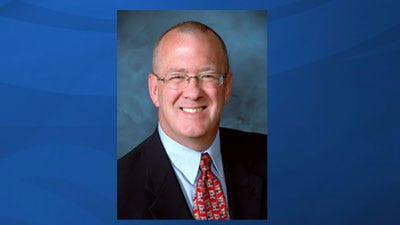
Michael J. Hicks is the director of the Center for Business and Economic Research and the George and Frances Ball distinguished professor of economics in the Miller College of Business at Ball State University.
This article originally appeared on Lafayette Journal & Courier: Hicks: Several forces are keeping gas prices from rising even higher
Reporting by Michael Hicks, Muncie Star Press / Lafayette Journal & Courier
USA TODAY Network via Reuters Connect