Florida provides assistance to more than 32,000 Floridians living with HIV and a proposed rule change could narrow income elegibility, causing more than half of recipients to lose access to treatment and medications, , according to the AIDS Healthcare Foundation (AHF).
The Florida Department of Health manages the state’s AIDS Drug Assistance Program (ADAP), which is funded by the federal Ryan White AIDS Drug Assistance Program. It directly provides HIV medication and helps pay for insurance premiums for patients whose income is below 400% of the Federal Poverty Level.

Last month, the FDOH sent out two letters, the AHF said. One was to all recipients, notifying them that the allowable medications would be changing. The other went out to people making more than 130% of the poverty level to tell them that as of March 1 they would no longer be eligible and should make other arrangements. The FDOH also said it was ending insurance premium coverage entirely.
The FDOH said in the letters and on the ADAP website that the change was necessary due to the “rising health care insurance premiums nationwide and lack of additional Ryan White Grant funding” that otherwise would cost the state a shortfall of more than $120 million. The FDOH also said it would cover costs for a two-month transition period to give people time to find other services, and provided a list of community assistance programs.
Florida sued for HIV benefits plans
After the AHF filed suit against the state, claiming it did not follow required rules change protocols including a 21-day public comment period. The FDOH on Wednesday published the proposed rule change online for community input.
HIV is a terminal disease but it’s manageable with proper care and treatment, which includes expensive antiretroviral medications.
“Treatment disruption for a person living with HIV is not an administrative inconvenience; it is a clinical risk,” the International Association of Providers of AIDS Care (IAPAC) said in a January release. “Interruptions in antiretroviral therapy (ART) can lead to viral rebound, increased risk of drug resistance, loss of viral suppression, worsened health outcomes, and heightened risk of onward transmission.”
The DeSantis administration has sought to move Floridians off state assistance and onto community services, most notably with Hope Florida, started by First Lady Casey DeSantis in 2021, which connects people to a clearing house of other services from nonprofits and faith-based communities.
According to DeSantis, the goal is for Florida to help and then stay “out of the way.”
What’s changing in Florida’s AIDS assistance program?
Under the proposal:
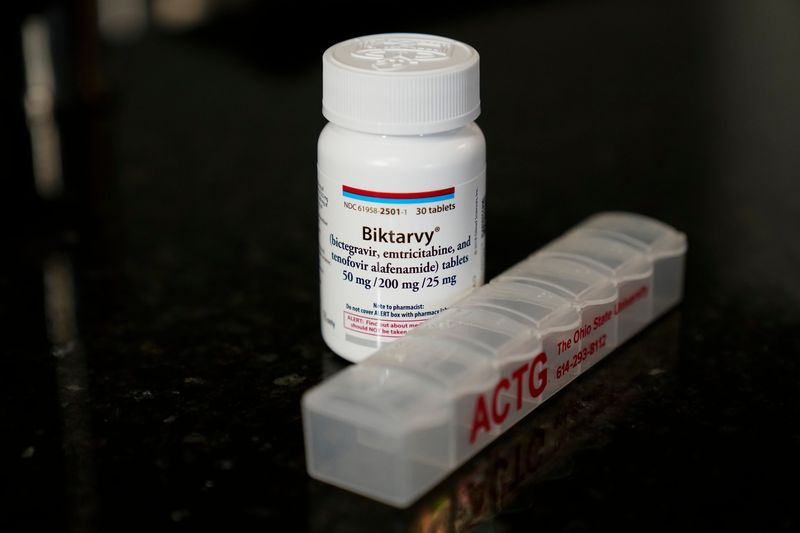
In a letter sent to HIV assistance recipients in January, the FDOH also said it was removing Biktarvy, a daily pill commonly used to treat HIV in adults and children weighing at least 31 pounds, from the list of drugs that would be available to ADAP clients.
What is the Federal Poverty Level?
The Federal Poverty Level is determined every year by the Department of Health and Human Services (HHS) and is based on the official poverty thresholds calculated by the Census Bureau. It is used to help determine eligibility for various federal and state assistance programs.
Under the current state program, that means ADAP would be available for someone making around $60,000 a year. Under the new guidelines, that would drop to people making around $20,000 a year.
The National Alliance of State and Territorial AIDS Directors reported that in 2024, Florida ADAP served 32,248 clients:
If the new rules cut off eligibility at 130%, NASTAD estimated that more than 16,000 people will lose medication access.
When is Florida’s ADAP changing?
Unclear.
Two letters were sent out to HIV patients last month, the AHF said, one notifying all of them about the medication changes and the other going only to people whose household income is over 130% of the Federal Poverty level to inform them that they were no longer eligible. Both letters listed March 1 as the cutoff date.
After the AHF filed a legal challenge to the FDOH, claiming it did not run the rule changes through the required rulemaking process, the FDOH published the rules changes at the Florida Administrative Code and Florida Administrative Register.
The public may submit comments there until March 4, 2026.
Did Ryan White AIDS assistance get cut?
Also unclear.
The proposed 2026 federal budget put forward by the Trump administration last year did call for ending all HIV prevention and surveillance programs at the Centers for Disease Control and Prevention, according to the HIV+HEP Policy Institute. The cuts were rejected and most of the programs were funded at the 2025 levels earlier this month.
On Monday, Feb, 2, AHF filed a second lawsuit in Leon County demanding the state produce documentation and its reasoning over why it’s changing the eligibility requirements, why it’s making changes to the allowable drugs, and where it got the as-yet-unsubstantiated $120 million shortfall.
“They are misleading the public and particularly the clients who rely on this service when they tell you that there have been cuts from Washington,” AHF President Michael Weinstein said in a press conference, WLRN reported. “There have been no cuts to the AIDS drug assistance program in the federal government.”
C. A. Bridges is a journalist for the USA TODAY Network-Florida’s service journalism Connect team. You can get all of Florida’s best content directly in your inbox each weekday day by signing up for the free newsletter, Florida TODAY.
This article originally appeared on Tallahassee Democrat: Florida HIV patients may see assistance slashed. What we know
Reporting by C. A. Bridges, Daytona Beach News-Journal / Tallahassee Democrat
USA TODAY Network via Reuters Connect