Did you hear about the legendary “Ritchie Boys”? I only found out one of them was living here in Stockton until he passed. Furthermore, when I was looking for some stuff to take to our American Legion Post Karl Ross Post 16, I found a jacket that Paul Fairbrook’s family had given to Puffy’s Thrift Mercantile so someone could take care of it. Then it was given to Michael Cockrell who in turn gives it to me for our Post. I had put it away in one of my closets because our Post was under renovation and I didn’t want it to be misplaced. But we will display it soon and you’ll see pictures as this is very symbolic and historical.

This goes to show you that beyond the headlines, Stockton has a rich history of war heroes and overall great human beings.
Here is the rest of the story:
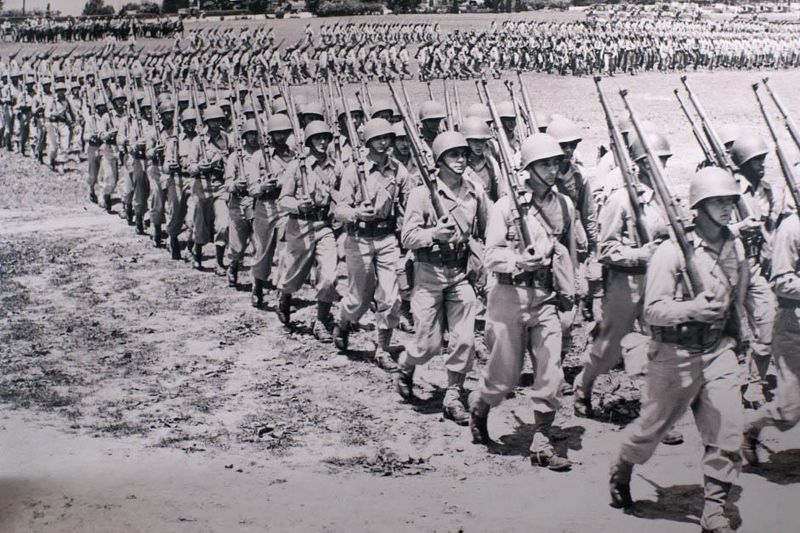
Camp Ritchie was one of the most important—and least known—military installations of World War II. Hidden in the mountains of western Maryland, Camp Ritchie became the U.S. Army’s secret Military Intelligence Training Center in 1942. This was not a place where soldiers simply learned to march, shoot, or dig foxholes. Camp Ritchie was where the Army trained the men who would become the eyes, ears, and minds of Allied battlefield intelligence in Europe.
Nearly 20,000 soldiers passed through Camp Ritchie during WWII. They were trained in prisoner interrogation, counterintelligence, psychological warfare, enemy order of battle analysis, terrain and map reading, aerial photo interpretation, reconnaissance, and the exploitation of captured enemy documents. In simple terms, Camp Ritchie taught soldiers how to understand the enemy, break down his command structure, expose his weaknesses, and turn information into a weapon.
The men trained there became known as the “Ritchie Boys.” Many were European refugees, and a large number were Jewish men who had escaped Nazi Germany, Austria, and other parts of Europe. They had fled Hitler’s persecution, made their way to America, joined the U.S. Army, and then returned to Europe in American uniform to fight the very regime that had tried to destroy them.
Because they spoke German, understood the culture, and knew the Nazi mindset, the Ritchie Boys became some of the most valuable intelligence assets in the Allied war effort. They interrogated German prisoners of war, analyzed captured documents, identified German units and commanders, supported psychological operations, and gave Allied commanders the intelligence they needed to outthink and outmaneuver the Nazi war machine. Historians have long credited the Ritchie Boys with producing a significant portion of the actionable battlefield intelligence used by U.S. forces in Europe.
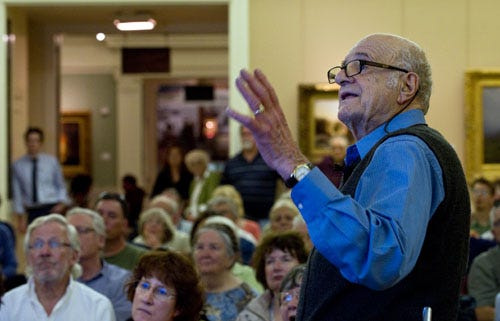
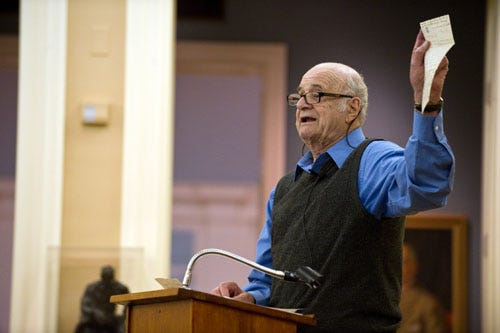
One of the most remarkable men to come out of Camp Ritchie was Paul Fairbrook.
Paul Fairbrook was born Paul Schönbach in Berlin, Germany, in 1923. He was Jewish, and as Hitler rose to power and Nazi persecution intensified, Paul and his family were forced to flee Germany in 1938. Like so many Jewish families of that era, they escaped with little more than their lives, eventually making their way to the United States. He arrived in America not just as a refugee, but as a young man carrying the memory of what Nazi Germany had become.
After arriving in the United States, Paul did what many thought unimaginable—he joined the U.S. Army and volunteered to fight in the war against Hitler. He was sent to Camp Ritchie, where his intelligence, language skills, and firsthand understanding of German society made him a natural fit for military intelligence.
Unlike some Ritchie Boys who were sent directly to the front lines to interrogate German POWs, Paul Fairbrook’s greatest contribution came through analysis and intelligence research. After training at Camp Ritchie, he was assigned to one of the most secret intelligence operations in the United States: the Military Intelligence Research Section at Fort Hunt, Virginia—better known during the war as P.O. Box 1142.
There, Paul Fairbrook became part of a small elite intelligence team responsible for analyzing captured German military documents and building one of the most important intelligence tools used by Allied forces in Europe: the “Red Book,” formally known as the Order of Battle Book of the German Army.
This was essentially an intelligence encyclopedia of the German Army. It cataloged German units, commanders, organization, weapons, operational patterns, and command structures. This information gave Allied interrogators and commanders an enormous advantage. When German prisoners claimed they would not talk, Allied interrogators often already knew their unit, their commanding officer, their deployment history, and even the operational role of their division. That intelligence often shattered resistance before the questioning even began.
In simple terms, Paul Fairbrook helped make sure Allied interrogators walked into the room already knowing the answers.
His work transformed captured Nazi paperwork into battlefield intelligence. That intelligence helped interrogate German POWs, track troop movements, map enemy command structures, understand German military doctrine, and support the broader Allied war effort in Europe. His contribution was not in storming beaches or charging machine guns—it was in helping build the intelligence backbone that made Allied battlefield victories possible.
Paul Fairbrook’s story is one of the most extraordinary of the Second World War: a Jewish boy forced to flee Nazi Germany, who returned in American uniform to help defeat Hitler—not just with a rifle, but with intelligence, analysis, and knowledge.
After the war, like many of the Ritchie Boys, Paul Fairbrook said very little about what he had done. Much of the work remained classified for years. He eventually settled in Stockton, California, where he worked for decades at the University of the Pacific in food service administration and quietly lived the life of a man who had already helped change history.
For years, few people knew his story.
But Paul Fairbrook was one of the hidden architects of Allied victory—a refugee who escaped Nazi persecution, became an American soldier, and helped break the Nazi war machine from the inside out.
Camp Ritchie proved that wars are not won by firepower alone. They are also won by intelligence, language, strategy, and the ability to understand the enemy before the battle even begins.
And men like Paul Fairbrook proved that some of the greatest warriors in history did not just carry rifles.
They carried knowledge.
Retired U.S. Marine Gunnery Sergeant Marvin HernandezGarcia is a combat veteran, community leader, and veterans advocate who serves as Commander of the Stockton Marine Corps Club, Commander of American Legion Karl Ross Post 16, and Chairman of the San Joaquin County United Veterans Council.
This article originally appeared on The Record: Thrift store gift shines light on Stockton WWII Ritchie Boy’s heroic past | Opinion
Reporting by Marvin Estuardo HernandezGarcia, Special to The Record / The Record
USA TODAY Network via Reuters Connect