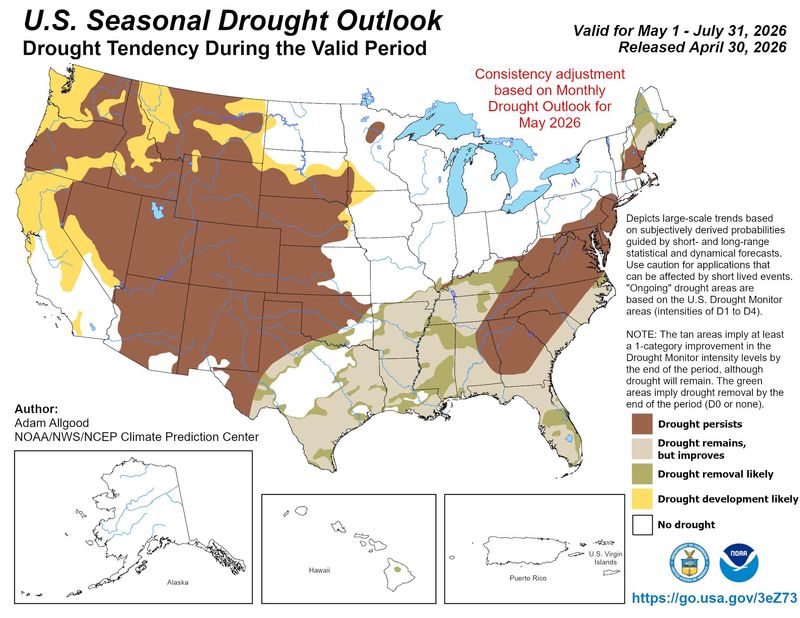
Much of California could be headed for drought this summer as its mountain snow pack dwindles as low as zero, climate scientists said.
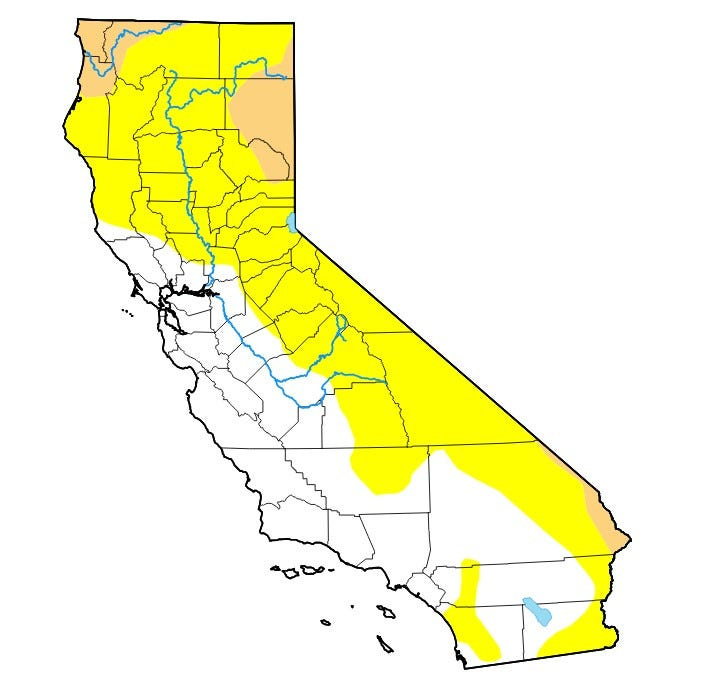
Parts of northern and southeastern California already face moderate drought conditions as of mid-June, according to weather scientists at the U.S. Drought Monitor, and conditions throughout the north and the eastern half of the state are unusually dry.

With much of the state already facing hotter-than-average temperatures, drought conditions could spread to other parts of California. That’s because drought risk increases when dry conditions combine with those warmer than average temperatures, the California Department of Water Resources said.
Much of the problem stems from unusually warm weather patterns in early spring, according to the Department of Water Resources. Warm storms brought more rain than snow to some mountain areas.
While state reservoirs are more full than average as of June 16, lakes rely on meltwater to replenish them, climate scientists said. Less snowpack means less water stored to melt slowly throughout summer and into autumn.
How low did the snow go in June?
The Department of Water Resources reported snow levels in the Northern Sierras and Cascades dropped as low as 0% of their average in June. Snowpack is down to 4% of average in the Central Sierras, 15% in the Southern Sierras.
Climatologists saw the problem brewing early in the year.
Winter storms were warmer than usual, the National Weather Service and water resources department reported. When it was too warm to snow, it rained instead, washing away snow at lower altitudes. Record-high temperatures and a very dry March reached mountain areas and other parts of the state, melting much of the snow.
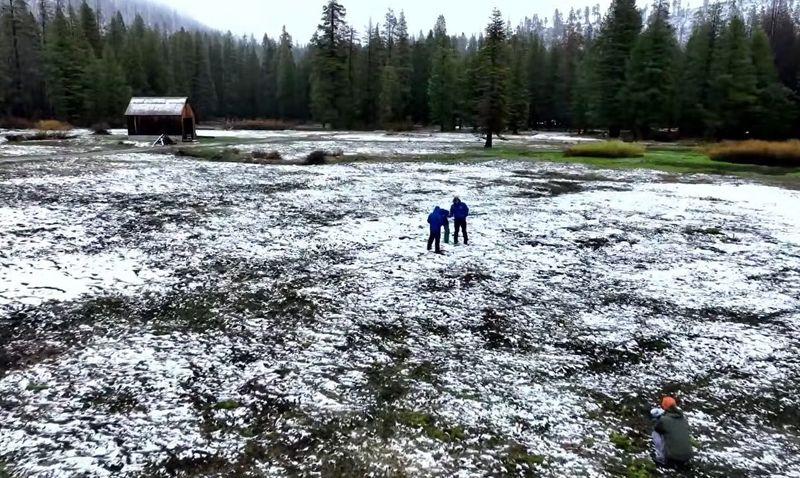
The result was that the snow pack fell to 18% of its average on April 1, according to a report by the California Department of Water Resources, which surveys snow depths throughout the state.
On that date, a time of year when snowpack is historically high in the mountains, state surveyors in Northern California reported they “found no measurable snow” in the Sierra Nevada Mountains. It’s “a stark indicator of how record‑hot March temperatures and high‑elevation rain have erased … snowpack months ahead of schedule,” the water resources department announced in April.
What drought could mean for Californian
Drought conditions usually impact agricultural industries first, the Department of Water Resources said, especially ranchers who graze livestock.
Early drought also hurts rural Californians who rely on private wells, and fish and other wildlife that depend on small streams.
People and animals living in large urban areas — ones with agencies that have multiple water sources — don’t usually feel the effects of drought as quickly, the department said.
Jessica Skropanic is a features reporter for the Record Searchlight/USA Today Network. She covers science, arts, social issues and news stories. Follow her on Twitter @RS_JSkropanic and on Facebook.
This article originally appeared on Palm Springs Desert Sun: Snow pack down as low as 0%. What drought could mean to Californians
Reporting by Jessica Skropanic, USA TODAY NETWORK / Palm Springs Desert Sun
USA TODAY Network via Reuters Connect
By Jessica Skropanic, USA TODAY NETWORK | USA TODAY Network