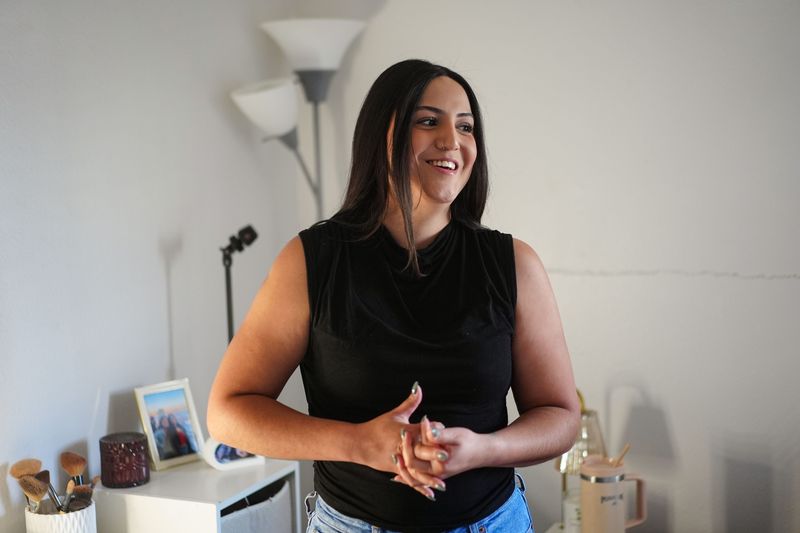
When Milena Araya-Davis held her green card, she thought about the previous versions of herself.
There was the student at Palm Springs High School who began to understand that being undocumented could limit her choices for the future. There was the graduate student who, when she earned her master’s degree, felt “mostly terrified over happy” because she did not know whether she would be able to find a job because of her legal status.

And there was the therapist who was taken into custody during her scheduled green card interview in December and held at Otay Mesa Detention Center for seven days.
The card was mailed to her apartment Friday, June 5, days after U.S. Citizenship and Immigration Services approved her application for permanent residency — giving Araya-Davis legal permanence in a country she had always considered her home.
It also forced her to sit with the contradiction of the past several months.
As The Desert Sun previously reported, agents with U.S. Immigration and Customs Enforcement had arrested Araya-Davis, 27, during her green card interview. Her parents brought her to the United States from Peru when she was 4 and overstayed their visas.
Last year, 10 days before Christmas, she was detained by ICE despite being married to a US citizen, having no criminal record and being in the process of applying for a green card, officially known as a permanent resident card.
An immigration judge later terminated her removal proceedings in January and returned her green card application to USCIS. In late May, the federal agency reopened her case after five months.
‘I never thought I’d get it’
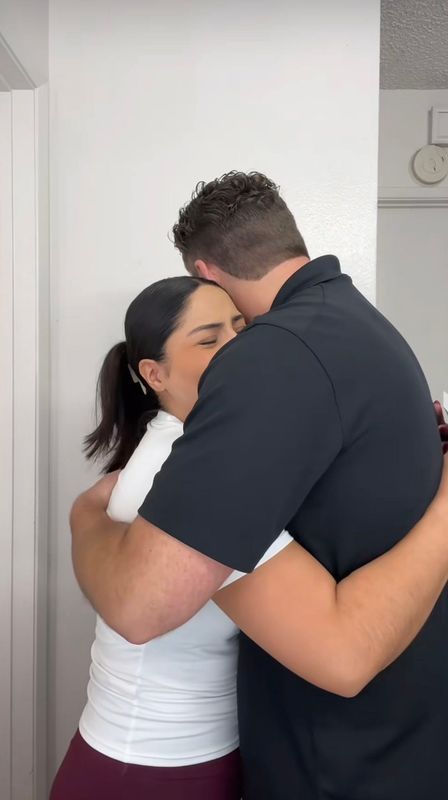
About a week later, USCIS approved her application. Her husband was elated when the notice finally appeared online, and her parents cried when she broke the news.
Now no one, her father told her, could say she did not belong in the United States.
Araya-Davis was, however, more guarded. She had spent too long waiting for updates to trust the approval from USCIS immediately.
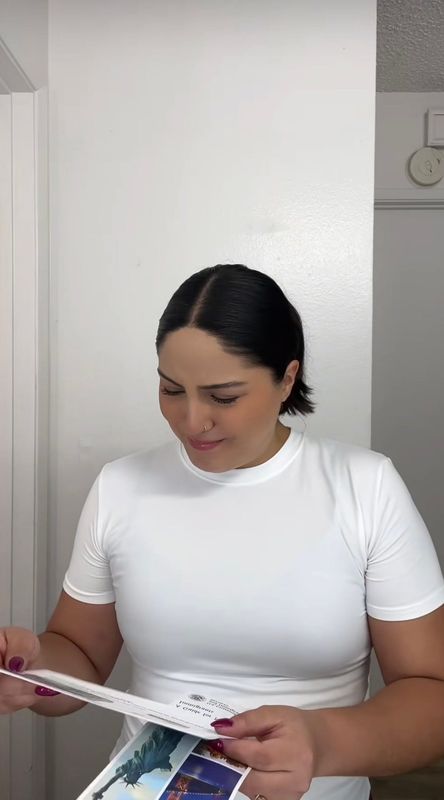
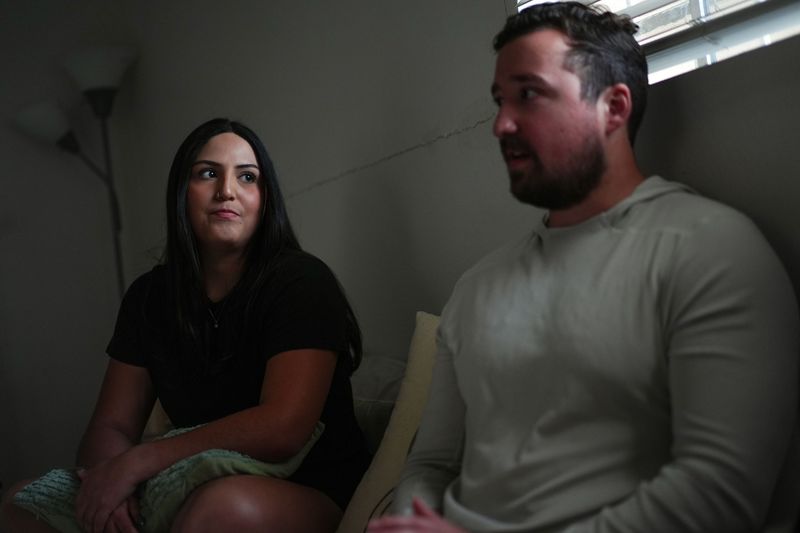
When the envelope was finally mailed to her apartment, she waited for her husband to come home before opening it. He had been beside her at the immigration office in San Diego when agents took her into custody, and she wanted him beside her for that moment as well.
She decided to record herself opening the envelope, mostly so she could look back on the moment later. Inside, she saw the green card and the emotion she had been holding back came all at once.
“I never actually thought I’d get it,” Araya-Davis said in the recording.
Now that the card was in her possession, she found herself thinking about how the process she had entered to resolve her legal status made her question her place in the only country she knew — and how safe she felt even after she was released from detention.
“It’s just like, what was the point?” she said. “I still got it, and yet they just gave me a little bit of trauma.”
That frustration is part of what she wishes more people understood. Immigration, she said, is often talked about as if there is a clear, legal path people choose not to take, or as though families leave their countries without good reason.
She thinks about why her parents left Peru. No one leaves a life behind to emigrate to another country with little money to raise children while sharing a two-bedroom apartment with another family unless there is a reason.
‘My life starts now’
Araya-Davis had rarely planned more than a year ahead.
DACA, the program for people brought to the United States as children, had allowed her to study and work, but when she earned her master’s degree, she was anxious about what came next.
“Now I’m not going to be a student, now I have to get a job and I can’t get a job because I’m undocumented,” she remembered thinking. “Did I just waste two years of my life in this master’s program, then not be able to work?”
Now, she’s beginning to imagine a life that is less defined by what her legal status might allow.
Since her detention in December 2025, she and her husband have left San Diego County only a few times and each trip brought anxiety. With her green card, even the drive to visit her parents in the Coachella Valley feels easier.
It also makes bigger plans possible. She and her husband have envisioned traveling to Mexico, Europe, Alaska — destinations and dreams that no longer feel out of reach.
Then there is Peru, where Araya-Davis was born and has not returned since she left at 4. Her mother is excited to plan that trip with her.
“I don’t know if I’ll ever be 100% healed. I think just getting the green card … is definitely a step in that direction,” she said. “It feels like, OK, my life starts now.”
A clearer conviction
After Araya-Davis was released from Otay Mesa Detention Center in late December, she returned to work within weeks.
She began talking publicly about her detention on TikTok and in media interviews, hoping to help others going through the immigration system feel less alone and to show how complicated it can be. But she later realized that explaining the experience was not the same as processing it herself.
At home, she rarely talked about how much she was still struggling.
“I think I kind of just wanted to feel like I was normal,” Araya-Davis said.
Months had passed since her release and she was still sleeping about two hours a night because of nightmares. Even her 30-minute drive to work from San Diego to Escondido sometimes left her in tears as she worried about being pulled over.
“I just felt super overwhelmed and I couldn’t contain all of my emotions, so I had to take a step back from work,” she said.
In April, she hit a low point, what she called a “rock bottom,” so she called her supervisor to request a leave of absence. That night, she slept for 13 hours, woke up for two, then slept again.
Looking back, she wishes she had given herself more time after her release instead of trying to resume her routine so quickly. If anything, Araya-Davis was reminded that healing does not follow a clean timeline, even for someone trained to help others work through their own traumas.
“I wish I would have gotten (the green card) and immediately been like, ‘Nope, I’m fine, and I’m all healed now, and everything’s fine and dandy,'” she said. “It’s definitely helped, but I think it’ll be a little bit more until I can kind of process everything.”
Her new immigration status has given her stability, relief and a sense of safety she did not feel before. While it hasn’t undone the trauma of detention or returned her to the person she was before, it has given more space to think about what she wants to do with what happened to her.
In detention, she learned people could be held for months or years with no therapist or psychologist available to help them process what was happening. She has started looking into ways she could offer pro bono therapy, volunteer or work with community organizations that serve immigrants who have been detained.
She is also considering one day taking on a more formal role in immigration cases by preparing mental health reports that can help attorneys and judges understand what detention, deportation or family separation does to someone’s mental health.
The reports, called immigration evaluations, do not decide a case on their own, but they can help put a person’s hardship, family dynamics and cultural ties into their record. Those evaluations can be expensive, Araya-Davis said, and Spanish-speaking therapists who provide them are especially needed near the border.
Her work is one way her experience in detention may inform what comes next for Araya-Davis. Citizenship is another.
Because her green card is conditional and valid for two years, she’ll be eligible to apply for U.S. citizenship in about three years.
And after 23 years of living under policies she could not vote on, she’s looking forward to having a formal say in what comes next.
“I don’t think people realize how lucky they are to vote because sometimes we feel like our votes don’t make a difference. But I think they do in our communities when you’re paying attention,” Araya-Davis said. “So I’m very excited for that.”
Jennifer Cortez covers education in the Coachella Valley. Reach her at jennifer.cortez@desertsun.com.
This article originally appeared on Palm Springs Desert Sun: ‘My life starts now.’ Palm Springs grad held by ICE gets green card
Reporting by Jennifer Cortez, Palm Springs Desert Sun / Palm Springs Desert Sun
USA TODAY Network via Reuters Connect
By Jennifer Cortez, Palm Springs Desert Sun | USA TODAY Network