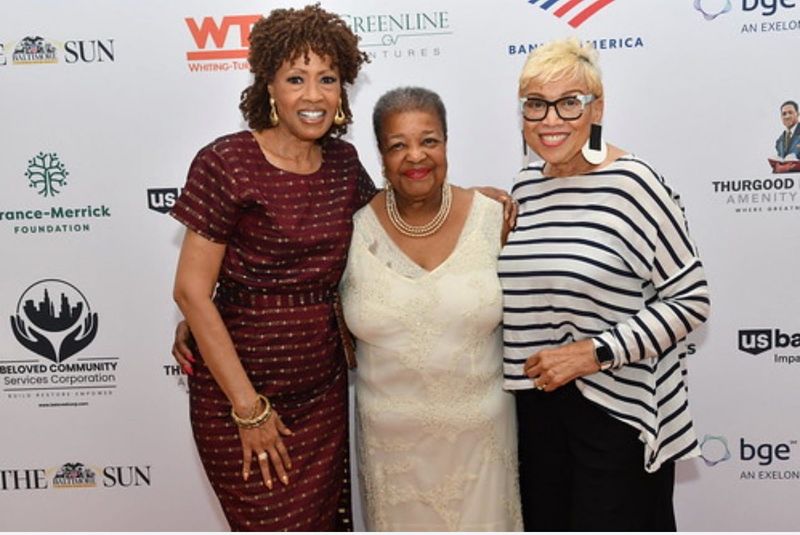
Montré Moore loves to tell people that Lillie Bell Wilson shared a birthdate with pop superstar Michael Jackson.
“There is just something to that,” Moore said. “Both of them had this magnetism that the world seemed to love.”

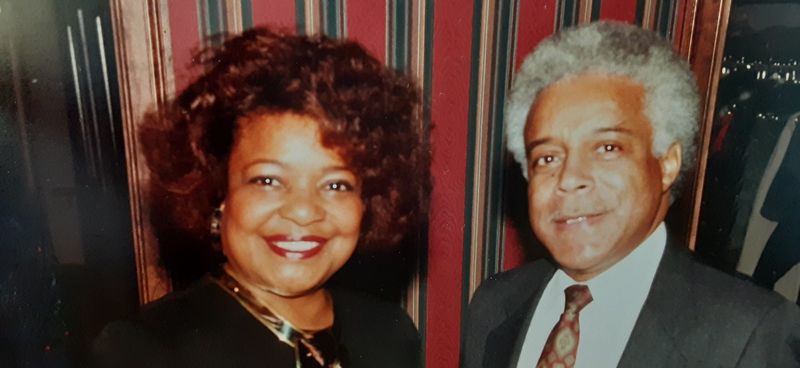
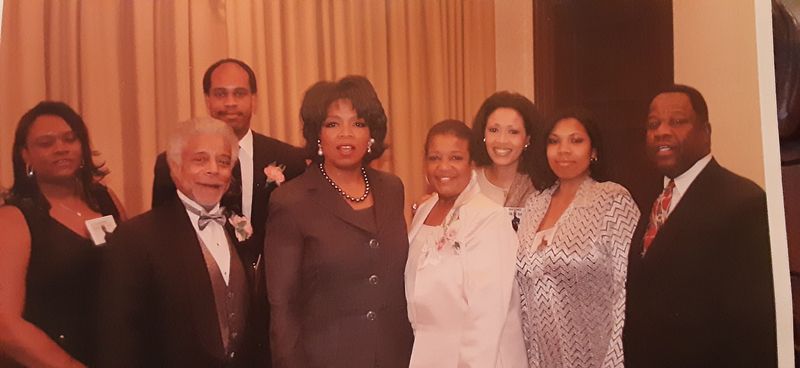
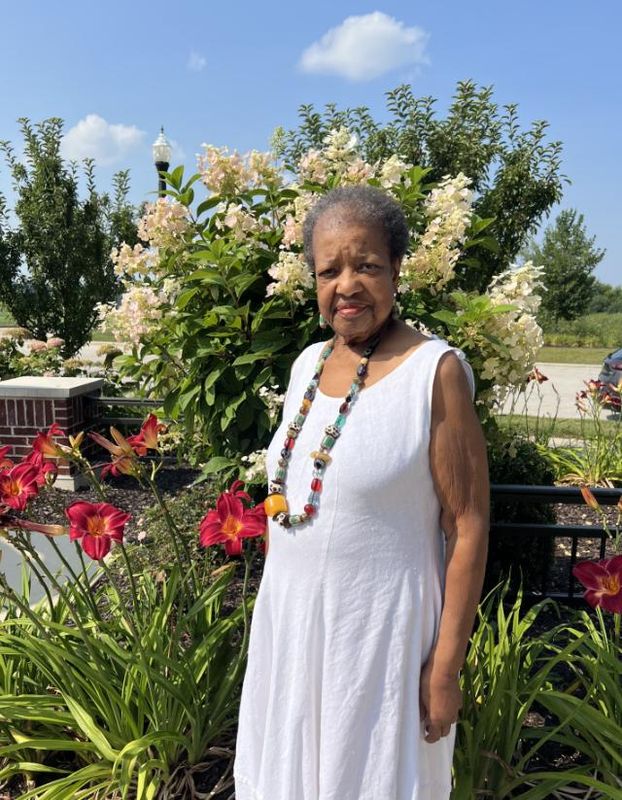
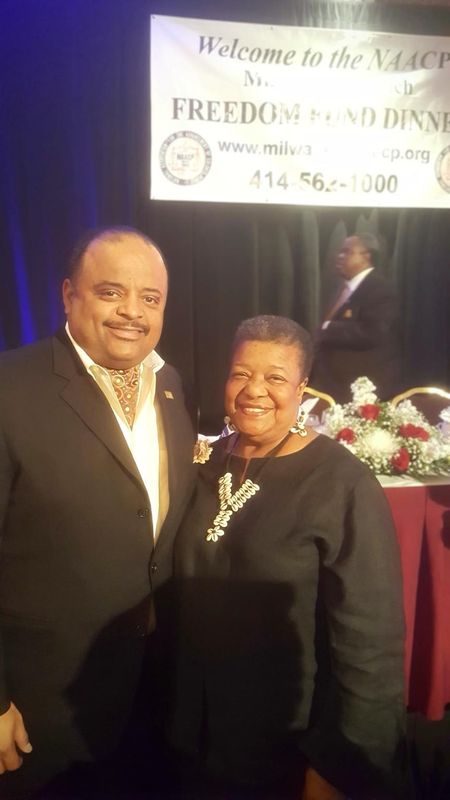
Wilson, the president emeritus of the Waukesha County NAACP, was a civil rights leader, a trailblazer and community resource instrumental in the development of Black populations in the suburban Milwaukee area county.
Known affectionately as “Bell,” Wilson died peacefully on Oct. 14 surrounded by her loved ones. She was 88 years old.
As a member of the leadership for a historic American organization, Wilson leaves behind a legacy of firsts in Waukesha County and in the city she resided in — Brookfield. Wilson and her husband of 64 years, Michael Erle, were one of the first Black couples to settle down and build a home in Brookfield, according to the NAACP.
“She was unapologetically not afraid to stand up, not only for herself, but for those that look like her,” said Moore, the 44-year-old first vice president of the Waukesha County NAACP and Wilson family spokesperson.
“She had tremendous impact, not only on the community of Waukesha County, but the state of Wisconsin as a whole,” he added. “A lot of the progress made in the last 50 years, (Wilson) and her family were instrumental in making some of those things happen.”
Wilson was trailblazer that pushed companies to address disparities
Born on Aug. 29, 1937, in Brooksville, Mississippi, Wilson was raised in Beloit. A graduate of the University of Wisconsin-Stevens Point, she became one of the first Black employees to work for and enter the leadership ranks of several major corporations, including Schlitz Brewing Company and GE Healthcare.
While at GE, she helped create one of the first diversity partnerships between a Fortune 500 company and the Waukesha County NAACP — a chapter she helped found in the mid-’80s.
“Not only did she show up for a paycheck and to represent her family, but she also showed up to ensure that these corporations did not move forward and grow all these great systems of wealth without pouring into communities,” Moore said.
Aside from her professional career, Wilson sat on multiple national and state boards, including the Waukesha United Way. She was glamorous, well-respected and well-connected, Moore said. It was typical for her to be representing the NAACP at events that featured national Black figures.
Wilson was longtime education advocate, supporter of Chapter 220
Having held multiple roles with the NAACP, including a board position with the national organization, Wilson also was a trusted resource for school districts looking to embrace diversity in Waukesha County.
Wilson was instrumental in Waukesha area schools celebrating Martin Luther King Jr. Day by offering programming on the national federal holiday. She also advocated for an extension of the Chapter 220 program.
The state’s now-defunct and only integration program aimed to improve diversity in suburban schools, typically by busing kids from majority Black and Brown neighborhoods into majority-White suburban schools.
Moore said Wilson passionately advocated for the program over the past decades in Brookfield schools, as segregation can still be prevalent. But the Wisconsin Legislature ended the program in 2015 following the rise of other school choice programs and open enrollment.
“She created a network of minority parents within Brookfield,” Moore said. “With an understanding of being raised and educated around people that don’t look like you. She received a lot of pushback. The Brookfield community fought really hard to be very traditional, let’s put it that way.”
But Wilson helped put three children and four grandchildren through schools and the importance of her kin experiencing diversity was never wavering, Moore said.
“She continued to show up even in her latter years,” Moore said.
Wilson was a constant presence at public forums and knew many principals and administrators on a first-name basis.
“They actually reached out to her (consistently) for support,” Moore said.
Waukesha NAACP says the work continues
For the Waukesha County NAACP, Wilson’s death means others must continue the work.
“We have a responsibility to carry on her legacy,” Moore said. “Some of (Wilson’s) intuitiveness makes a great foundation for that.
“Not only as a branch, but as a county, we have to move forward because some of this was sacrificed. She put her family’s reputation and safety — let’s be honest — on the line many times fighting for equality, justice and inclusion in Waukesha County.”
The county’s NAACP chapter is much in line with the Milwaukee and national NAACP, in that it remains resolute in its commitment to its principles.
“How do we ensure that every American has some of the basic essential elements that they deserve — affordable housing, affordable health care, access to clean water, access to clean air, access to affordable energy. All of these things are important for every American to have,” Moore said.
A public memorial for Wilson in the Waukesha community will be announced on a future date.
This article originally appeared on Milwaukee Journal Sentinel: Lillie Bell Wilson leaves legacy of advocacy for Black Wisconsinites in Waukesha County
Reporting by Drake Bentley, Milwaukee Journal Sentinel / Milwaukee Journal Sentinel
USA TODAY Network via Reuters Connect