Early voting for Lubbock’s May 2 municipal election is underway, with the race for mayor at the top of the ballot.
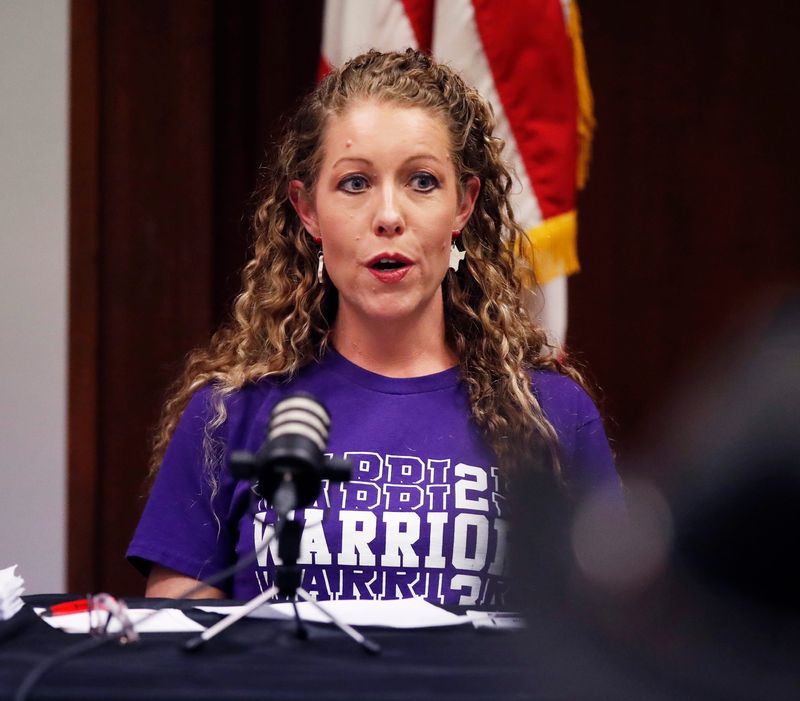
One of the mayoral candidates is U.S. military veteran Peggy Bohmfalk.

In an effort to get to know the candidates in this race, the Avalanche-Journal sent out a questionnaire to all the candidates to get to know their platforms and priorities.
Here are Bohmfalk’s answers to the questionnaire, as early voting is from April 20 – April 28. Election Day is May 2.
Q: The hyperscale data center proposal for northeast Lubbock was rejected by Planning and Zoning and then withdrawn. The developer plans to resubmit. What criteria should the city require before approving a project of this scale — and should the city require mandatory water and energy consumption disclosure from data center operators?
A: Mandatory water and energy consumption disclosure should be non‑negotiable for any development of this scale. Transparency is essential so city government, advisory committees, and residents can accurately determine whether a project provides a net benefit to Lubbock. No large-scale project should move forward without full access to verifiable data regarding its long‑term impact on infrastructure, utilities, and quality of life.
Q: LEDA’s CEO said the project would bring significant tax revenue. Critics say the same land zoned for residential and commercial use would generate more long-term revenue. How do you evaluate that tradeoff? Is Lubbock even ready for an AI project, given the recent developments across the state on AI Data centers?
A: Claims of “significant tax revenue” are meaningless without clear, itemized numbers and an honest break‑even analysis. The city must evaluate whether projected revenue is sufficient to offset the long‑term costs to infrastructure, water supply, energy demand, environmental impact, and surrounding neighborhoods. Without adequate mitigation, such projects risk driving up water and energy costs for residents. Given Lubbock’s current fiscal and water constraints, I am not convinced a hyperscale AI data center is an appropriate or responsible fit for the city at this time.
Q: The City, like other governing entities, is facing budget constraints, and recently the city dissolved impact fees. Last year the city also saw shortfalls in sales tax collections and lost dollars from LCAD. Given that the 2026 budget already required a tax rate higher than the no-new-revenue level just to maintain current services and the growing size and population of the city, are you for or against raising the tax rate? Explain your reasoning
A: On a personal level, I believe property taxes are immoral and unconstitutional, and I hope future state and federal reforms eliminate them altogether. However, governing requires dealing with present realities. By eliminating impact fees, the city has forced existing residents to subsidize new growth. Without reinstating those fees, Lubbock will likely face service cuts and higher taxes. At that point, it is not a matter of desire but necessity. Ideally, growth should pay for itself, not punish long‑time residents.
Q: Lubbock’s crime rate has dropped significantly, but staffing hasn’t kept pace with population growth. How many additional sworn officers and firefighters does Lubbock need, and how will you pay for them without raising taxes or would you raise the tax rate for this reason?
A: Public safety must keep pace with growth. I support maintaining or increasing the recommended ratio of at least two sworn officers per thousand residents, along with corresponding increases in fire staffing. The most responsible way to fund these needs is through smarter growth policies, restored impact fees, and better financial planning — not simply raising taxes on residents who are already stretched thin.
Q: The First Friday Art Trail generates tourism, foot traffic, and economic activity downtown — exactly what HOT funding is designed to support. In 2024, the council cut that funding over content concerns, then restored it with new restrictions requiring grantees to avoid issues of a divisive or controversial nature. Who defines “controversial” and is that standard enforceable without becoming viewpoint-based censorship?
A: The term “controversial” should remain in the public domain, not narrowly defined. Vague language allows citizens — not elected officials — to decide for themselves what they support. That flexibility preserves public dialogue and avoids viewpoint‑based censorship while maintaining public accountability.
Q: Hotel Occupancy Tax is paid by visitors, not Lubbock taxpayers. Should HOT-funded cultural grants be evaluated primarily on their economic and tourism impact, or should the council exercise content-based oversight of what artists and venues present?
A: Both factors matter. Economic and tourism impact should be the primary purpose of HOT funding, but transparency, accountability, and public trust cannot be ignored. The balance must be handled carefully to avoid government acting as an arbiter of speech while still ensuring taxpayer‑protected funds are used responsibly.
Q: The feasibility study noted the Civic Center has reached “the end of its functional life”. What is the cost of doing nothing — how much economic activity is Lubbock losing by not having a competitive convention facility?
A: Doing nothing costs Lubbock lost conventions, tourism dollars, and economic activity year after year. A noncompetitive facility limits our ability to attract regional and national events, which directly impacts hotels, restaurants, and local businesses.
Q: Private-public partnerships have been a contentious point with the City of Lubbock with a big project being stalled for a while — outside of the city control— while smaller ones under the city’s purview have succeeded but not without their complaints — lack of funding, ambitious ideas having to be edited down or the entities having to place a timeline on it. Should the city consider pursuing public-private partnerships for the civic center project and/or for future projects?
A: Yes. The city does not have the financial capacity to fund major capital projects alone. Well‑structured public‑private partnerships can improve quality of life, increase sales tax activity, and support local businesses — provided they are transparent, realistic, and protect the public interest.
Q: Lubbock loses college graduates to bigger cities. What specific quality-of-life investments would you make to retain young professionals — and is “affordable” enough to compete with cities that offer more cultural and recreational amenities?
A: Affordability alone is not enough. Young professionals also want cultural amenities, recreation, vibrant downtown spaces, and opportunities to build a future. Strategic investments in these areas — paired with responsible growth policies — are essential if Lubbock wants to retain its talent.
Q: If elected, what issue would be your top priority, and how would you work with council to accomplish it?
A: My top priority is stopping Lubbock from funding its own financial decline. Current policies force residents to subsidize unchecked growth while infrastructure, utilities, and services fall behind. This must stop. Transparency, independent financial analysis, and smart‑growth policies — including impact fees — are essential. Growth over the next two election cycles is critical, and how we manage it will determine whether Lubbock thrives or struggles for decades to come. I will work collaboratively with council members by respecting district priorities while insisting on fiscally responsible, data‑driven decisions to preserve the unique character of Lubbock.
Mateo Rosiles is a reporter for the Lubbock Avalanche-Journal and USA TODAY Network in Texas. Got a news tip for him? Email him: mrosiles@usatodayco.com.
This article originally appeared on Lubbock Avalanche-Journal: Get to know about Lubbock mayoral candidate Peggy Bohmfalk, her platforms
Reporting by Mateo Rosiles, Lubbock Avalanche-Journal / Lubbock Avalanche-Journal
USA TODAY Network via Reuters Connect