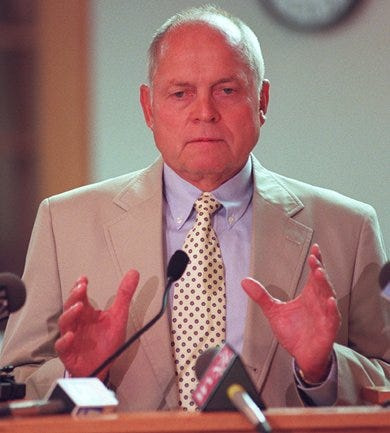
Simon L. Leis Jr., the hard-charging former sheriff and prosecutor who took on pornographers, go-go clubs and the Robert Mapplethorpe photo exhibit, died Saturday in Cincinnati. He was 92.
His family said the cause of death was pneumonia, which followed a yearslong battle with cancer.

A retired Marine who grew up on Cincinnati’s West Side, Leis spent his more than 40 years in public life fighting battles that would burnish the Queen City’s conservative reputation for decades.
To friends and admirers, Leis was a hometown hero who devoted his career to defending traditional American values. To his critics, he was a closed-minded tough guy who targeted art and speech he didn’t like.
The late Hustler publisher Larry Flynt, whose porn empire was a constant source of agitation to Leis, once called him a “storm trooper.”
Leis took the scorn in stride. Court cases came and went, but Leis was a constant presence in the community throughout the last half of the 20th century, fighting the culture wars that shaped local politics and society.
“Si had a lasting impact,” said H. Louis Sirkin, a Cincinnati defense attorney who butted heads with Leis in courtrooms for years.
“He set the tone,” said retired Hamilton County Common Pleas Judge Robert Ruehlman, who worked for Leis as a young prosecutor in the 1970s. “He set the standard.”
Leis once said his sense of right and wrong, instilled in him by a Jesuit education and a father who worked for years as a mob-busting prosecutor, guided every decision he made.
“I’m a different bird,” Leis told The Enquirer in a 1999 interview. “If I had an issue that I knew might ruin my political career, but it was the right thing to do, I wouldn’t hesitate ruining my career.”
For the most part, his career did just fine. He was a charismatic, law-and-order Republican in a town dominated for decades by Republicans. Over the course of his career, Hamilton County voters elected him prosecutor, judge and sheriff. He never lost a race.
While his critics, including some fellow Republicans, complained he could be stubborn and self-righteous, friends said Leis enjoyed a good laugh as much as a good argument. He counted a few liberals among his friends and regularly attended social gatherings where he chatted up Democrats, opposing lawyers and even journalists, who he tended to view with suspicion.
His family remembered him Saturday as “a devoted family man, husband, father, grandfather, great grandfather, relative, and friend whose love for his family and friends remained constant throughout his life.”
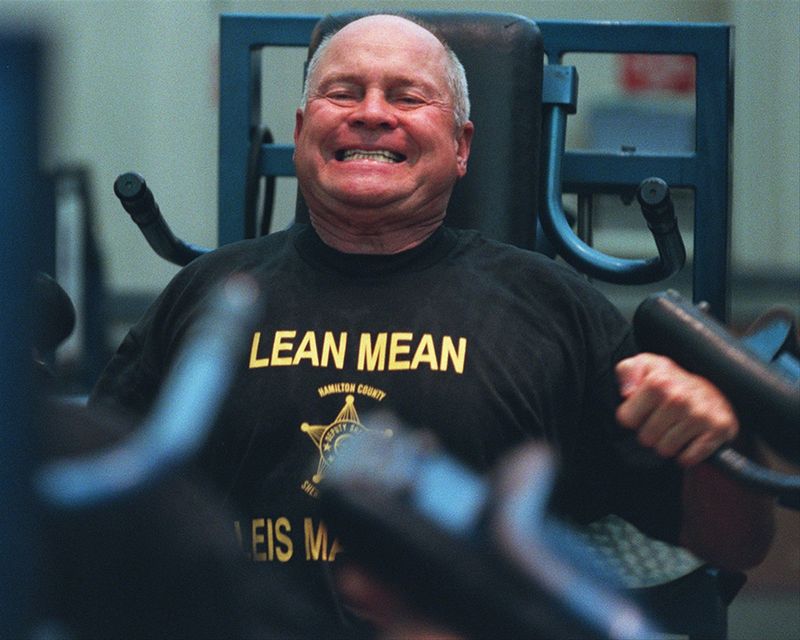
And while he cultivated his public image as a rigid discipliniarian, Leis wasn’t above poking fun at himself. During his early morning workouts, a routine he followed into his eighties, he joked around with the other regulars at his gym and sometimes wore a T-shirt that read, “LEAN MEAN LEIS MACHINE.”
“I really liked the guy,” said Sirkin, who worked out at the same gym for years.
Sirkin said Leis once complained to him about the defense attorney’s aggressiveness in court, asking, “Why do you have to sue me?”
Sirkin responded, “That’s the only way I get to see you.”
They would see a lot of each other over the years. When it came to his work as a prosecutor and sheriff, Leis was unwavering and often uncompromising. He said many times that if he believed he was right, he felt compelled to act.
Even if it meant picking a fight.
A tough but fiercely loyal boss
Born in 1934 to German Catholic parents, Leis was taught early on that there were two ways to live your life: the right way and the wrong way.
When he was a child, his father, who later became a judge in Cincinnati, traveled the state as a prosecutor assigned to root out organized crime. His work, one newspaper declared, left communities “washed white as the driven snow.”
Leis talked admiringly of his father years later, in an interview with The Enquirer. “He was a hell of a lawyer,” he said. “He had a great reputation.”
After graduating from St. Xavier High School and moving on to both Holy Cross College and Xavier University, where he studied history and English, Leis joined the Marines. It was, he said, a perfect fit for a young man who craved order and discipline.
He might have made a career as a Marine, Leis said, if he hadn’t married his wife, Margery, and decided to return to Cincinnati, where they’d raise three daughters.
By 1965, he’d earned a law degree and was on a path similar to his father’s. He became an assistant prosecutor and was elected Hamilton County’s top prosecutor in 1971.
He took on prominent officials and public figures in a slew of high-profile cases. Pressure from Leis led to the resignation of then-Councilman Jerry Springer in 1974 after the disclosure in court of checks Springer had made out to prostitutes.
In 1976, he indicted Cincinnati’s well-regarded police chief, Carl Goodin, on bribery charges. Leis agonized over the indictment, which divided the city and cost him friendships with Goodin and several police officers.
“I was physically sick,” Leis said later, recalling the case. “I felt so damn bad. But it was the job I had to do.”
In 1977, Leis shut down a Cincinnati production of the musical “Oh! Calcutta!” for a day, objecting to scenes that included nude actors. At a subsequent performance, some of those actors unfurled a banner reading “Simon Sez: No-No,” prompting roars from the audience.
A few years later, a gay bar opened near Fountain Square. It’s name? Simon Says.
An early riser with the discipline of a Marine
Leis was a demanding boss. He brought a military rigor to the job, rising most mornings before 5 a.m., driving to the gym and then donning a suit, tie and shining black shoes before heading to the office. He led a disciplined life, and he expected the same from his employees.
Ruehlman recalled the day an assistant prosecutor showed up for work with the beginnings of a mustache sprouting above his lip. Leis, who had a strict no facial-hair policy, went ballistic.
Ten minutes later, Ruehlman said, the chastened prosecutor was at a barbershop across the street, getting a shave.
Some offenses couldn’t be fixed so easily. Once, Ruehlman said, an assistant prosecutor told Leis he didn’t agree with his policy of raiding adult bookstores and charging them with obscenity.
Leis told him to pack up his desk and get out. The message was clear: If you’re not on board with the mission, find another job.
But Ruehlman said Leis was fiercely loyal to friends and longtime associates. He encouraged his employees to spend time with their families and he supported them when they had to make tough decisions.
“He would bend over backwards for you,” Ruehlman said.
Taking on a pornographer, then an art museum
It didn’t take long for Leis’s anti-pornography campaign to run headlong into Flynt, who owned go-go clubs and adult bookstores all over Ohio, including in downtown Cincinnati. In 1977, he charged Flynt with obscenity.
The law on obscenity is tricky. To win the case, Leis had to convince a Cincinnati jury that Hustler magazine violated the “community standards” of Hamilton County. Unlike other crimes, the standard can change over time and can vary from community to community. Only a jury in an obscenity case can determine what the standard is at any given time.
To simplify things for the jury in Flynt’s case, Leis drew a chalk line on the courtroom floor. “To protect the community,” he said, “you’ve got to draw that line.”
He won the case and Flynt briefly went to jail. An appeals court, however, overturned the verdict, freeing Flynt and transforming him almost overnight into one of the nation’s most famous free speech advocates.
Though he lost on appeal, Leis’s pursuit of Flynt reinforced Hamilton County’s reputation as a no-go zone for hard-core pornography. Adult bookstores all but disappeared and Hustler magazine vanished from store shelves here for almost two decades.
“He was committed,” Sirkin said. “He believed in what he was doing.”
After a brief stint as a judge in the early 1980s – a job that bored him because it took him out of the fight – Leis jumped back into the arena by becoming Hamilton County’s sheriff.
Under Leis, sheriff’s deputies had to complete an obstacle course each year to assess their physical fitness.
“Prior to him, the sheriff’s office was kind of a cowboy boots environment,” said Sean Donovan, Leis’ longtime chief deputy sheriff. “As we professionalized and improved, it drew other agencies to do the same thing.”
Leis transformed the office in other ways, too. As sheriff, he resumed the pursuit of obscenity cases that he began as prosecutor.
In 1990, Leis charged the Contemporary Arts Center for exhibiting Robert Mapplethorpe’s photos, which included some sexually explicit images. Leis said the case was no different than the Flynt case.
But taking on a foul-mouthed pornographer was one thing. Raiding a museum and charging its director for displaying an artist’s work was another.
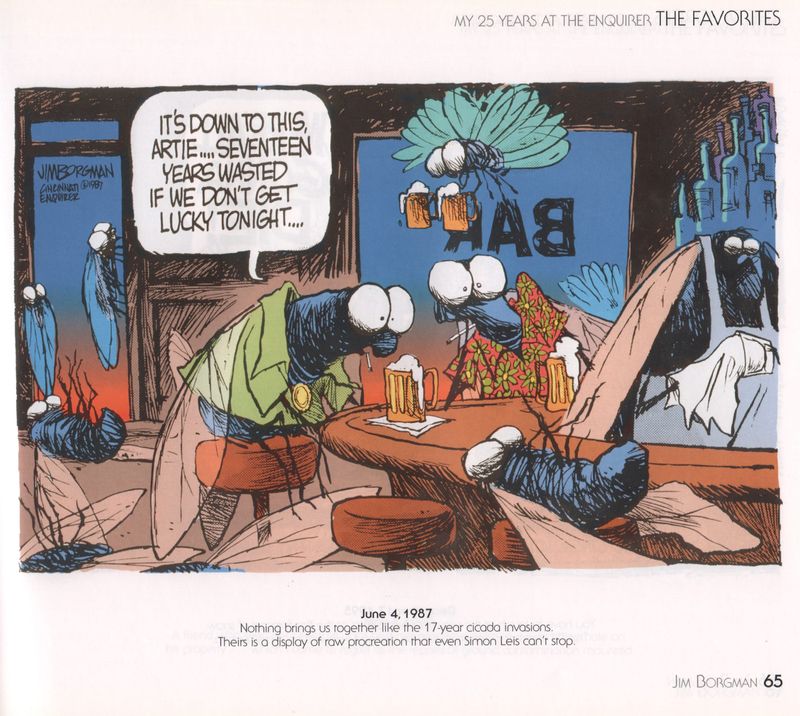
Protesters filled the streets and criticism poured in from across the country. Former Enquirer editorial cartoonist Jim Borgman drew a cartoon of Leis hauling away Michelangelo’s “David”. The Chicago Tribune’s Mike Royko wrote a column mocking the decision to charge the museum.
“All they’ve done is hype the exhibit and make Cincinnati look like a big rube town, which I’ve never thought it was,” the late Royko wrote. “It’s always struck me as being a medium-sized rube town.”
The museum won. And Leis began to encounter more resistance when he took on obscenity cases. In the age of the internet, when explicit material could reach anywhere, including Cincinnati, community standards became less relevant.
The world around him had changed, but Ruehlman said Leis never did.
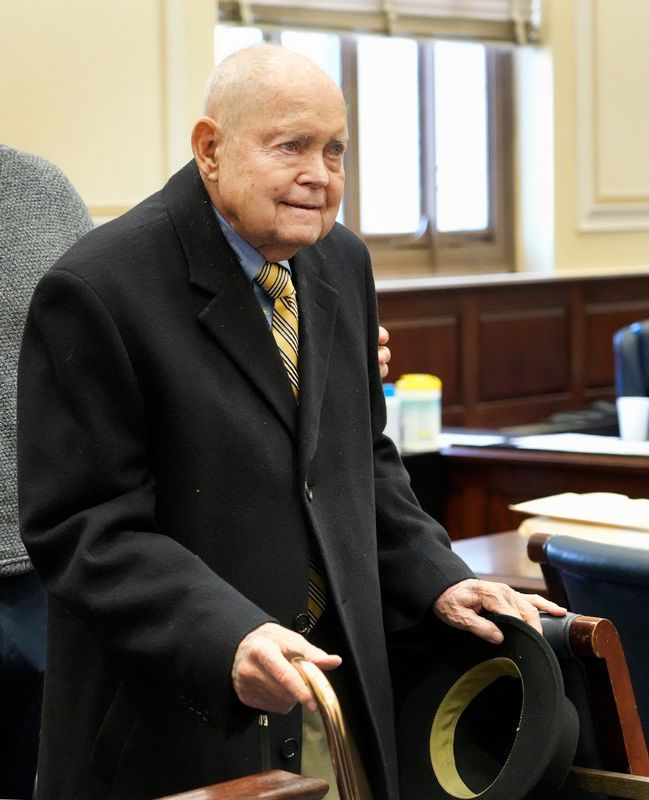
He said he saw Leis at the gym every week after he retired, even when his health began to deteriorate during a long battle with cancer and he needed a walker to get around. Leis still arrived early and worked hard, determined to keep living his life as he always had.
“Most people would just give up,” Ruehlman said.
Leis told The Enquirer in 1999 that giving up on something he believed in was never an option, no matter how much praise or criticism he received. Asked if he had any regrets about his choices or his career, Leis thought about it for a moment before answering.
“No,” he said. “Nothing stands out.”
Funeral arrangements have not been announced. The family asks that in lieu of flowers, donations be sent to Madi’s House, a nonprofit organization established in memory of Leis’s granddaughter, who died by suicide in 2019. Donations will help fund the construction of the Si Leis Wellness & Fitness Center, a mental health facility serving teens and young adults: Madi’s House, 2360 Kipling Ave., Cincinnati, Ohio, 45239.
Former Enquirer staff writer Mark Rosenberg contributed to this obituary.
This article originally appeared on Cincinnati Enquirer: Simon Leis, lawman who took on Larry Flynt, Mapplethorpe, dead at 92
Reporting by Dan Horn, Cincinnati Enquirer / Cincinnati Enquirer
USA TODAY Network via Reuters Connect
By Dan Horn, Cincinnati Enquirer | USA TODAY Network