

By Tom Dennis

Common Goldeneye, Bucephala clangula
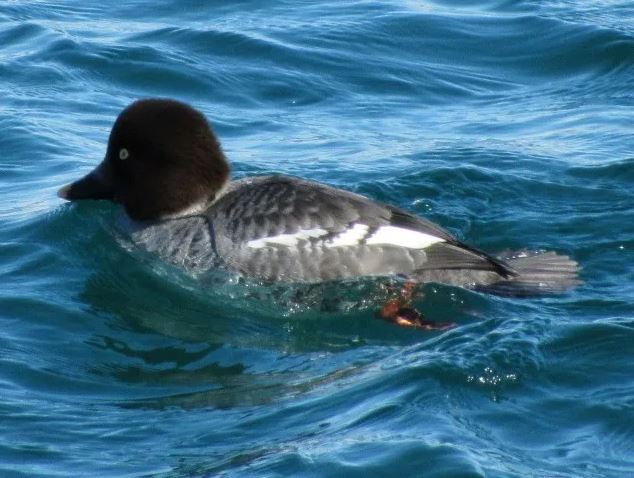
This week’s highlighted species in our Blue Water Nature Series, is the Common Goldeneye, a beautiful diving duck that is seen locally only during winter months. This medium sized duck, weighing in at about two pounds, is named for its yellow eye and when seen on a bright day the eyes resemble shiny jewels. Let’s take a closer look at this beauty so we can identify them easily and appreciate them more.
The genus name Bucephala comes from an Ancient Greek word meaning bullheaded, with the species epithet clangula derived from the Latin clangere, “to resound”. They have unique vocalizations for ducks but they are rarely hear during the winter, non-breeding season.

Adult males have a circular white patch between the eye and gray bill on an otherwise iridescent green head. The breast is pure white contrasting sharply with a black back and wings with white wing patches and bars. The female birds have a chestnut brown head, mottled gray-brown back, white belly and neck ring with white wing bars that are less conspicuous compared to the males. Both sexes have the golden eye and yellow feet. The rarely seen Barrow’s Goldeneye is distinguishable from the Common by its crescent-shaped white spot in front of the eye and a glossy purple-black head.

Goldeneyes nest in tree cavities, made by broken limbs and those made by large woodpeckers, specifically Pileated Woodpeckers, and they return year-after-year to the same cavities. They will also use man-made nest boxes. Breeding is along lakes and rivers of boreal forests in Alaska and throughout Canada with the exception of the Pacific coast. The females accomplish brooding responsibilities and do so competitively even to the point of killing the young of other females. They migrate to open waters in the lower 48 states in the winter preferring protected coastal and open inland waters at temperate latitudes.
These diving ducks forage underwater and their diet includes aquatic insects and crustaceans supplemented locally with aquatic plants. The Common Goldeneye is the only duck in North America known to benefit from lake acidification. Many acid-tolerant insects provide plentiful food for Goldeneyes and most fish can’t survive in these environments, thereby reducing the competition.
We usually see Buffleheads at the Winter Bird Blast, jointly sponsored by Friends of the St. Clair River and Blue Water Audubon Society. The fifth annual popular event will be held on Saturday, February 23, 2019 and all ages are welcome to attend to learn more about this and many other local winter birds. The indoor lesson, followed by the outdoor fieldtrip, starts at 9AM at Donald Dodge Auditorium in the St. Clair County Building and will then be followed by a painting event at Studio 1219 where experts will help you create your very own masterpiece of this beautiful duck.
Tom Dennis is a free-lance writer, passionate birder, zoologist, and naturalist.
