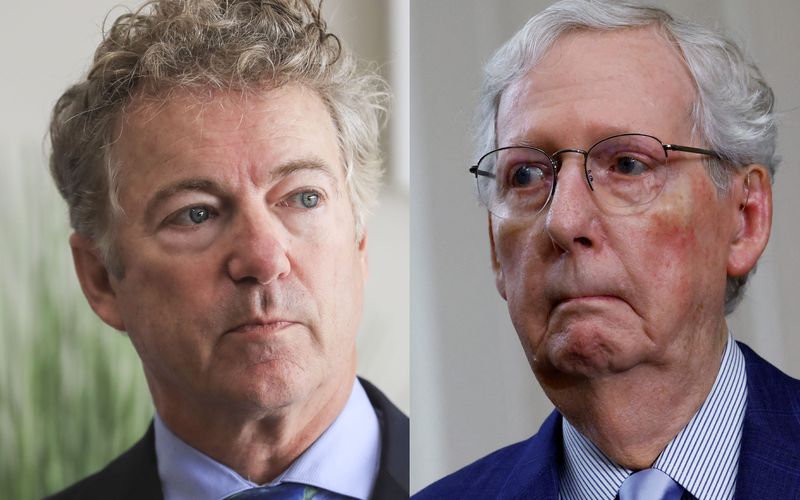
U.S. Sen. Mitch McConnell’s push to close a legal loophole that allowed intoxicating hemp products to hit the marketplace seven years ago has turned into a dividing line in the advancing effort to reopen the federal government, with fellow U.S. Sen. Rand Paul opposing his Kentucky colleague.
After a critical vote on Nov. 9, senators are moving forward with a potential plan that would end the government shutdown, which has dragged out for more than 40 days. The path forward includes combining three appropriations measures into one bill, which could pass through Congress this week and is expected to be approved if it reaches President Donald Trump’s desk.

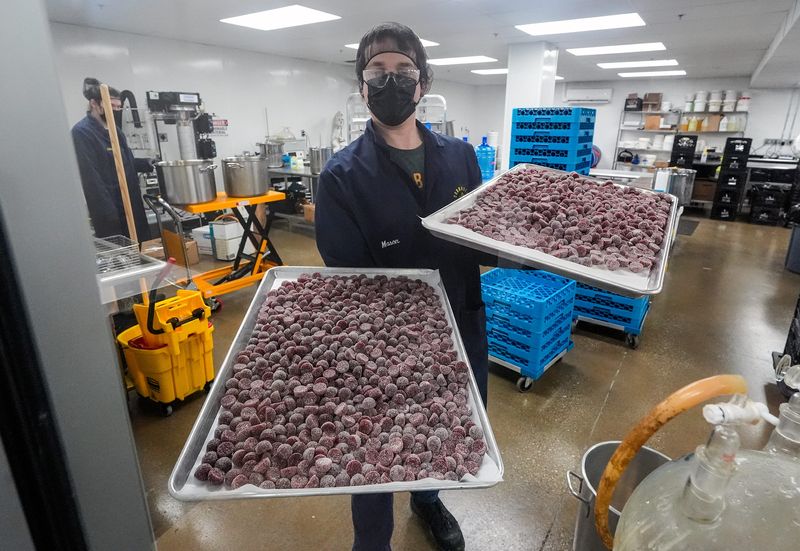
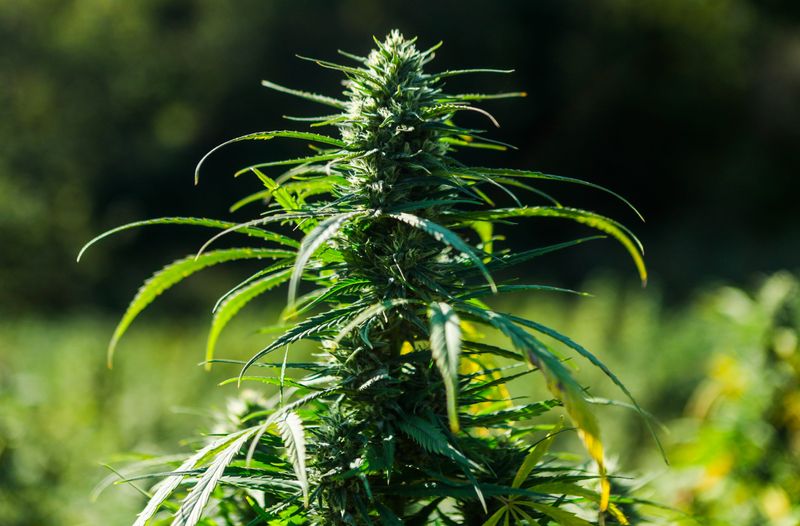
One of those measures, though, includes language that would ban products that include more than 0.4 milligrams of THC, the intoxicating chemical in marijuana. And in recent years, hemp — which contains THC in smaller amounts than its “illicit cousin,” as McConnell has called marijuana — has built a booming industry in Kentucky.
The measure would go into effect 365 days after the potential law is on the books. But industry advocates such as Jim Higdon, cofounder of Louisville-based Cornbread Hemp, say the legislation would all but wipe out the hemp industry, a key piece of Kentucky’s agricultural economy.
The government shutdown began Oct. 1. If current proposals advance, it could be over by the end of the week. On Nov. 10, the legislation to end the shutdown was approved in the Senate on a 60-40 vote — Paul was the lone GOP vote against it — and was sent to the House to be taken up in coming days.
Paul and McConnell, who is retiring at the end of next year and was a key driver behind the 2018 bill that opened the loophole, have been on opposite sides of the issue for years, even coming to a head this summer on the Senate floor.
McConnell’s intent in 2018 was to legalize hemp production, as the plant can be used to make dozens of non-intoxicating products such as rope and clothing. But the farm appropriations bill he supported seven years ago inadvertently legalized products like delta-8, a synthetic product similar to marijuana, and McConnell has frequently noted many producers now sell intoxicating hemp products in packages that appeal to kids.
In comments Nov. 10, the senator said language in the 2025 bill “keeps these products out of the hands of children, secures the future of regulated hemp businesses, and keeps our promise to American farmers and law enforcement by clarifying the intention in the 2018 Farm Bill.”
Paul, meanwhile, has opposed efforts to close the loophole, noting hemp production has been a boon for Kentucky farmers and small businesses. Nearly 5,000 farmland acres in the commonwealth are currently used to produce hemp, according to the state’s Department of Agriculture, with 97.5% used in floral or cannabinoid products.
McConnell tried over the summer to insert language in a Senate appropriations bill that would have closed the loophole, but Paul threatened to block the legislation in its entirety. McConnell relented but publicly questioned whether Paul was an “advocate for hemp farmers,” noting he’d voted against two previous bills that legalized its production — Paul has said he supported the hemp portions of those bills but opposed their impacts on government spending.
Months later, the issue is at the center of the push to reopen the government.
Paul put forward an amendment on Nov. 10 that would strike the hemp language from the proposal, though it was voted down later that evening. His office said the senator is committed to “reopening the government without delay” but believes the hemp provisions “unfairly target Kentucky’s hemp industry — language that is unrelated to the budget and the government-reopening goal.”
He has support from industry advocates such as Higdon, who said restricting the industry and allowing just 0.4 milligrams of THC per product would amount to “a dark day for anyone who hopes for a future when cannabis is descheduled in America.”
“If we can’t keep full spectrum CBD products legal, then the future of cannabis reform seems even more distant with an emboldened alcohol industry that now has a proven playbook for killing cannabis,” he said in a release.
Other members of Kentucky’s congressional delegation have also spoken up against similar proposals in the past. In September, four of the state’s six House representatives — Reps. Andy Barr, James Comer, Thomas Massie and Morgan McGarvey (the lone Democrat in the group) signed a letter sent to House Speaker Mike Johnson opposing the hemp language.
Representatives for Barr, Comer and McGarvey did not immediately respond to requests for comment, though McGarvey has indicated he will not vote in favor of the bill. A spokesperson for Massie said the congressman plans to vote against the advancing bill, “and the hemp provision in the legislation was a part of that decision.”
“Kentucky benefits from hemp production, and I fully support Senator Rand Paul’s efforts to strip the unrelated hemp ban from the Senate funding bill,” Massie said in a statement. “I detest the tactics that are being used to try to get this ban enacted into law.”
McConnell, meanwhile, said he has been clear that closing the 2018 hemp loophole is on his list of priorities before he retires at the end of 2026. And he hasn’t been alone in his push to ban intoxicating hemp products. In late October, 39 attorneys general sent a letter to Congress calling on lawmakers to close the loophole, which has been “exploited by bad actors to sell recreational synthetic THC products across the country.”
Kentucky Attorney General Russell Coleman was not among those who signed it. And Kentucky Agriculture Commissioner Jonathan Shell spoke up against the legislation over the summer when McConnell tried to pass it in the Senate agriculture appropriations committee, calling the language “overbroad” and arguing it would “criminalize non-intoxicating CBD products in our hemp program.” His office did not immediately respond to a Nov. 11 request for comment.
Meanwhile, presidents of five spirits industry groups — American Distilled Spirits Alliance, Beer Institute, Wine Institute, Wine America and Distilled Spirits Council of the United States — sent a letter to senators dated Nov. 10 that urged them to side with McConnell, adding they “stand ready to work with Congress and the Administration to enact meaningful regulations that protect consumers and ensure a safe, orderly marketplace for these intoxicating products once this loophole is addressed.”
The Kentucky legislature passed a bill earlier this year that added new regulations to the sale of hemp-derived drinks, including setting a cap on how much THC they can include. Wine & Spirits Wholesalers of Kentucky lobbied in favor of that bill, arguing regulations were needed. Still, Charles George, the group’s executive director, said a federal ban isn’t the answer, though he’s “encouraged by the one-year grace period.”
“We urge Congress to establish a balanced regulatory framework — similar to that governing alcohol — that protects consumers, ensures product safety, and respects state authority,” George said. “Kentucky passed a sensible hemp beverage bill during the 2025 session, and it should not be upended by conflicting federal law.”
McConnell has support from the National Hemp Association. Chairman Geoff Whaling said the senator has been “instrumental in establishing industrial hemp as a critical new commodity, paving the way for growth in American agriculture and manufacturing.”
McConnell said the bill’s language will allow industrial hemp and CBD products to “remain legal for industrial applications — such as seed, stock, fiber, grain oil — or used in drug trials, federally authorized research, or research at an institution of higher education.”
He also has an ally in Chad Rosen, founder and CEO of Kentucky-based Victory Hemp Foods. Rosen wrote a recent blog post praising the senator’s push.
“The loudest voices claiming the industry is being ‘banned’ are the same voices who built their business models on a loophole — selling intoxicating cannabinoids under the label of ‘hemp,’” he wrote, noting he’s sympathetic to employees and farmers whose livelihoods are at risk. “Their panic is real, but it is not representative of the hemp industry as a whole.”
Katie Moyer, owner of Kentucky Hemp Works and a board member for the Kentucky Hemp Association, however, said the bill will criminalize many nonintoxicating products. If approved, she said, more than 90% of the state’s hemp industry would be impacted, and research and development of products that wouldn’t be banned are largely funded by the sale of cannabinoid products.
“The idea that McConnell is doing us a favor by allowing farmers to have a year to figure out what to do with their product or their crop, that’s not much of a consolation,” she added. “This just goes to show that they’re not interested in public safety, they’re not interested in protecting children, or they would have banned it immediately as an emergency bill.”
Jay Grundy runs a farm in Marion County on about 60 acres that provides hemp for Cornbread Hemp. They’ve scaled up operations in recent years to meet the demand, he said, under the assumption lawmakers would pass “some sort of responsible regulation to get rid of the bad actors” and allow legitimate operations to continue.
Products with excessive amounts of THC need to be taken off shelves and regulated, he said. But products with dosages closer to five milligrams or slightly higher can be consumed without putting people in danger, he said.
“By all means, get rid of the synthetic crap. Get rid of all the high dosages,” he said. “… That is something we want to get rid of, and that is something that sound regulation can help us do.”
His farm produced tobacco for many years before the industry cratered. If a federal crackdown on hemp goes into effect, he said, “I’ll be liquidating assets to pay off our debt load, and then we just go back to nothing at that point. It’s all gone.”
“It’s a death sentence at this point,” Grundy said. “If this continues forward and we don’t get something done within a year, we’re shut down both from a manufacturing standpoint and a farming standpoint.”
Reach Lucas Aulbach at laulbach@courier-journal.com.
This article originally appeared on Louisville Courier Journal: Hemp crackdown in deal to reopen government could be ‘death sentence’ for Kentucky farms
Reporting by Lucas Aulbach, Louisville Courier Journal / Louisville Courier Journal
USA TODAY Network via Reuters Connect