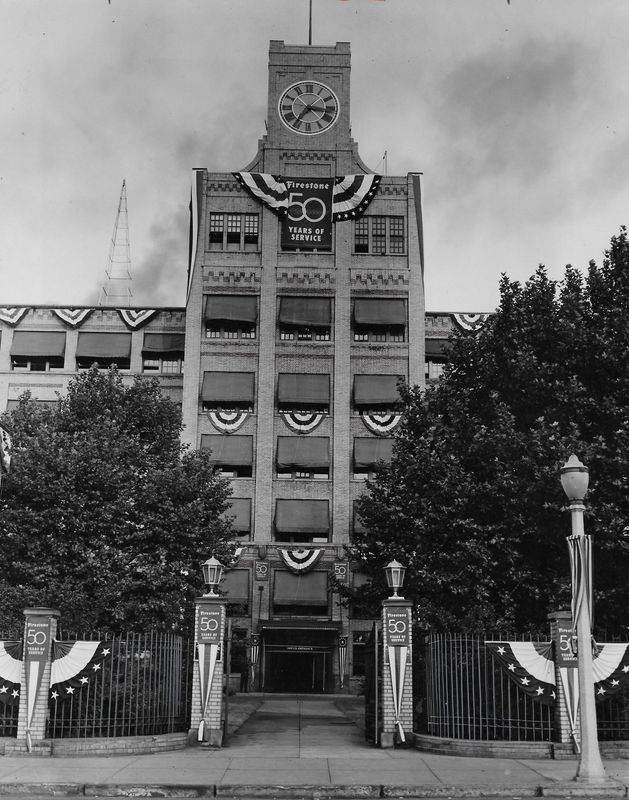
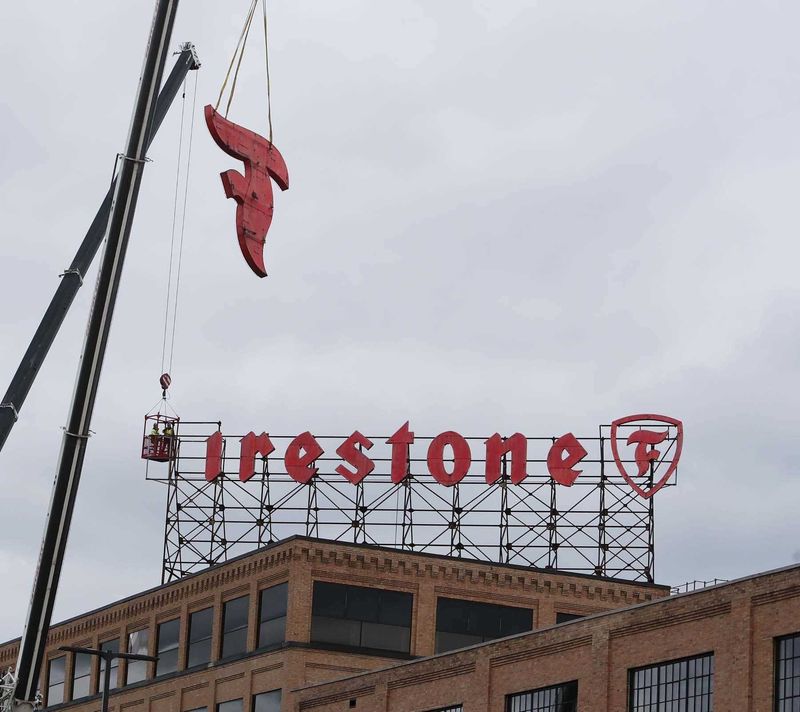
Firestone Plant 1 was once a symbol of growth and prosperity.
Now it’s a symbol of loss and neglect.

Akron officials plan to begin demolishing the old rubber factory in December. Before the wrecking ball swings, before the rubble falls, let’s take a moment to remember the building’s glory.
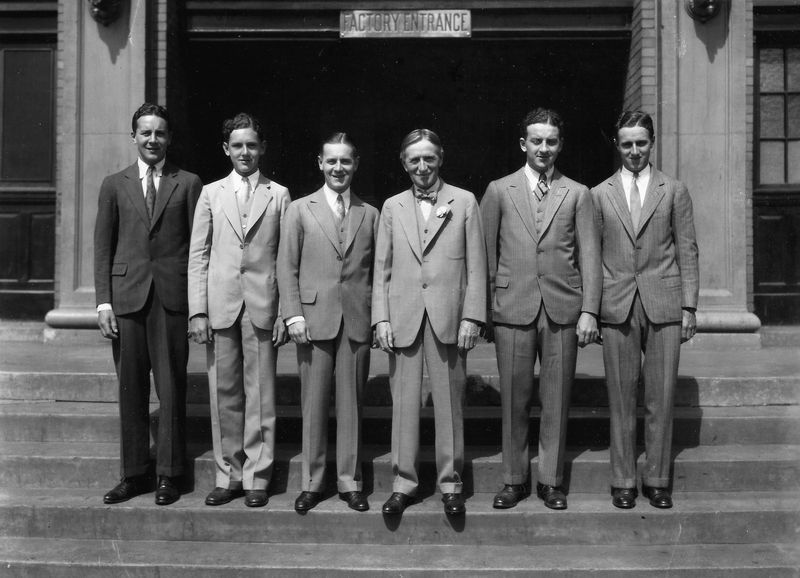
Harvey S. Firestone (1868-1938), a native of Columbiana, founded Firestone Tire & Rubber Co. in Akron in 1900 — two years after F.A. Seiberling and C.W. Seiberling established Goodyear Tire & Rubber Co. The Firestone name can be found on Akron streets, schools, a country club, a park, a stadium and an entire neighborhood.
With a workforce of 12 employees, Firestone built solid tires for carriages at an abandoned foundry at Miller and Sweitzer in South Akron. In 1903, the company began to produce pneumatic tires, and the timing couldn’t have been better.
The advent of automobiles changed everything.
In 1905, Firestone sold his first big order — 2,000 sets of tires — to Henry Ford in Detroit. Within a year, the company reported $1 million in sales.
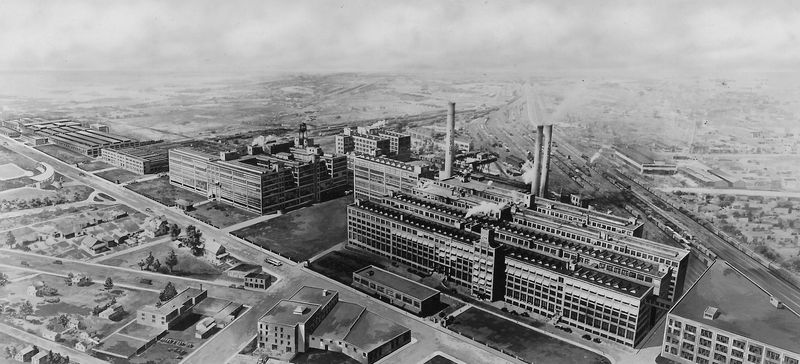
During an era of unprecedented optimism in Akron, Firestone announced plans in 1909 to build a new tire factory on the outskirts of the city. The company paid Moses Falor’s heirs $30,000 — over $1 million today — for 15 acres near the railroad tracks on South Main Street in Coventry Township.
“This is only the first step in our plans for an expansion of our business,” Harvey Firestone announced. “We have long had in mind the erection of a great modern plant, but have hitherto been handicapped by a lack of land on which to build.
“The additions we have made to our plant from time to time have later proven to be only temporary measures of relief and have failed to keep pace with the increased demand for Firestone tires.
“Notwithstanding inducements which we have been offered to locate elsewhere, we have preferred to remain in Akron where the facilities for high grade tire manufacture are the best in the world and the policy of the city authorities has always been one of cooperation with its industries in upbuilding the City of Opportunity.”
In 1910, Firestone awarded a $500,000 contract ($17 million today) to George W. Carmichael & Co. to build the factory. The Osborne Engineering Co. of Cleveland served as architect on the project.
The main building would be of reinforced concrete and steel, five stories tall with an eight-story clock tower. Plans called for a main structure with five wings and a power station. A 230-foot smokestack would tower over the complex.
Architects constructed scale models to map out the floor arrangements, allowing for raw materials to arrive via incoming trains and for finished tires to be loaded onto outgoing trains. The factory would produce 5,000 tires a day.
“Everything from the smallest item to the largest piece of machinery will be brand new, and when completed will be a plant equipped with every modern contrivance that engineering science can provide,” the Beacon Journal reported.
Firestone eventually amassed more than 25 acres for the complex. When the plant went into production in 1911, Firestone converted the Miller Avenue operation into a rim factory.
Those were boom years. Akron’s population surged from 69,067 in 1910 to 208,435 in 1920 as rubber companies welcomed workers from across the nation. Goodyear, Firestone, Goodrich, General and other local tire makers battled for supremacy in “The Rubber Capital of the World.”
“Building tires is a delicate science,” Harvey Firestone explained. “Quality does not just happen. It is the result of scientific research, knowledge and practical experience. From now on, with more tires of known quality available, due to enlarged facilities, it will be a question of the survival of the fittest.”
The rubber executive further transformed the city with the development of Firestone Park in 1915 to provide affordable housing for employees. The city annexed the land from Coventry. The 1,000-acre neighborhood included 600 homes as well as schools, churches and businesses.
The Main Street factory became known as Plant 1 after the company opened five-story Plant 2 in 1917. Generations of families worked in the sprawling complex with employment topping 9,000. By the mid-1920s, the company produced more than 10 million tires a year.
Firestone became a global giant, operating more than 70 plants in 19 countries by the late 1950s, and controlling 25% of the U.S. tire market in the 1960s.
But dark clouds were on the horizon.
Increased foreign competition cut into profits and sales began to slide in the 1970s. As debt mounted, disaster struck. In 1978, the company had to recall 8.7 million defective Firestone 500 radial tires at a cost of $150 million. Firestone nearly went bankrupt.
Plant 2 shut down and 1,200 workers lost their jobs. The Eslich Wrecking Co. of Louisville began demolishing the building in 1979, a project that took two years.
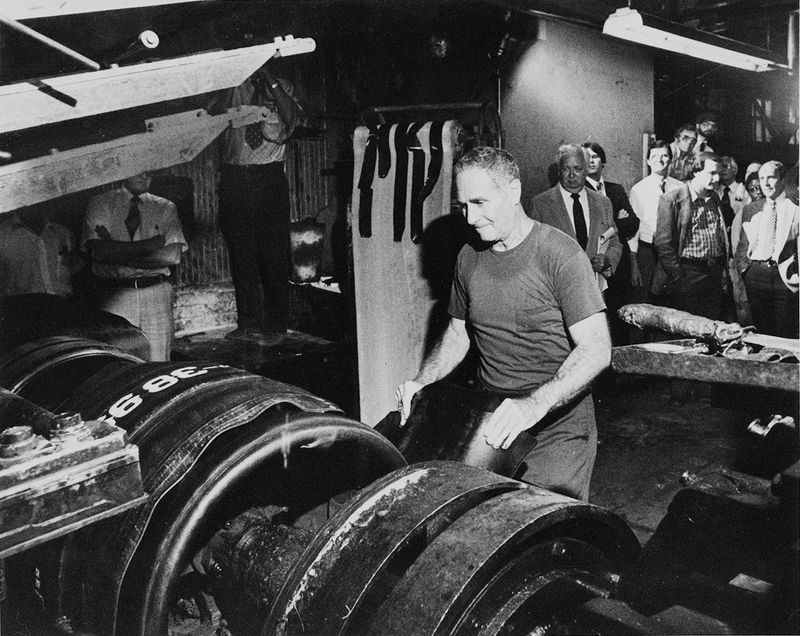
In 1981, Plant 1 ended production, idling another 1,300 workers. Julius Garman, a 39-year employee from Norton, built the final tire June 12. The factory closed two weeks later.
Bridgestone Corp. bought Firestone in 1988 for $2.6 billion and moved its headquarters to Nashville. In 2012, the Japanese company opened a $100 million technical center at South Main Street and Firestone Boulevard in Akron.
Plant 1 has been on the National Register of Historic Places since 2014, but vandals and scavengers have taken a toll inside the building at 1200 Firestone Parkway. Workers removed the historic Firestone sign from the roof in 2021 and moved it to the Bridgestone racing tire plant.
Despite the protests of preservationists, Firestone Plant 1 seems doomed. Akron officials are moving ahead with demolition plans after the city rejected a proposal this month to transform the old factory into a new police headquarters.
In the last couple of years, crews have torn down the former B.F. Goodrich smokestacks, Goodyear Tire & Rubber Co. mixing plant, Seiberling Rubber Co. office building, Wonder Bakery, Atlantic Foundry, Akron Baptist Temple, Recycle Energy System, St. Thomas Hospital, East Akron YMCA, Kenmore High School, Goodyear Middle School and Rankin Elementary, among other local landmarks.
Add Firestone’s name to the list.
Eslich Wrecking, the same company that tore down Plant 2, is scheduled to move in Dec. 8. Preliminary work is already underway.
Firestone Plant 1, a former symbol of growth and prosperity, will be gone by spring.
Mark J. Price can be reached at mprice@thebeaconjournal.com
This article originally appeared on Akron Beacon Journal: Firestone plant was a giant in Akron industry | Local history
Reporting by Mark J. Price, Akron Beacon Journal / Akron Beacon Journal
USA TODAY Network via Reuters Connect