Farmers upstream from the Des Moines metro can now get incentives to plant more than three times as many acres in cover crops, a conservation practice that helps cut the high nitrate levels straining central Iowa’s drinking water treatment capacity.
The Iowa Department of Agriculture said Monday, June 22, it will provide farmers with $25 an acre to plant cover crops on up to 500 acres, up from the current maximum of 160 acres. The initiative will be made available to farmers in 22 counties in the Des Moines and Raccoon river watersheds, the source of drinking water for 600,000 central Iowa residents.

“Cover crops are one of the most effective tools we have to keep soil and nutrients in the field, improve soil health and protect water quality,” Iowa Agriculture Secretary Mike Naig said in a statement. “That’s why we’re increasing incentives and making it easier for farmers and landowners to participate.”
The targeted cover crop initiative comes as Central Iowa Water Works earlier this month banned customers from watering their lawns as the regional authority struggled to treat high nitrate levels in the Raccoon and Des Moines rivers while meeting spiking seasonal water demand. It’s the second year for the lawn irrigation ban.
Central Iowa Water Works has run its nitrate removal facility, one of the largest in the U.S., since March 9 to ensure it meets the 10 milligrams-per-liter federal drinking water limit for nitrates.
Iowa’s water challenges are an emerging issue in this year’s election. Residents are questioning state and local candidates about their plans for cleaning the state’s rivers, lakes and streams — and whether environmental factors like high nitrate levels, pesticide use and so-called “forever”chemicals in Iowa waters are tied to the state’s rising cancer rates.
In May, Gov. Kim Reynolds announced the state would provide Central Iowa Water Works with a $25 million grant to expand its nitrate removal capacity. The grant is part of a 12-year, $312 million water quality package Reynolds said will boost water quality monitoring, increase funding for wastewater and drinking water treatment and create a low-interest loan program for rural communities statewide seeking to upgrade their facilities.
As part of the initiative, the Iowa agriculture department said Monday the state would invest $2.5 million boosting upstream cover crops by 100,000 acres, roughly doubling the number of acres now used.
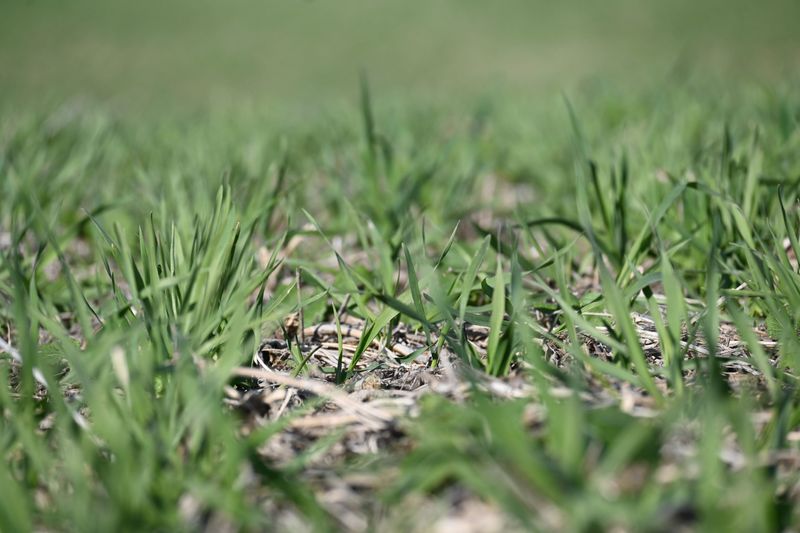
Cover crops like cereal rye are planted in the fall, holding soil in place over winter and reducing erosion that recently has caused massive Midwestern dust storms. Cover crops also take up nitrogen and phosphorus from the soil in the spring as they begin to grow, helping to prevent fertilizers from leaching into the state’s waterways. They can cut by about 30% nitrogen and phosphorus losses from fields.
The nutrients, tied up in the soil, then become available for farmers’ cash crops, planted after they kill off the cover crops.
Voluntary conservation vs. regulation is election issue
Statewide, about 4 million acres were planted to cover crops in 2024. While a dramatic increase over the 400,000 planted a decade earlier, they represented only about 17% of the state’s crop acres.
Cover crops are among the conservation practices and infrastructure outlined in the Iowa Nutrient Reduction Strategy, a plan designed to cut by 45% the nitrogen and phosphorus runoff from Iowa farms and cities that eventually flows into the Mississippi River, contributing to the dead zone around the river’s mouth in the Gulf of Mexico, which the Trump administration calls the Gulf of America.
Critics have said the state isn’t investing enough in conservation practices and infrastructure to improve water quality. Chris Jones, a retired University of Iowa water scientist and Democrat who’s challenging Republican Naig’s bid this fall for reelection as agriculture secretary, says the approach isn’t working and that he favors adopting “common sense regulations” that will better prevent farm pollution.
His approach includes requiring buffer strips along Iowa waterways, revamping state siting regulations on confined animal feeding operations to prevent overapplication of manure and creating initiatives to help farmers diversify Iowa’s crops beyond corn and soybeans.
Naig contends voluntary farm conservation is working. On Monday, he pointed to the growth of cover crop acres, construction of 150 wetlands that can cut nitrate runoff by as much as 90% and what he said are nearly 500 “nitrate-filtering buffers along field edges, all of which capture and treat water before it reaches streams.”
“There’s more work to do, but Iowa farmers are accelerating the pace at which they’re adopting conservation practices,” he said in a statement.
While the state is providing enhanced incentives upstream from Des Moines, it also continues to provide assistance to farmers statewide, including $30 per acre for farmers using cover crops for the first time and $10 for those continuing the practice. For those farmers, the maximum acreage for which aid is available remains 160.
Last year, planting cereal rye cover crops cost between $30 and $50 an acre, based on ag group estimates. While the added expense comes at a time when farmers are struggling with losses, some programs allow growers to “stack” incentives, covering a portion of their costs.
Counties with the expanded incentives announced Monday are Audubon, Boone, Buena Vista, Calhoun, Carroll, Clay, Dallas, Dickinson, Emmet, Greene, Guthrie, Hamilton, Hancock, Humboldt, Kossuth, Palo Alto, Pocahontas, Polk, Sac, Webster, Winnebago and Wright. For more information, go to CleanWaterIowa.org.
Donnelle Eller covers agriculture, the environment and energy for the Register. Reach her at deller@registermedia.com.
This article originally appeared on Des Moines Register: Iowa boosts cover crop incentives for farmers upstream from Des Moines
Reporting by Donnelle Eller, Des Moines Register / Des Moines Register
USA TODAY Network via Reuters Connect
By Donnelle Eller, Des Moines Register | USA TODAY Network