Sea dragons have joined the students at Des Moines Public Schools’ marine biology program with a surplus of sea dragons.
The four sea creatures were donated to the Central Campus aquarium for students to study and learn from this year. They’re a welcome addition to the lab, says DMPS intern and incoming senior Nora Baugh.

“It’s just really interesting to get to learn and see, and whenever we get new organisms, I’m actually very excited,” she said.
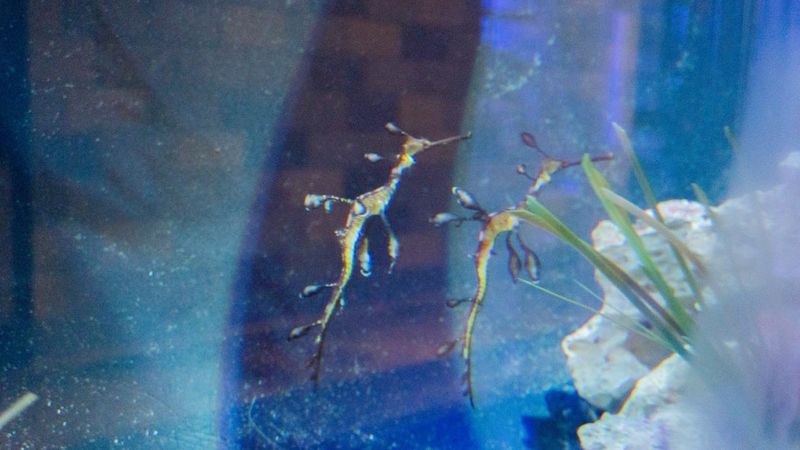
Three weedy sea dragons were donated to the lab earlier this year by the Shedd Aquarium in Chicago. DMPS marine biology instructor Gregory Borard said the lab worked with a former student who works at the aquarium to get the now 6-month-old sea dragons to Des Moines.
Borard’s favorite part of the new sea dragons is the excitement from non-marine biology students.
“I think to me, the new addition of the sea dragons is seeing other students at school who are just walking through, going from class to class, and just seeing their face kind of plastered up against the glass and just seeing this new animal,” Borard said. “It’s nice for us to be able to share these cool things with not just our students, but with the rest of the school and our Des Moines community.”
Weedy sea dragons are a rare breed found only in Australia cold waters. They eat 30 to 60 mysid shrimps a day, according to DMPS intern and graduated senior Vianne Stroope-West.
As the sea dragons grow into adulthood, students will observe their behavior and learn about adaptation diversity and the differences in Australia’s ecosystem.
“It’s pretty nice having them,” incoming senior Katherine Santana said. “We focus on feeding them with live brine, like mycid, and we can just observe, like, are they hunting? Is their behavior good? How much are each of them eating?”
Borard said the students were initially “super excited,” for the new additions to the lab, but that the “honeymoon phase” of the seahorses went away as taking care of them got more difficult.
“It is a really hard animal to care for, and so it is kind of not an exciting thing to have these, you know, relatively sensitive, delicate animals in our lab,” Borard said. “But we know that our industry partners and organizations believe in our students to care for these animals.”
Stroope-West said that when new marine animals arrive at the lab, they tend to fast for the first one to two weeks. Despite this, students worked “really, really hard” to get the sea dragons to eat.
“Now, they’re at a very consistent feeding schedule, so we’ll log daily records about it. And it’s kind of a big team effort that we’ve been really successful in,” Stroope-West said.
While sea dragons bear resemblance to sea horses, the difference mainly lies in anatomy and habitat.
“The difference between seahorses and sea dragons is mainly the ornamentation of their fins,” Borard said. “So they’re kind of more frilly. Most other seahorses have relatively small pectoral fins and relatively few kind of ornamentations on them.”
Stroope-West said the sea dragons are “very beautiful” creatures and it’s interesting to see their behaviors, especially as the breed is rare.
“It’s just really, really good learning opportunity for our students to see something so rare, just in a classroom,” Stroope-West said.
Searching for swell sharks
In May, marine biology students wanted to study a shark in the lab.
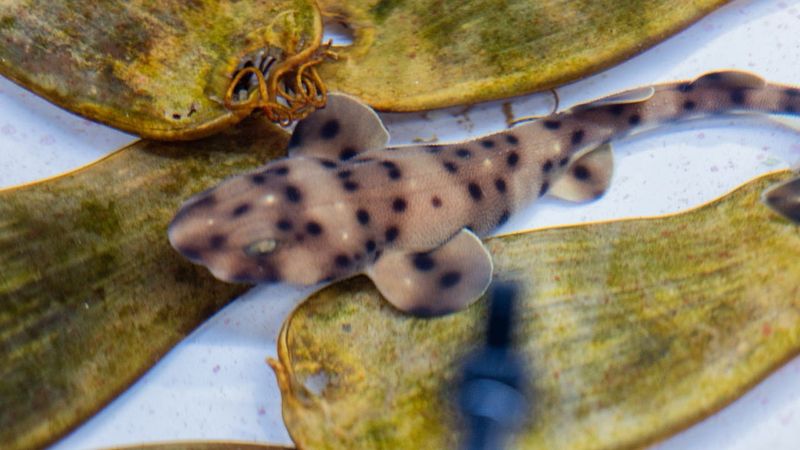
The Omaha Zoo donated a swell shark egg to the lab so students could study the hatching process, but they were met with a surprise when they received the egg.
“When we went to pick up the egg, the shark had hatched!” Borard said.
Swell sharks are distant relatives of cat sharks. They fend off predators by swallowing the water around them to swell their bodies to look intimidating.
The shark is only a few inches long, but it will soon grow much larger and be moved to a bigger tank.
“We’ll have this one for probably three to four years, just until it outgrows this tank and needs a bigger space,” Borard said. “Then, we’ll reassess and see if students at that time want to continue with sharks or do something different. It gives us some adaptability to make sure we’re always doing the right thing for the students coming back.”
In the same way the sea dragons did not immediately eat at the lab, the swell shark faced a similar challenge.
“We expected it to not eat within the first week of feeding,” Stroope-West said. “It’s just, you know, stress levels, a new habitat. It’s pretty normal, but our shark actually ate within the first few days, which is really, really good.”
‘A 24/7, 365 student-run lab’
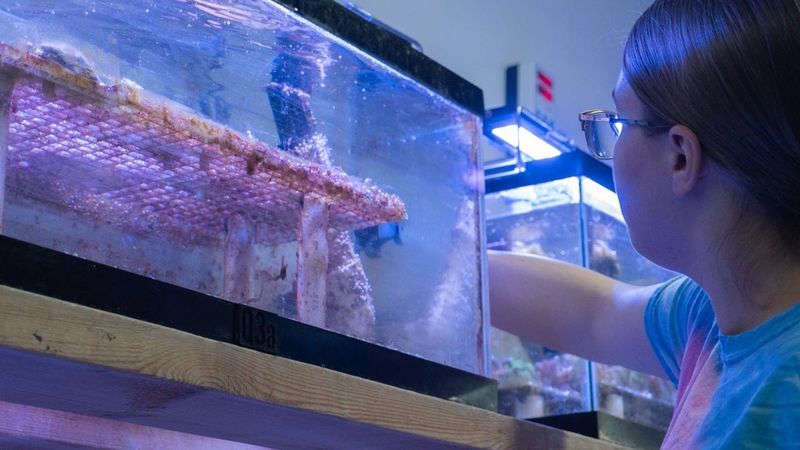
This year, DMPS hired 14 interns to keep the lab running outside the normal school year.
Before the internship, Stroope-West volunteered during past summers five days a week.
“It’s kind of my second home,” Stroope-West said. “I just, I love the place so much. It’s changed my life, and I honestly don’t know where I would be in my aquarium career path without this program.”
Recruitment for these positions took place during the school year. Each intern gets paid $16 to $20 per hour to feed the marine animals, monitor their behavior and keep their tanks clean.
“We wouldn’t survive without that, because I’m not getting paid right now,” Borard said. “I’m not on contract time any longer, so it’s really a 24/7, 365 student-run lab.”
While Borard insists the lab is student-run, Stroope-West said the credit belongs to him.
“If you were to ask our teacher, Dr. Borard, he’s going to say it’s all us,” she said. “But he helps us so much. He mentors us so much, and this program is … the opportunities are endless with this place. It’s really changing people’s lives, and it’s changing how much, like how far students go in their career in the marine industry.”
Veronica Meiss is a news intern for the Des Moines Register. You can contact her at vmeiss@gannett.com.
This article originally appeared on Des Moines Register: House of the sea dragon? See new creatures at DMPS marine biology lab
Reporting by Veronica Meiss, Des Moines Register / Des Moines Register
USA TODAY Network via Reuters Connect
By Veronica Meiss, Des Moines Register | USA TODAY Network