SOUTH BEND — The image of the American cowboy is incomplete without Black cowboys, whose story has largely been left untold.
As more people work to tell the long-overlooked story of Black cowboys, who made up about one in four cowboys in the late 1800s, South Bend will host a Black rodeo at the St. Joseph County 4-H Fairgrounds and several cultural events there and elsewhere to bring that legacy back into view.

The life of a cowboy was — and still is — laborious. Many days were spent working in unfavorable weather conditions, feeding livestock, maintaining infrastructure or riding horseback to push cattle across vast distances for very little pay.
“In my opinion, a cowboy is a man who can get the work done. Period,” said Nick Jones, owner of South Bend-based WTJ Films, which specializes in projects concerning Black men who helped build the American West, The Tribune previously reported in a 2014 story. “Either you can cowboy or you can’t. I think it’s further complicated by Hollywood and television because they present an image that is accessible to the majority of Americans.”
Jones wrote, produced, directed and starred in his company’s “The Exodusters: The Man from Texas,” a fictionalized account of the real-life Walter Jackson, the son of a cowboy and thought to have been the first Black person born in Montana.
Historians estimate that 20% to 25% of cowboys in the late 19th century were Black, yet in classic TV Westerns like the original “Rawhide,” you rarely see Black cowboys at all, Jones said. “And when they do appear, they’re usually portrayed as someone who needs help from a white cowboy,” he said.
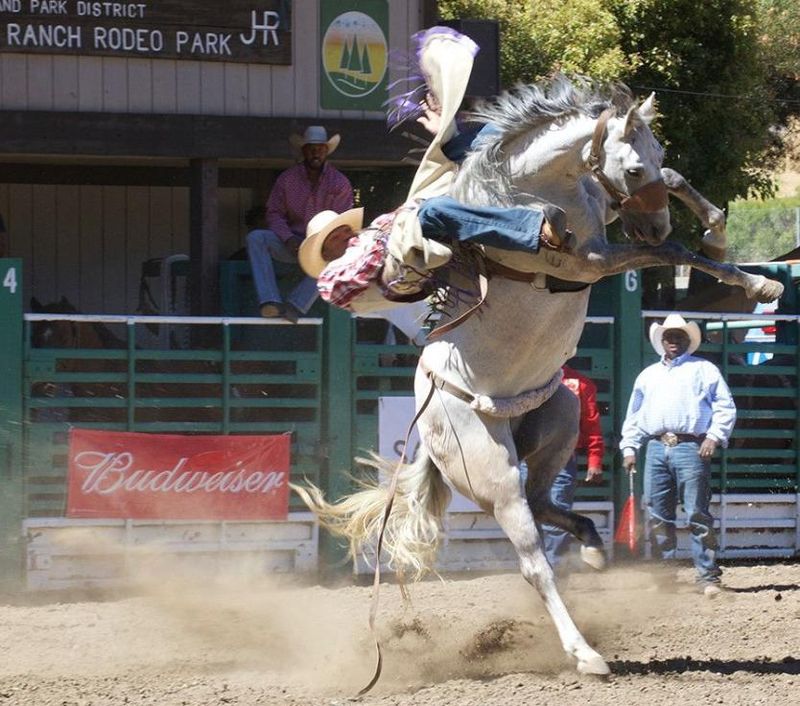
As rodeo became a way to showcase riding and roping skills, Black cowboys were often not allowed to compete, or, if they were, it was after the main performance, when most of the audience had left.
“They got into rodeo by starting their own rodeos,” Jones said. “Because of their race, they weren’t included in the original rodeo. It wasn’t until they created their own that it attracted attention.”
Midwest Invitational Rodeo
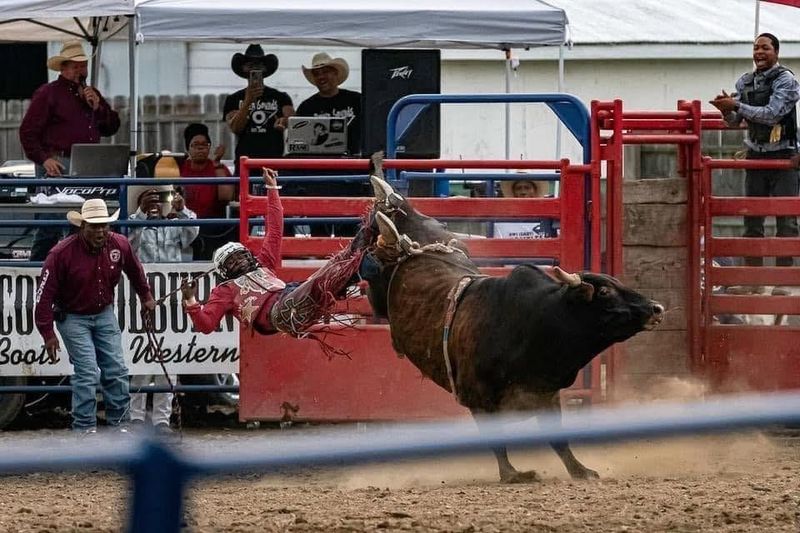
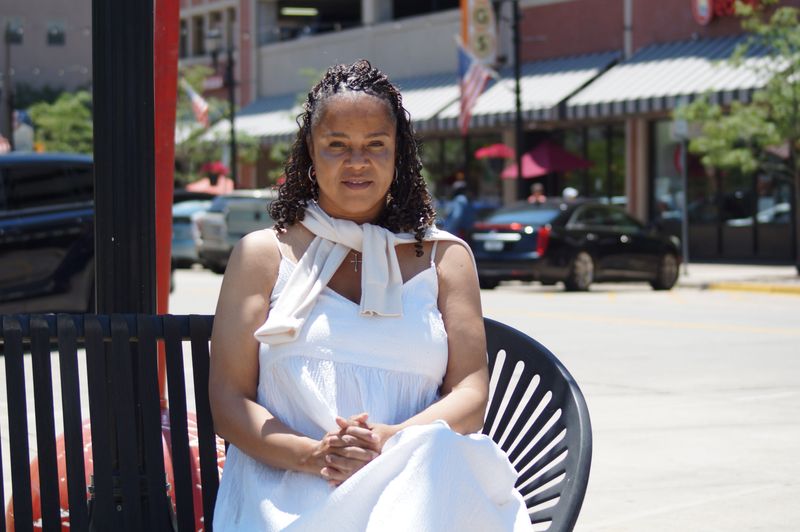
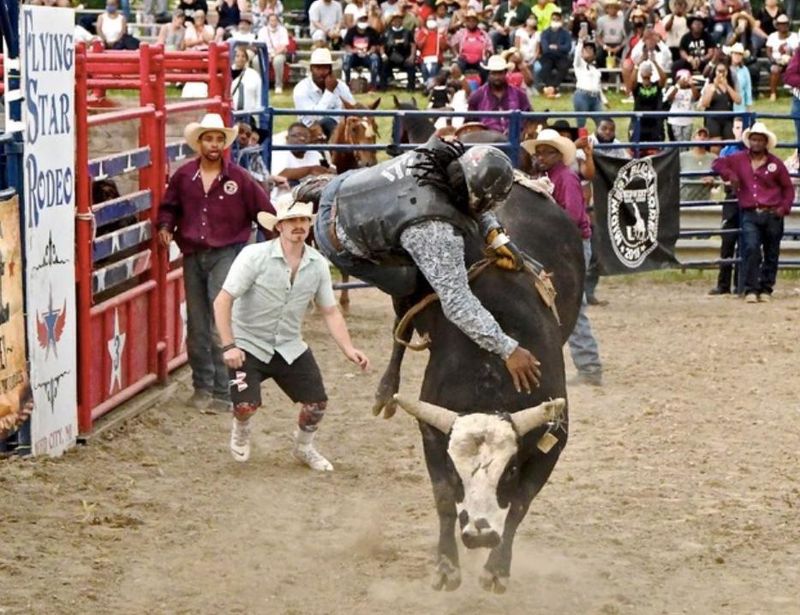
That history and ongoing discrimination in mainstream rodeo are part of what Nicole Scott, founder of the Midwest Invitational Rodeo, hopes to confront with a stop in South Bend on Aug. 1. The city will have the opportunity to experience a night of culture that focuses on Black cowboy and cowgirl traditions.
Scott has never competed in a rodeo. But the first time she went, she said, she fell in love with its action and history. She spent the next 20 years working in the front office and in ticket sales for rodeos before she started her own.
“The original cowboy was African American,” Scott said. “[Cowboy] was a derogatory term back in the 1800s. It was the ‘boy’ working out in the fields with the cows. The gentlemen decided to make it fun or use alternative ways to herd the cattle, so that’s how some of the events in the rodeo came about.”
In the late 1800s, the term ‘cowboy’ often referred to low-paid cattle hands — including many Black men — rather than the white ranch owners romanticized in popular culture, historians say.
Scott said Black cowboys weren’t taken seriously as contestants.
“I wanted to do something a little bit different because these athletes are talented, and they don’t get the same opportunities to compete or to make the money that you can in mainstream rodeo,” Scott said.
Contestants will haul in from all over the country to participate in the Midwest Invitational Rodeo. Scott said mainstream rodeo attracts hundreds of thousands of dollars; her rodeo has a smaller purse of $21,000.
Typically, the host of a rodeo will put money into a “purse,” and a percentage of contestants’ entry fees will add to that total. The money is divided among the winners across all events.
“In African American rodeos, there is not a lot of money,” Scott said. “My purse is considerably larger; it gets people to come in from all over the country.”
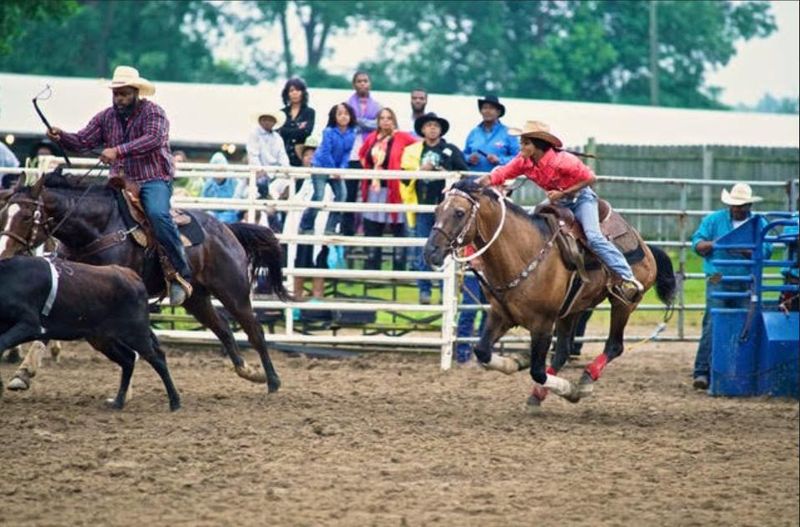
Tess LeBlanc is coming to South Bend from Okmulgee, Oklahoma, with her husband and son to compete in the Midwest Invitational Rodeo.
She competed at the Midwest Invitational Rodeo in Flint, Michigan, last year.
“That was an amazing rodeo, and I really appreciated the atmosphere,” LeBlanc said.
She described the Flint rodeo as “that ’90s hometown rodeo feel,” which, she said, is a feeling that is being lost in Oklahoma.
“The rodeo atmosphere in Oklahoma seems to be getting away from the quiet hometown feel and more like a mainstream thing, and I’m really not a fan,” LeBlanc said. “The crowd was so unreal in Flint. Every single person who nodded their head and entered the arena, they cheered so loud for them. It was amazing.”
Scott wants to help keep the Black rodeo tradition alive.
“We’re going into what was the second and third generation, and now we’re trying to go into third and fourth [generations], and if we don’t continue to have venues that welcome us or continue to have purses that are inviting, it’s just going to stay in the South, or it may not even grow,” Scott said.
Generational cowgirl
LeBlanc is a fourth-generation Black cowgirl. Her family runs what they describe as the largest and oldest Black rodeo in the country, the Roy LeBlanc Invitational Rodeo in Okmulgee, Oklahoma. She said that her family’s history is a piece of history.
“I was born into this,” LeBlanc said. “My grandfather and his father started the oldest Black rodeo in Oklahoma, along with several other men. Many years ago, the Black cowboys were not allowed to compete during the show. They always had to go in slack when there was no audience, or they were not allowed to compete at all.
“After running into this time and time again, they decided to create something for people who looked like them and had the same issue.”
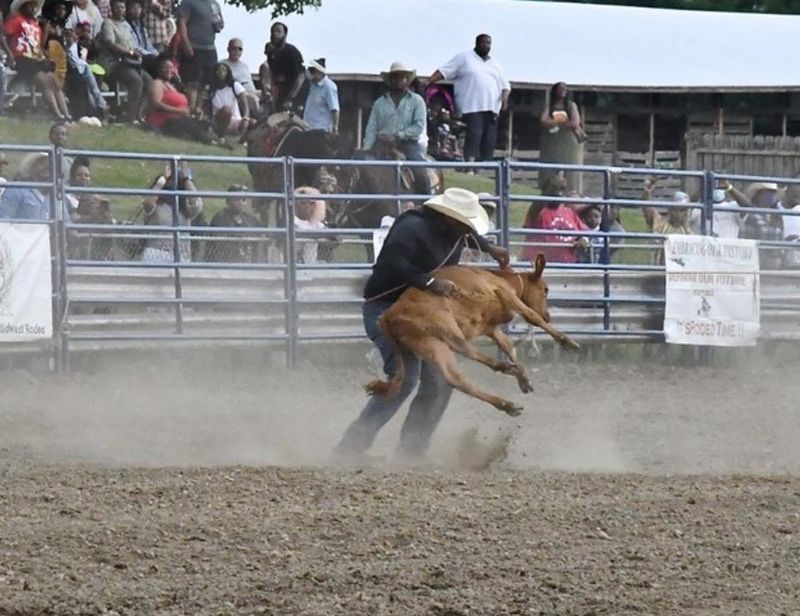
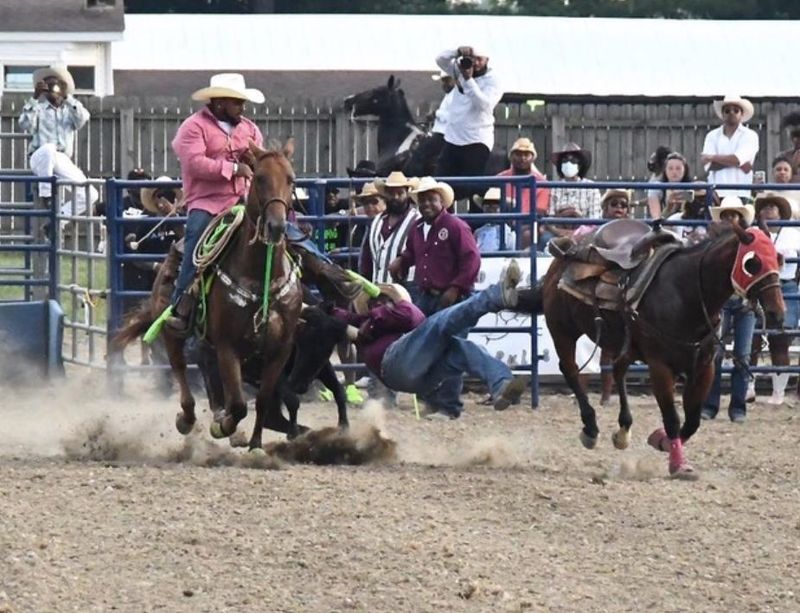
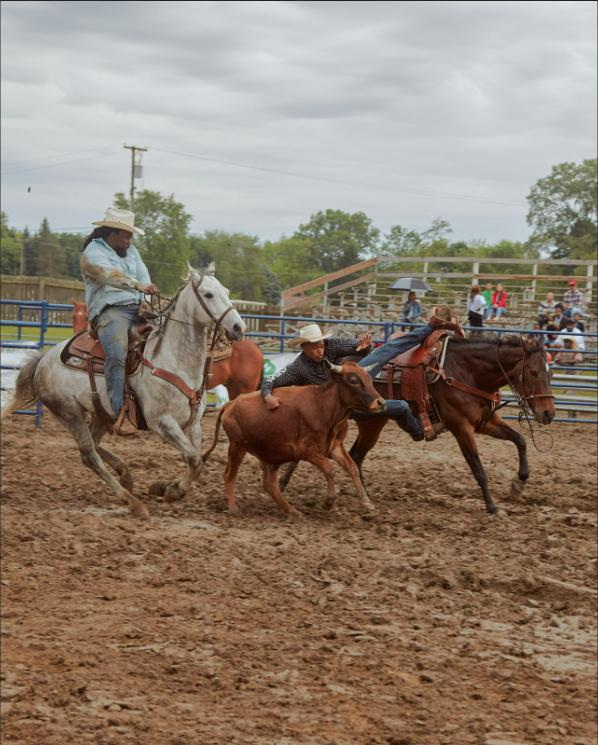
As a young girl, LeBlanc would ride her pony, Grandma, while her father and his friends practiced steer wrestling, which is commonly known as bulldogging.
“I would be trapping steers to the back of the arena on my pony, and you couldn’t tell me anything,” LeBlanc said. “You couldn’t tell me I wasn’t one of the big kids out there.
“My dad is a pretty tough fellow, and when I was little, a lot of times, I was always trying to prove that I could do everything that my brothers could do,” she said. “My dad would always say, ‘Well, you’re a girl, you don’t have to do that,’ and I feel like that made me more competitive.”
LeBlanc competes in barrel racing and steer-undecorating, a women’s event similar to bulldogging where the steer-undecorator removes a piece of tape or ribbon from the steer’s back. The quickest with their hand in the air with the ribbon wins.
Le Blanc said she doesn’t have a favorite event, just whichever one she is winning in.
“I feel like you can compete anywhere now,” LeBlanc said. “But I think this event, more so, just showcases a smaller population that sometimes gets lost in the crowd.”
Rodeo is not LeBlanc’s full-time job. She works in hospice, which, she said, is stressful.
“I truly love what I do, but it’s a heavy job,” LeBlanc said. “So, that’s one of the things that I kind of just am able to let go of whenever I am at the rodeo competing on my horse.”
For LeBlanc, rodeo means peace.
“That’s where I go to forget everything,” LeBlanc said. “I feel like if you just have a stressful day, when you get in the saddle, for me, I just am able to completely relax. I forget about all of the stuff that worries me throughout the day when I’m sitting on my horse.
“That’s the most relaxed I’m going to be.”
‘If you can see it. You can be it.’
When Scott came to South Bend to research venues, she said, she could hear and see the need in the community to have a safe place to learn about Black cowboy culture and something different.
At first, she was concerned that she was going to have to cancel the rodeo, which was originally planned for two days. But after having conversations with Mayor James Mueller and South Bend Common Council member Sharon McBride, Scott knew she had to make the rodeo happen.
“It’s not just an African American rodeo,” Scott said. “It’s a cultural event. It is for people to see the original cowboy. Other communities have the opportunity to go and do other rodeos.
“We don’t always get the opportunity to do that. So, I’m just creating a platform where little kids, that look like me or look like my children, can go out and learn.”
Although the rodeo isn’t a two-day event anymore, it now has other events attached to it beforehand.
Members of the Midwest Invitational Rodeo will tell the story of the Black cowboy at The History Museum’s “Insights in History” program at 1:30 p.m. July 29 at 897 Thomas St. Admission is $3; $1 for members. Reservations are required by July 27 and can be made by calling 574-235-9664, ext. 6256.
The Pokagon Band of Potawatomi’s Four Winds South Bend casino will host the Boots & Bucks Party from 10 p.m. to 1 a.m. July 31 at 3000 Prairie Ave. The event features music by DJ Gino J and the band Lepolion, and Midwest Invitational Rodeo riders are expected to be there, too, according to a press release from Four Winds Casino. Admission is $10; $60 for VIP access. Must be 21 or older to attend.
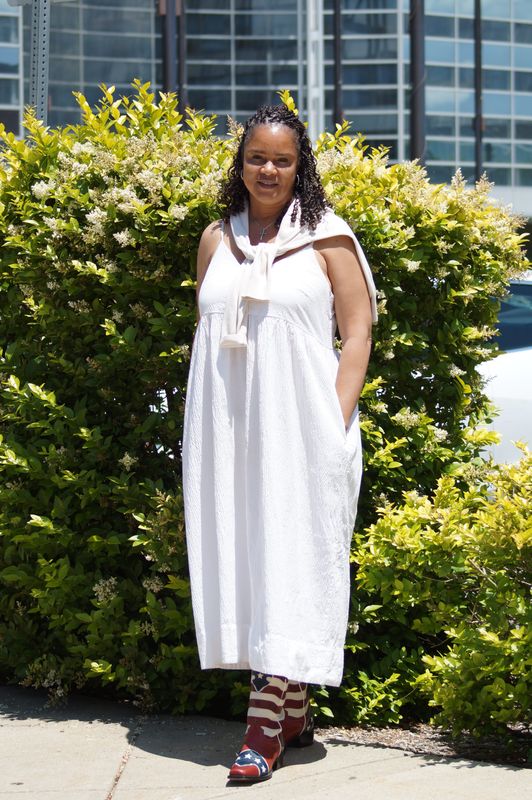
McBride said that, starting at 3 p.m. Aug. 1 at the fairgrounds, there will be a mental health fair and a gospel concert. At 5 p.m., there will be a fashion show with a local artist who is making “cowboy and cowgirl gear.” And at 7 p.m., the rodeo will start.
“A lot of times, recognition is not given, or a lot of times people don’t know about the culture of the African American community,” McBride said. “So, this is a great way for people who have never known [that] cowboys started out in our minority community.”
Midwest Invitational Rodeo
● What: A cultural event showcasing Black cowboys and cowgirls
● Where: St. Joseph County 4-H Fairgrounds, 5117 S. Ironwood Drive, South Bend
● When: 7 p.m. Aug. 1
● Cost: $26.90 per ticket
● For more information: Visit https://midwest-invitational.com/home.
Email Tribune staff writer Juliane Balog at jbalog@usatodayco.com.
This article originally appeared on South Bend Tribune: Midwest Invitational Rodeo brings Black cowboys to South Bend
Reporting by Juliane Balog , South Bend Tribune / South Bend Tribune
USA TODAY Network via Reuters Connect
By Juliane Balog , South Bend Tribune | USA TODAY Network