Carol Walker has always had an affinity for downtown Lansing.
Since she was a young child growing up in Lansing in the late 1940s and ’50s, Walker looked forward to spending time there.

Yet as much as she enjoyed it, downtown was far different in those days. Walker never could have imagined how much the area would change when a baseball team — the Lansing Lugnuts — arrived in the mid-1990s.
“I had no idea (there could be) something like this,” said Walker, who is now part of the Lugnuts’ hospitality team. “I thought downtown would just always be downtown. We all know who grew up here in Lansing (and) watched shop after shop and department stores close. That was downtown.”
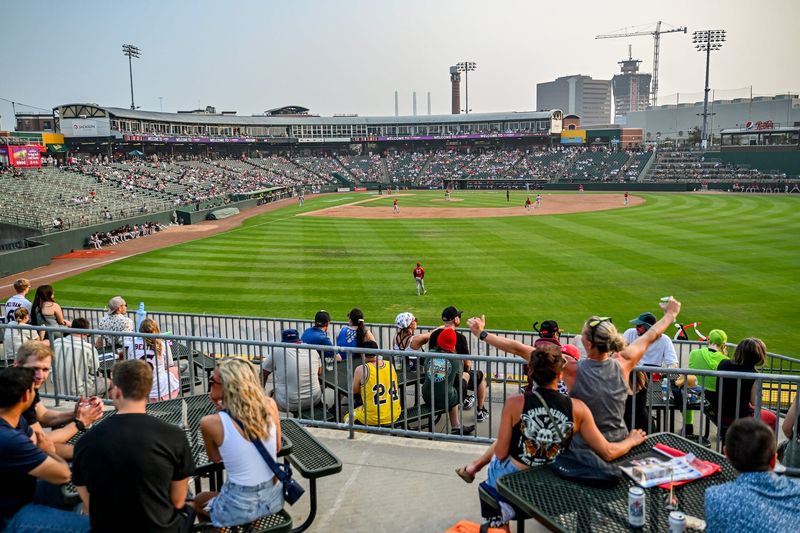
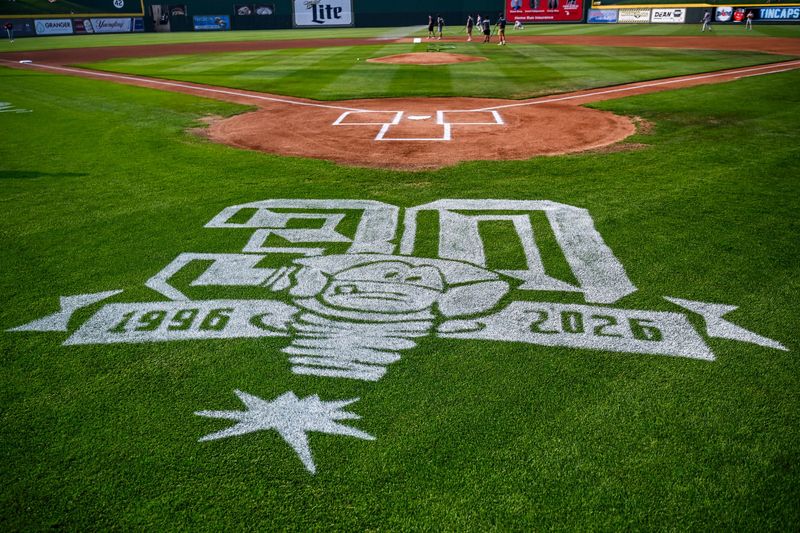
The Lugnuts debuted in a shiny new stadium on Michigan Avenue — then Oldsmobile Park, now Jackson Field — in front of more than 9,000 people on a bitterly cold Friday night on April 3, 1996.
Lansing was hooked.
And now 30 years after former owner Tom Dickson brought the Midwest League team to town, the franchise is still going strong, displaying significant staying power that many minor league baseball towns haven’t enjoyed.
A franchise still flourishing
Surviving 30 years in the same city as a minor league franchise affiliated with Major League Baseball is no small feat.
Prior to the Lugnuts’ arrival, Lansing’s last taste of minor league baseball was brief, lasting just two seasons from 1940-41. The franchise was an affiliate of the St. Louis Cardinals in 1940 before being unaffiliated the following year. That league, the Michigan State League, and the franchise disbanded after the 1941 season.
Lansing embraced its next chance 55 years later.
There are plenty of examples of minor league baseball towns struggling to get a foothold. One instance nearby was in Battle Creek, the home to a Midwest League team from 1995 to 2006. The franchise went from being named the Battle Creek Battle Jacks to the Battle Creek Yankees to the Southwest Michigan Devil Rays during its time as an MLB affiliate.
The team finally relocated to Midland following the 2006 season and became the Great Lakes Loons.
The Lugnuts, who are now owned by Diamond Baseball Holdings and are the High-A affiliate of the Athletics, have also survived despite a much different minor league baseball landscape now than even at the start of this decade. Major League Baseball streamlined its minor league system in 2021, eliminating 40 teams and leaving just 120 across the country.
Lansing’s team never seemed to be in danger.
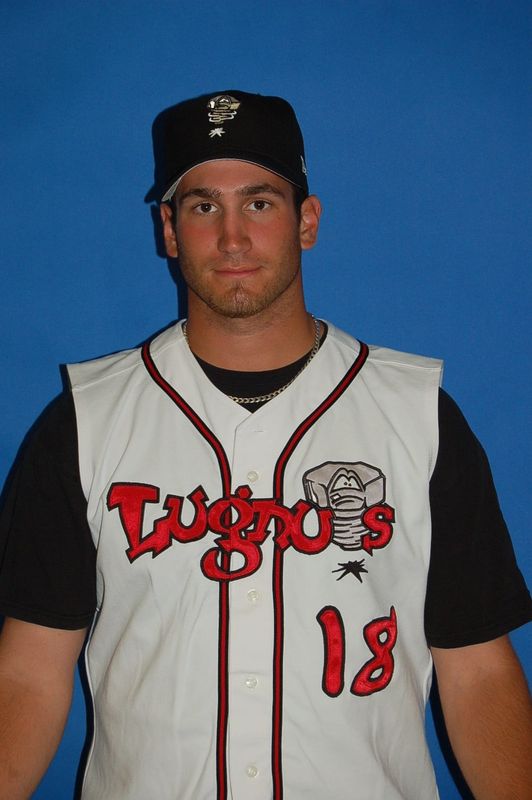
The Lugnuts’ longevity is no accident, according to Paul Phillips, a Blissfield native who spent seven seasons pitching in the minors, including stints in Lansing in 2006 and 2007.
Phillips, who resides in Portland and still attends Lugnuts games, said plenty of factors made Lansing stand out for him as a player.
“It’s in a great location for one thing,” Phillips said. “The stadium is top notch. I haven’t seen anything else recently, but the stadium was always in great shape. It was just a fun place to play. It was a family-type atmosphere. There was always something to do. The surrounding area is nice for fans to come in and get something to eat somewhere and then come to the game if they want.”
Phillips also had minor league stops in Auburn (N.Y.), Dunedin (Fla.), Manchester (N.H.) Montgomery (Ala.), Durham (N.C.), Port Charlotte (Fla.) and Bridgwater (N.J.) during his career.
“As a player, (Lansing) was early in my career and I didn’t realize how spoiled you were (playing) there. The locker rooms were in great shape. They made you feel like you were something bigger than you were.
” … The (management) just seemed like they ran it really well. They had a great booster system that really looked out for the players and made it fun to play there and they always had stuff for the fans. The food for a minor league stadium is top notch. They just always seemed to do things really well.”
Jesse Goldberg-Strassler has served as the radio broadcaster for the Lugnuts since 2009. One of the things he believes has helped the Lugnuts have staying power is having a ballpark in a prominent place downtown.
“Jackson Field is completely integrated within downtown Lansing so that if you’re just driving through downtown Lansing, there is Jackson Field,” Goldberg Strassler said. “I think that’s terrific that this ballpark is part of it all because a ballpark adds to the feeling of safety and being scenic.
“I love that we are right downtown, several blocks away from the state capitol and eight minutes away from Michigan State University or thereabouts. We’ve got that confluence and that merger of an enormous state university and the state capitol so everyone who is coming from all around the state to this area (can see us). If you are just coming into downtown Lansing for the convention or for whatever reason you’re going to see Jackson Field.”
‘No resting on our laurels’
The Lugnuts were an instant hit when they arrived in Lansing as an affiliate of the Kansas City Royals, drawing big crowds and setting a minor league attendance record by drawing 538,326 fans in their debut season. They averaged more than 7,000 fans in their first three seasons and more than 6,000 fans each of the following three after becoming affiliated with the Chicago Cubs in 1999.
Those attendance numbers have not surprisingly dipped since the early years but they’ve remained strong. The Lugnuts have averaged 3,196 fans this season entering play Wednesday, July 22. And the franchise has remained a big part of the community.
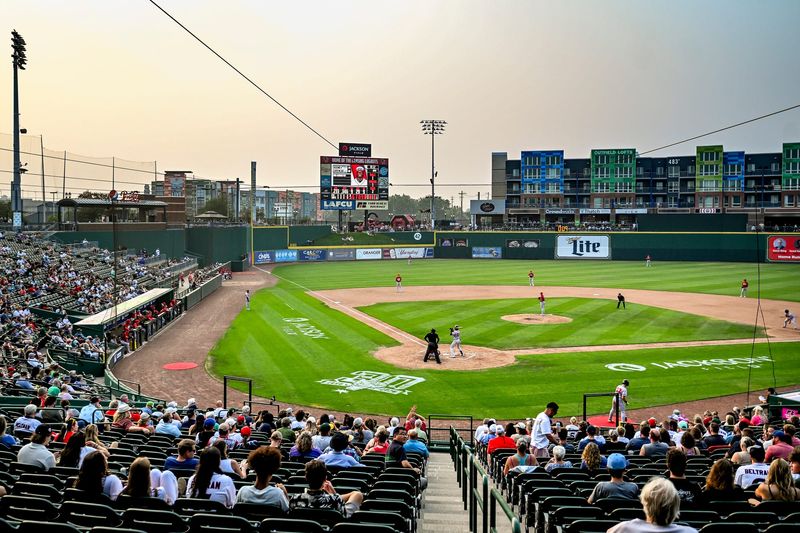
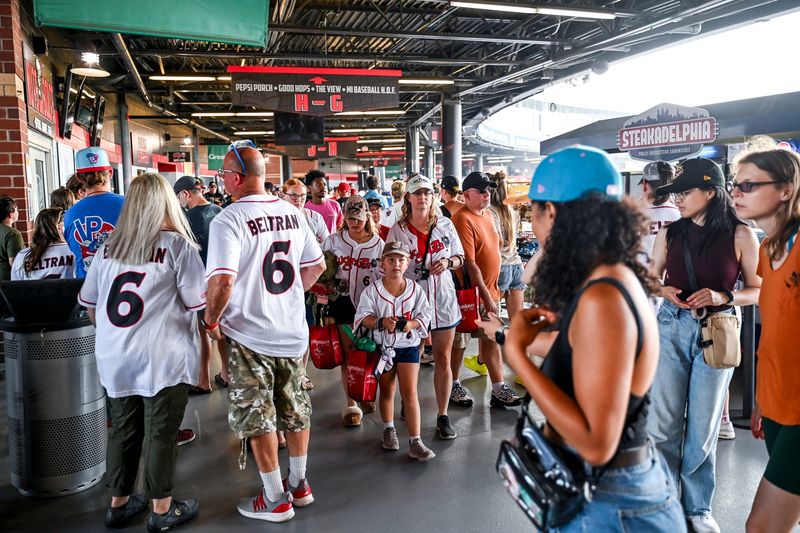
The team has continued to update Jackson Field over the years with renovations, including the addition of The View event gathering space and the incorporation of the Michigan Baseball Hall of Fame as part of the stadium’s expanded concourse. Fans looking outward from the infield now also have a signature view of the colorful Outfield Ball Park Lofts, an apartment complex that looms prominently beyond the outfield wall.
“It was constantly saying with each decade there is a need to do something more,” Golderg-Strassler said. “(It was) this isn’t enough. We were constantly saying, ‘What can we do to make sure that as people come out here to the ballpark that there is reason and that they will continue to enjoy themselves more and more?’ There’s no resting on our laurels.”
Innovative leadership plays a big role in successful minor league baseball teams and the Lugnuts have made that a priority. When COVID-19 shut down minor league baseball in 2000, the Lugnuts created the Lemonade League, which provided opportunities for college baseball players to play on the field. There’s also been creativity in promotions with special jersey theme nights that have helped the team draw some of its best crowds. And when it’s not baseball season or the Lugnuts are on the road, special events like concerts, festivals or the Nitro Circus have helped draw people downtown and into the stadium.
That constant community support over three decades has been instrumental in the eyes of Lugnuts General Manager Zac Clark, who has spent more than a decade working in minor league baseball, previously working for the Johnson City (Tenn.) Cardinals and the Asheville (N.C.) Tourists.
“The community support has been unbelievable,” said Clark, who has observed that support since his days growing up in Dansville and attending games. “With all the events that aren’t Lugnuts baseball that have taken place over the years and all the Lugnuts baseball, the relationship we’ve had with Michigan State baseball and some of those events that have occurred here — it really is just a pillar in the community. We are so lucky as being people from Lansing or being from the Greater Lansing area to have this place because we can do so much here. We’ve done 5Ks, festivals and concerts and all these fun events. Even people who aren’t baseball fans can come in here and enjoy it.
“As far as I can tell, that’s always been the vision and the focus for the Lugnuts and for the Lugnuts staff is to create an environment where it’s not just baseball. We want to create an environment that is fun and exciting and engaging and entertaining and there happens to be a baseball game going on in the background.”
Walker is part of that community support and has been affiliated with the Lugnuts for nearly the duration of their time in Lansing. She and her husband, Dale, joined the Lugnuts Booster Club in 2000. That same year they also served as a host family for Lugnuts players with Juan Cruz being the first to live with them at their Delta Township residence.
Walker’s presence has extended beyond that to working as an English instructor for the franchise in 2015 while they were an affiliate of the Toronto Blue Jays to now spending her time in recent seasons taking tickets and greeting spectators at the suite level.
Walker has taken pride in her small role with the Lugnuts. She believes the franchise has continued to adapt to its customers.
“I think it’s important that they’ve stayed on top of what is acceptable and pleasing to the people who are there rather than just trusting their reputation,” Walker said. “They keep updating and bringing new things and new ideas and keeping it fresh. I think that’s really important.”
Another factor in the Lugnuts’ sustainability could be as simple as the consistency in their name and brand. The franchise has had the same name and red, black and white color scheme since first arriving in 1996.
Other teams in the Midwest League with the Lugnuts have had multiple nicknames over the years. Fort Wayne was the Wizards before changing to the TinCaps. South Bend was the White Sox and then SilverHawks before becoming the Cubs, while Beloit was the Brewers and then Snappers before becoming the Sky Carp. Cedar Rapids and Quad Cities have also each had multiple names as well.
“The Lugnuts name and the Lugnuts brand and Luggie the Lugnut, it’s lasted,” Goldberg-Strassler said. “It’s a fascinating thing to see. I’ll just walk around and be around the mid-Michigan area and I’ll see people wearing their Lugnuts shirts, Lugnuts caps — I do think that has helped anchor things.
“I’m never great at understanding how long something will last. Don’t ask me about fashion or style. I think it’s cool that the same basic logo, the same name, the same idea, the same red and black colors — this has stuck around so well.”
Equipped for the future
If the Lugnuts are to continue having a big presence in downtown Lansing for the next decade and beyond, Phillips believes the approach is simple. They need to keep doing what they’ve done over the past 30 years — mainly being family friendly and taking pride as an entertainment option in Greater Lansing.
Phillips has always had positive experiences in his interactions with the Lugnuts over the years and believes things like that matter.
“There just seems that there has been a lot of people there for a really long time and that it matters to them,” Phillips said. “When you have an organization that’s doing something for 30 years that’s basically the same for 70 games a year and they are there for the right reasons and do the right things, it makes it really easy to be successful when you have the right people doing the right things.”
Clark believes there are some specific ways the Lugnuts can remain relevant going forward, including improving the fan experience with modern video boards and technologies and keeping prices at a reasonable level. He also said meeting the needs of players with up-to-date facilities will also be important.
He said everything is in place for the Lugnuts to remain a Lansing staple for many years to come.
“We’re in a capital city, we’re in the heart of downtown, we’re the pillar in the community that we all strive to be in our business,” Clark said. “We have access to travel. There’s three airports really close to us in Lansing, Grand Rapids and Detroit. Everything is set up so incredibly nicely for Lansing as far as longevity with a baseball program here in this town. We just have to keep going. We have to keep modern with the times, we have to keep adding more and more entertainment pieces outside of baseball. We have to get those concerts in, we have to add more to the slate when the team is not here so we’re really, really a mixed-use facility as opposed to a baseball stadium.
“If we can do that there should be no concerns about the longevity of the Lansing Lugnuts for the next 30 years and then the next 30 years after that.”
Contact Brian Calloway at bcalloway@lsj.com. Follow him on X @brian_calloway and Bluesky @briancalloway.
This article originally appeared on Lansing State Journal: 30 years in, Lansing Lugnuts show staying power as downtown pillar
Reporting by Brian Calloway, Lansing State Journal / Lansing State Journal
USA TODAY Network via Reuters Connect


By Brian Calloway, Lansing State Journal | USA TODAY Network