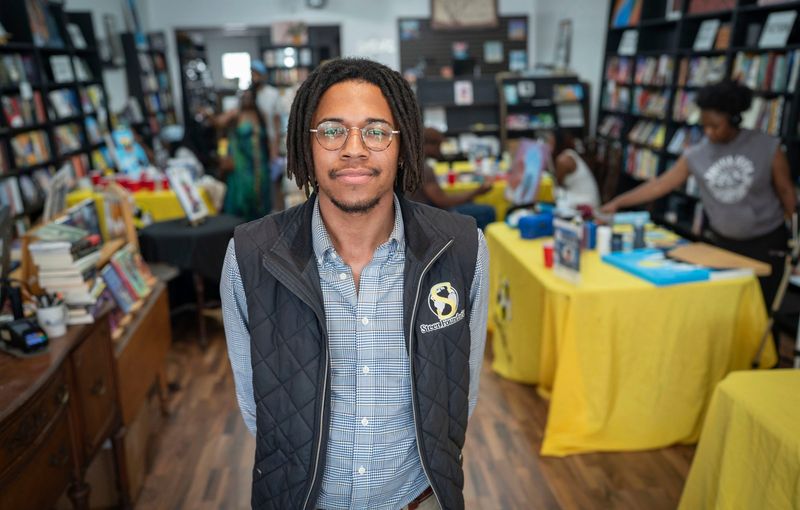
Jeremiah Steen could always tell when his youth was being tokenized on boards he has served on, like his presence checked a box for older people to make the decisions they were going to make anyway.
But Steen, 25, has been doing this since high school and he has learned how to leverage his positions to make room for more young leaders.

Steen’s work revolves around youths in Detroit, creating opportunities for young people to take control of the institutions they live within.
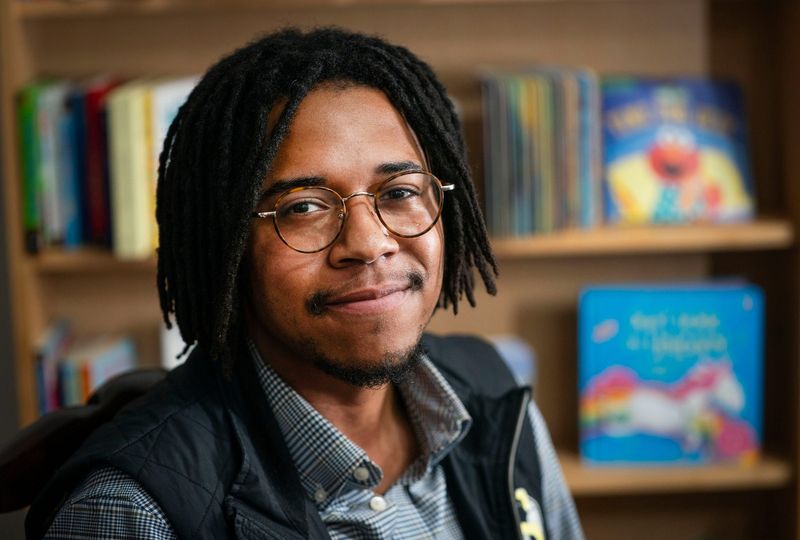
When Steen was 17, he became the youngest fellow at the Jane Goodall Institute. Using his $3,000 in fellowship money, he started the Steen Foundation at 18 and continues to run it with the help of donors. Through that foundation, which grants between $30,000 and $50,000 annually for scholarships and community programs, Steen has created an organization in which young people decide what to invest in.
By 21, he became the youngest trustee at the Skillman Foundation, which invests in youth education and leadership programs. By 25, he served on the Michigan Central Station Children’s Endowment selection committee, which manages over $19 million in endowment funds.
The key word in all this is “young.” Steen is determined to realize a Detroit where young people are influential players in city institutions. Even the Steen Foundation is made up entirely of people under 26 years old, and Steen himself will pass on leadership once his birthday comes around in 2027.
Steen’s commitment to putting young people in decision-making seats is among the reasons he is a 2026 recipient of the Dave Bing Young Leader Award. Part of the Shining Light Awards, presented by the Metropolitan Affairs Coalition and the Detroit Free Press, the Bing award recognizes young people who work across communities to improve the region. We asked Steen, a fellow at Detroit Future City, about how he prioritizes youths and what every young person should expect when they get a seat at the table. This interview has been edited for length and clarity.
Question: What advice do you have for young people who want to make a difference across the region?
Answer: Volunteer. Find an organization that aligns with your interest, and go volunteer. Connect with the leadership, connect with other volunteers and really start to build your network there. Then move up. Try to get into board service early because that gives you at least 12 folks who are senior in their fields that you can engage with, email or take out for coffee, literally building your network while learning how organizations are handling real issues.
How did you learn to carry yourself in professional spaces filled with older colleagues?
In many of those places, I was used as a token … so they could say, “we have a young person on the board, we’re doing this level of equity.” But I think they learned pretty quickly that if I’m going to be a token, they’re always going to be my token as well. I leveraged them all just as much as they leveraged me. First, I developed the mindset that I belonged in this place, that I’m not just here as the youth, and I’m actually meant to be here. Then next was really trying to bring as many young folks into the room as possible. On the first day, I’m coming in, requesting that we have at least one young person presenting at the meeting about something, you know? That’s how every board meeting should begin, especially if it’s centered around young people. … I learned to be clear up front and sometimes say, “I don’t know what this means,” … I then identified a board buddy, someone who’s seasoned in that organization, who I can call and email when something comes up about the board.
What advice do you have for young people in similar positions to yourself?
Show up. Know that if you’ve been invited into the room, you belong in the room, but don’t ever go into a game pretending as if you know the rules. Many boards, especially when it’s majority older individuals, will instantly start to disengage with you, if you come in saying, “This is what we need to do,” because that’s not how that works. That shows a level of immaturity in their eyes and that kind of creates pushback. It was something I had to learn.
What do you wish investors understood before investing in youths?
I think bringing young people to the table early, especially around decisions that they’re going to inherit, is valuable. Engage young folks as soon as the idea comes to mind, have a youth adviser around, then think about the accountability steps you’re putting in place so that when the young person says, “I think you, you should do this, this, and this,” and you’re only able to do one or two, you can clearly state that so the young person doesn’t go away, feeling as if they were just a token youth for the day. You don’t want them to feel like, “I got my photo, I got my certificate, but the organization’s not going to actually do anything that’s going to align with where I want to be.”
Shining Light Awards ceremony
The 2026 Shining Light honorees will be recognized at a luncheon ceremony in October. Here are the details.
When: 10:30 a.m. Wednesday, Oct. 7Where: Motor City Casino Hotel Tickets: $85 available at bit.ly/shininglight2026
This article originally appeared on Detroit Free Press: Detroit’s Jeremiah Steen puts young people in decision-making seats
Reporting by Tristan McFolley, Detroit Free Press / Detroit Free Press
USA TODAY Network via Reuters Connect
By Tristan McFolley, Detroit Free Press | USA TODAY Network