SPRINGFIELD, IL – While a landmark legislation changing how swipe fees work passing costs to customers sits another year in purgatory, small business owners across central Illinois are applying their rights to choose to deny certain payment platforms.
The first in the country bill requires interchange fees to not be charged to taxes and tips in restaurants or stores, a cost which has previously been swallowed by businesses.

Illinois lawmakers passed the bill ending “swipe fees” on taxes and tips in 2024, but the state will be delaying implementing the bill into 2027, despite the bill being upheld by United States District Court Judge Virginia Kendall in northern Illinois in February of this year.
While the future of swipe fees remains uncertain, some businesses in the Springfield area have decided to not worry about what happens with swipe fees.
‘It’s not fair to the customer’
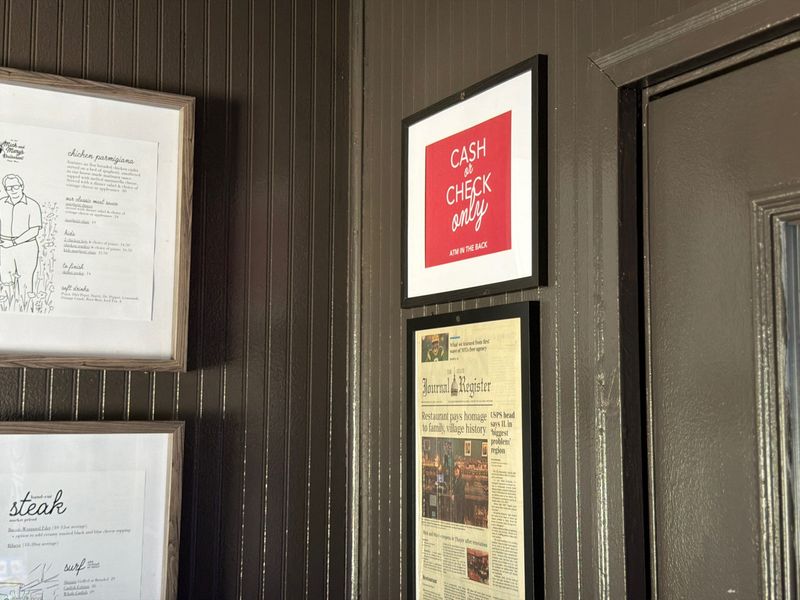
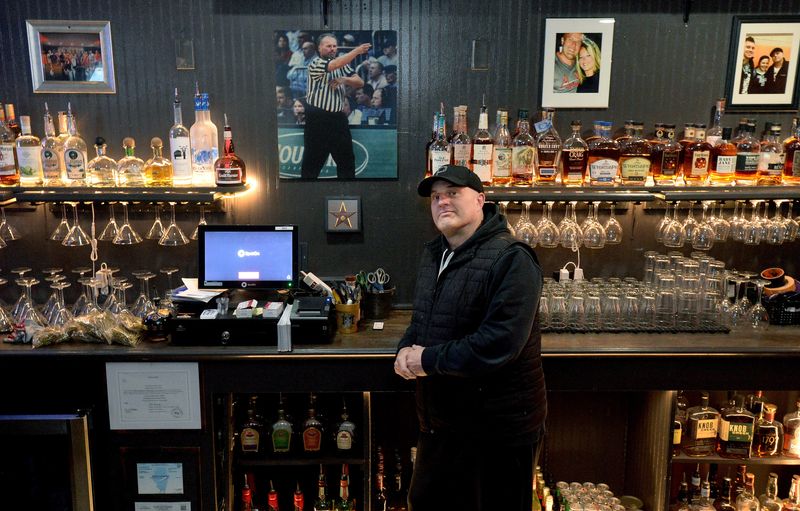
When Josh Snodgrass opens Mick and Mary’s in Thayer for the day, he knows his restaurant has survived prohibition, the turn of the century and COVID-19; his choice now to make payment cash only is another way to make sure the steakhouse survives.
Signs are posted on the door, hung up from the ceiling and published online to let customers know their card is not accepted here, for their benefit.
“If we were to let (card payment) for every customer who walked in, I know what we used to pay in fees and it was astronomical,” Snodgrass said. “I wanted to stop that and at the end of the day it’s not fair to the customer to pay an extra 4% for the service we’re already giving them.”
He said Mick and Mary’s when accepting cards in the past would lose several thousand annually.
Snodgrass continued that in the last 20 years he has seen processing fees get out of hand. During COVID-19, Mick and Mary’s in Thayer stopped accepting card payments and since then, only accepts card for large business parties.
He said the restaurant like many others across the state is constantly balancing a budget, and when they could feasibly no longer eat the 4% charge for swipe fees, it was not fair as a business to make the customers pay the extra percentage instead.
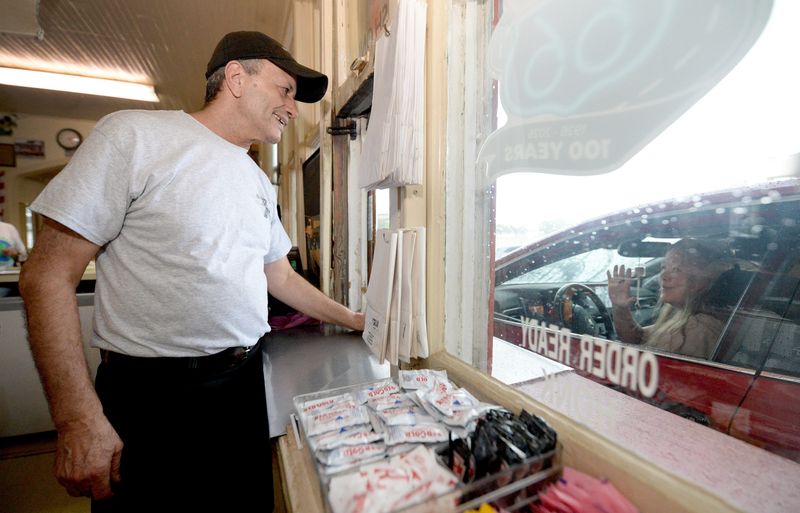
Mick and Mary’s is not alone in the area. Another historical business, Maid-Rite on the corner of Pasfield and Jefferson streets, pays homage to their history by predominantly taking cash only.
Saving fees for customers just because it’s easier that way, owner Sam Quaisi said nothing needs to be changed if it’s not broken. However, Maid-Rite has on hand a card reader, just in case someone forgets cash or cannot access the ATM inside the building.
Cash on the comeback?
The Illinois Retail Merchants Association is a longtime proponent of swipe fee regulations and the Swipe Fee Prohibition Act. President and CEO Rob Karr says there has not been a significant rise in cash use for the past five years, just under 15% according to the 2025 Nilson Report on the Federal Reserve’s Consumer Payment Choice.
“The amount of electronics includes credit, debit and digital and continues to increase,” Karr said. “If you are a coffee shop who relies on debit and credit transactions you could save an awful lot.”
Opponents of the bill like the Electronic Payments Coalition of banks, credit unions and card companies have been vocal about how card readers and payment processing cannot dissect a receipt cost breakdown.
“I would like to see implementation of no swipe fees at all, whatever that is and best for the customer and the businesses,” Snodgrass said. “That should be the solution, whether our legislators believe that and the banking industry believes that is up to them.”
When asked if he thought cash was coming back, Snodgrass said any way cutting the cost of operations down will see more use in the service industry, be it cash or other means to get by.
Card equals convenience
While businesses like Mick and Mary’s, the Robin Roberts Stadium home of the Springfield Lucky Horseshoes and Magic Kitchen prefer to take cash and only accept card in extreme cases, there’s another new piece of legislation which would affect businesses to conform with statewide consumer habits.
House Bill 4592 was sent to Gov. JB Pritzker’s desk. The legislation prohibits retailers from refusing cash payments up to $500 or posting signage that cash is not accepted. Violations would be considered petty offenses with a 30-day window to correct citations.
“For many Illinois residents, cash remains a dependable and necessary way to pay for everyday purchases,” State Sen. Christopher Belt, D-Swansea, who was a sponsor of the bill, said in a news release after the bill passed in May. “People deserve the freedom to choose how they pay.”
Exceptions for the bill include sales after 10 p.m., retailers with self-service checkout and a prepaid card system already established for the specific business. The measure also would focus on retail payments, and not government – so paying bills to a municipality would not be made harder.
Karr voiced opposition to the bill, stating that businesses should be allowed to choose what they can and cannot accept.
“We’re opposed, the retailer ought to be able to choose what their approach is,” Karr said. “The retailer has to make a decision, and it should be their decision as whether they will risk the possibility of a customer shopping somewhere else because they prefer that payment.”
There are still multiple businesses like newly opened indie bookstore Elderberry & Plumb which take card-only payments.
“The downside is convenience,” Karr said. “While cash represents 14% of transactions for the last five years, a lot of customers rely on electronic transactions.”
House Bill 4592 will go into effect in 2028 once the governor signs it.
Claire Grant writes about business, growth and development and other news topics for The State Journal-Register. She can be reached at CLGrant@usatodayco.com; and on X (Formerly known as Twitter): @Claire_Granted
This article originally appeared on State Journal-Register: Cash comeback? Why some local businesses are ditching cards for cash
Reporting by Claire Grant, Springfield State Journal-Register / State Journal-Register
USA TODAY Network via Reuters Connect
By Claire Grant, Springfield State Journal-Register | USA TODAY Network