Shark Week is approaching for the Discovery Channel folks — it begins July 26 — and wouldn’t it be nice if we could celebrate with a nicely grilled blacktip steak, topped with a busy mango salsa?
Problem is, we don’t often see shark steaks on the market ice these days. Too bad, because shark is one of those hunks of seafaring flesh that’ll taste pretty much how you want it to taste, while dense enough to hold firm on the grates.

Not a lot of money in shark retail, they say. Also, increased regulations have played a role — such as the ban on keeping the plentiful, short-finned mako, which provided a rack of swordfish-like steaks.
Perhaps most of all, according to those who have dabbled in the shark harvest, they’re a pain to deal with. The endgame — at the grill or skillet — might be a piece of cake, but the front end of the endeavor is a bit extensive.
And for some, quite disgusting.
There’s additional work with any fish that must be bled-out before hitting the boat’s ice chest. For most of those fish, including many of our common Florida catches, it’s a matter of draining blood and oils that would make the filet much less appetizing at dinner.
That’s true for the shark, but there’s another big reason for the draining — and brother, it’s a doozy.
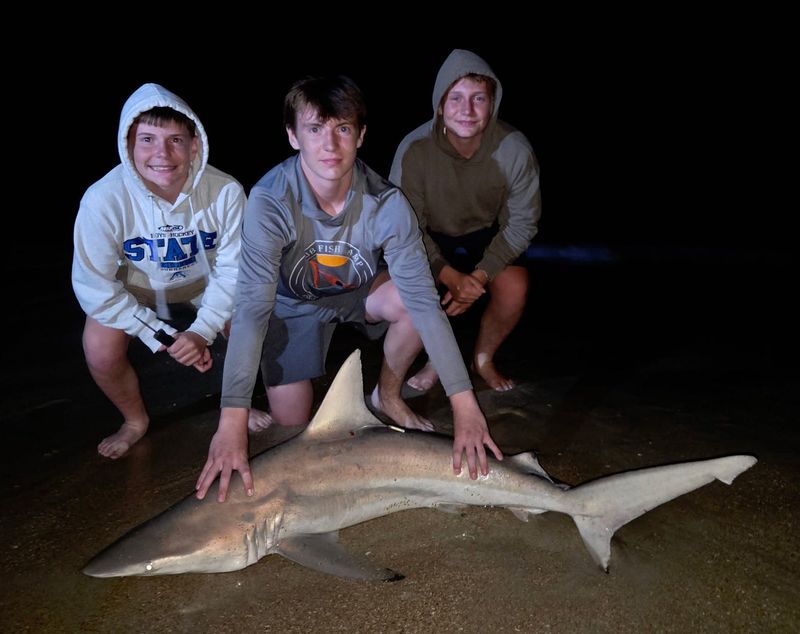
“If you don’t bleed it, and you take it home and you cut that belly open, you’re gonna get the biggest dose of ammonia you’ve ever had,” says Dustin Smith, owner and operator of NSB Shark Hunters, where the sharks are released back into the surf after a photo-op.
Ammonia? Well, technically, yes, but it begins as urea — that’s right, what the amateur biologists would call pee-pee.
If you’ve ever wondered why sharks can be so mean, we can likely blame their inability to … um … discard of bodily fluids like most others. Like a grizzled war vet or mob boss, they tend to internalize. Trust the process, as they say.
When a shark dies, all of that urine has to go somewhere, and since its innards have died and shut down the normal process, it floods the body, including the part you would’ve eaten if you hadn’t passed out upon beginning the filet process.
“So many people don’t know that,” Dustin says. “They think they can just throw the shark in the cooler and deal with it when they get home. But it’s not like a regular fish.”
Capt. Billy Pettigrew occasionally gets a hankering for shark — filets as well as bite-sized hunks, he says. But steps must be taken. He stops fishing in order to gut and bleed the shark, then uses a tail rope to return it to the water, where the saltwater helps flush out that which needs flushing.
“Then it goes in the fish box and I pack ice in and around the shark,” he says.
Dustin checks back in with a tip he employs once he gets home with a harvested shark. He sets aside a pail of ice-water and soaks the filets in it for 10 minutes.
“You’ll see a yellowish tint,” he says.
Ewwww.
“Drain the ice-water and repeat that process three times,” he explains. “On the third time, it will be clear. They’re ready to be packed and thrown in the freezer.”
We should pause to say there are rules involved with harvesting sharks, and if fishing for them from shore, there’s a shore-based license needed (it’s free but still a must) — all info available on the FWC’s website.
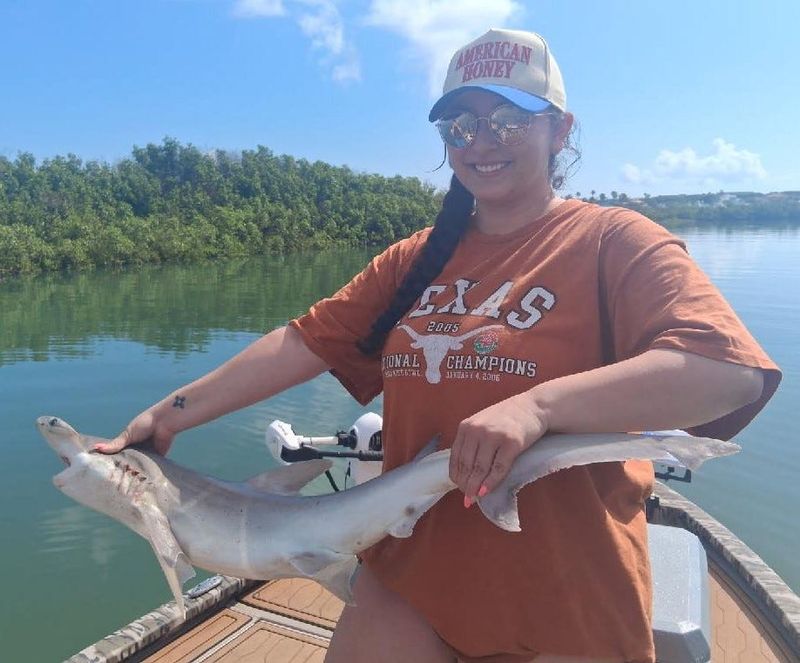
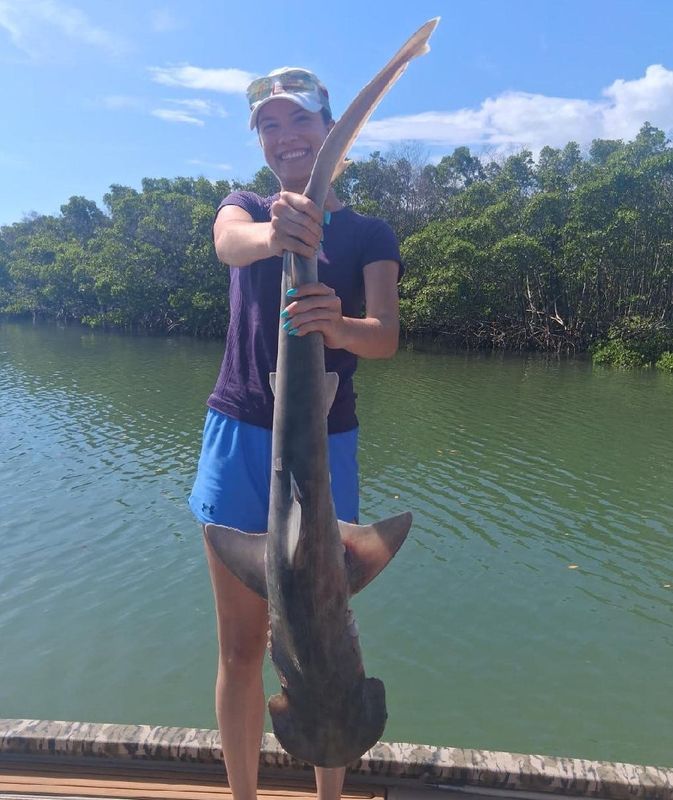
Local fishermen will tell you, if you’re gonna eat shark, you can’t do better than the bonnethead — and that’s good, since it’s a common catch, or bycatch, throughout the intracoastal and, of course, in and outside the inlet. When hooking your first-ever bonnethead, you might think you’ve landed a hammerhead due to its odd-shaped noggin.
But if you take the time to look at your fish app, you’ll notice a difference. The hammerhead’s head is shaped like a hammer while the bonnethead’s is shaped like a bonnet. Go figure!
Bonnetheads aren’t just unique for their looks, but for their diet. Other sharks will eat damn near anything that moves, with special desires for oily bluefish and the like. Bonnetheads are more cultured and prefer all varieties of crustaceans. That diet makes for better plate fare.
Since he runs a full-service charter operation, Capt. Billy offers advice for the very back end of this whole process.
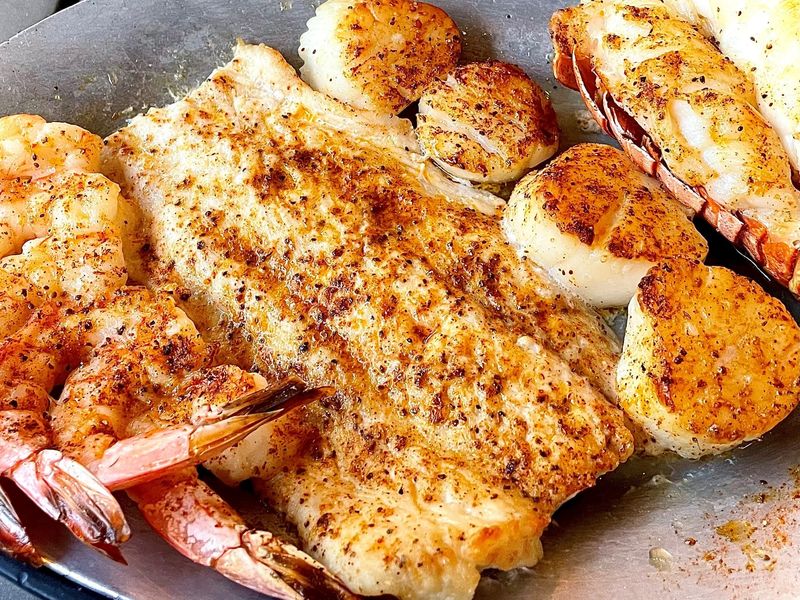
“With grilled shark, I put salt and lemon pepper on the steak,” he says. “A little butter and some herbs of your choice, all wrapped in aluminum foil. Serve with tartar sauce and wild rice.
“For shark bites, cut the shark in half-inch pieces, lightly coat in Frank’s hot sauce and bread it in your favorite breading. Mine is Zatarain’s Southern fish-fry. Deep-fry until golden brown. My favorite dipping sauce is sriracha aioli.”
Thank you, sir, may I have another?
Halifax/Indian River
Unlike all those fish that like to roam and occasionally find your baited hook, the flounder make you find them. Unable to order Grubhub, they blend into the floor of the river and await small passersby.
Good news is, these days they’re everywhere. By everywhere, we mean everywhere they’re prone to hang out — the inlet’s jetty rocks, creek mouths, oyster beds, bridge pilings, etc.
“The bite has been red-hot,” says Capt. Jeff Patterson (Pole Dancer charter).
Capt. Jeff says he had a four-man trip this past week that produced the legal limit of flounder — five apiece.
“The word is out and a lot of people are getting them,” he says.
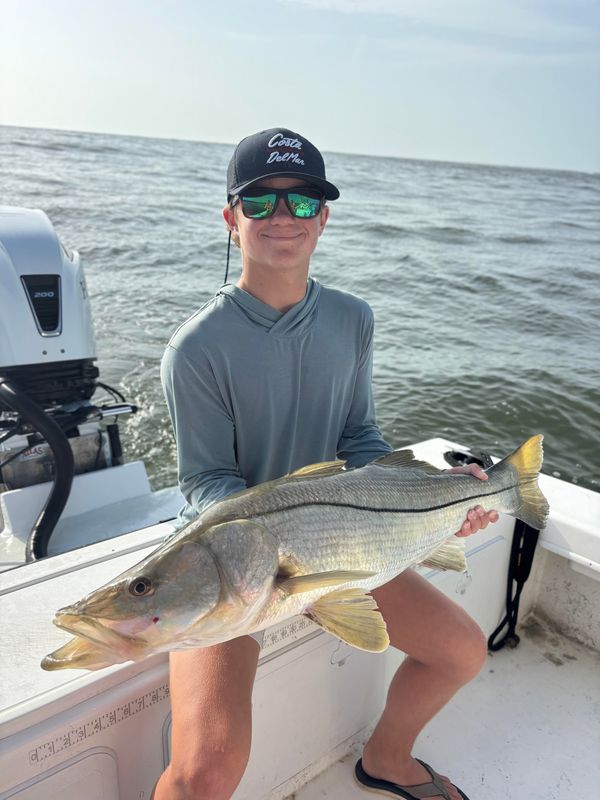
Redfish are going after large shrimp and around the inlet the reds are quite large. Catch-and-release snook are snooping around before and after the hottest part of the day.
Along with flounder to the north, mangrove snapper continue to pick up the summertime slack, as they always do. Ike Leary says they’re a common catch these days on the pier behind his Granada bait shop in Ormond Beach.
Offshore
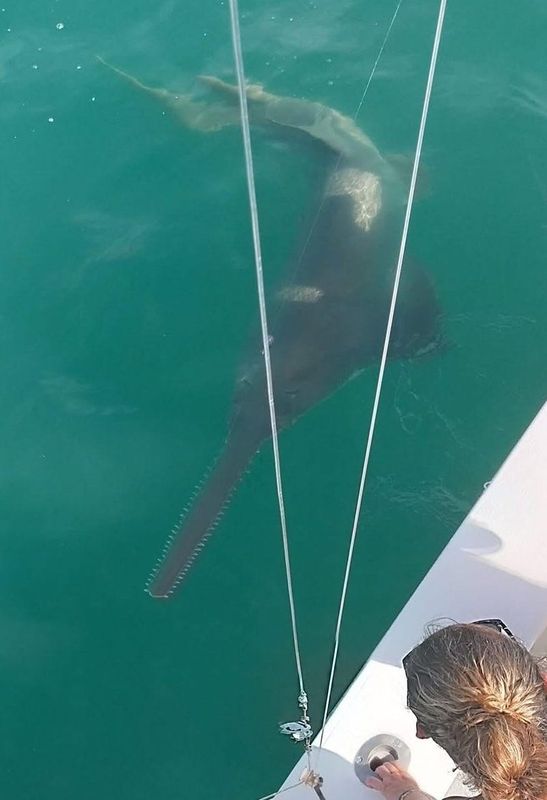
You may remember a few weeks back when Capt. Jeff sent us a picture from his fish-finder. It showed a sawfish passing under his boat, and yes, that’s quite a rarity in this part of the world.
Well, it appears that same sawfish — maybe — is still around. It became quite a surprise catch for the Rainbow Charters boat this past week. It was safely released, of course, because why would anyone bring a sawfish on board?
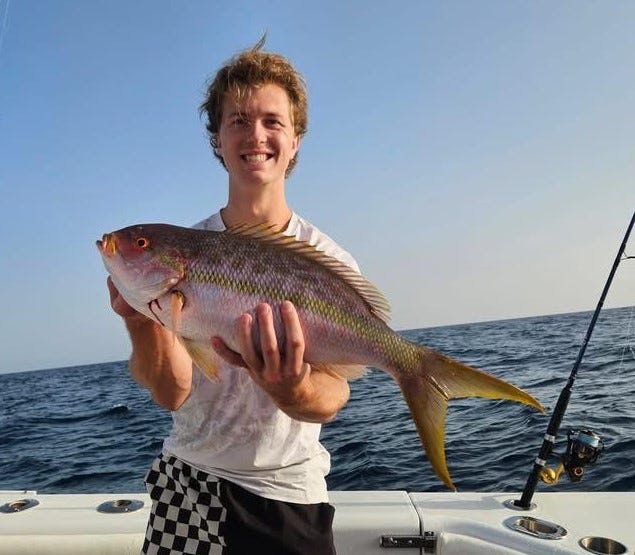
In yet another rarity, Cole Steininger, an Indiana native visiting from California, caught a yellowtail snapper while fishing aboard Capt. Tony Varano’s Reel Compulsive. The yellowtails are generally found in southernmost Florida and the Caribbean.
Surf
Same ol’.
Plenty of whiting and a rare pompano, along with lots of catfish.
You’re also likely to bring in a croaker, which is among our most underrated, two-way threats — small ones are great as bait, bigger catches are good on a plate.
St. Johns
Crickets and worms are the gold standard for chasing bluegill in this heat.
Largemouth bass are here and there, but it’s best to get out there at first light. Or before.
Hook, line and clicker: Send us your fish pics
We want to see your most recent catch. Email your fish photos to ken.willis@news-jrnl.com.
Please include first and last name of angler(s), as well as type of fish (we’re occasionally stumped). Some may be used in print, but all appear in the online version of the fishing roundup.
Do I need a fishing license?
You can find all the license info, including exemptions, on Florida’s Fish and Wildlife Commission website: MyFWC.com. But the basics are: No: If you’re 65 or older, 15 or younger, you don’t need a license. “Probably” Not: If you’re fishing with a licensed guide or charter boat, both of which often purchase commercial licenses that cover their customers. Yes: Most everyone else, including visitors from other states. Yes: Even if you’re a shore-based angler (shoreline, dock, pier, bridge, etc.), and even if fishing with a shore-based guide. However: The shore-based license is free . . . But: You still need to register for that free license.
Where do I get a license and what does it cost?
Many bait shops sell licenses, as do the bigger retailers (Bass, Dick’s, Walmart, etc.). Florida’s FWC uses a third-party site for buying or renewing fishing licenses: GoOutdoorsFlorida.com. The cost: $17 for an annual license. Don’t forget: Whether you’re fishing fresh or saltwater, you need the specific license. Freshwater and saltwater licenses are both $17 annually.
I’m here on vacation, do I need a license?
Yes you do, and some are available at GoOutdoorsFlorida.com, but what you need probably isn’t. Short-term: Three-day ($17) and seven-day ($30) licenses are no longer available online, but only at local tax-collector offices and many bait shops. Long-term: The yearly visitor pass is still available online for $47. “Some” exceptions: If you’re fishing on a charter boat (saltwater only), that guide should have a license that covers all his clients. If you’re hiring a shore-based guide, no such coverage exists and you must go purchase a license.
What if I get caught fishing without a license?
Florida residents: First-time violation is usually $50, plus the cost of the license you should’ve had. Non-residents: Fines range from $100-250, plus cost of license. Both go up exponentially with future violations.
This article originally appeared on The Daytona Beach News-Journal: Shark bites of a nicer kind. But first, to the urinal: A fishing tutorial
Reporting by Ken Willis, Daytona Beach News-Journal / The Daytona Beach News-Journal
USA TODAY Network via Reuters Connect
By Ken Willis, Daytona Beach News-Journal | USA TODAY Network