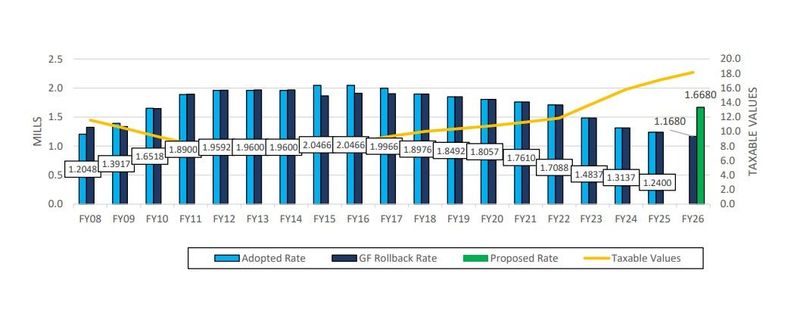
After eight years of property tax rollbacks, Marco Island City Council is considering the largest increase in at least 17 years to dig out of the hole staff and council say has been created and left city assets in major disrepair.
With increasing property values, mostly from new construction, over the past decade, city councils have focused on lowering property tax rates for most property owners, while maintaining the same revenue for the city – that’s rollback.

The problem is that a growing city needs more revenue to pay its employees a fair wage, to maintain infrastructure such as roads and bridges, and to supply emergency services. The proposed fiscal year 2026 general fund budget is an increase of $9 million.
“We are in a severe deficit situation” when it comes to maintenance, said City Manager Mike McNees.
That’s not a surprise for city council members who have been meeting for months in workshops on the budget. Now they have to decide how much to raise property taxes, which support the city’s general fund operating budget. There is a consensus not to continue with rollback but not on what the final tax rate should be. Staff is recommending a 34% increase over the FY25 rollback rate of 1.24.
The city’s total taxable value of real and personal property is $18.5 billion, up from this year’s $17.1 billion.
City Council has until September to set FY26 budget, tax rate
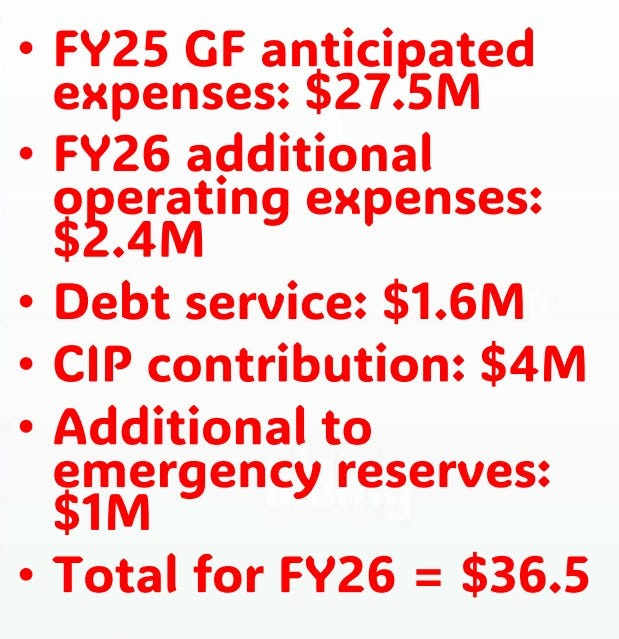
With maintenance, emergency fund, salaries, a couple of new employees and capital improvements discussed during those workshops, city staff recommended a 1.6680 millage, that’s a half mill increase from fiscal year 2025 rate of 1.24. It would fund the city’s proposed general fund budget of $36.5 million, up from $27.5 million this year.
City Council voted 4-3 July 21 to set the cap at 1.6680. That doesn’t set the rate for the year, but it does set the high end; Marco Island can approve a lower rate but not a higher one. A first reading of the budget and property tax rate will be held Sept. 2 with second and final approval set for Sept. 15. The 2026 fiscal year begins Oct. 1.
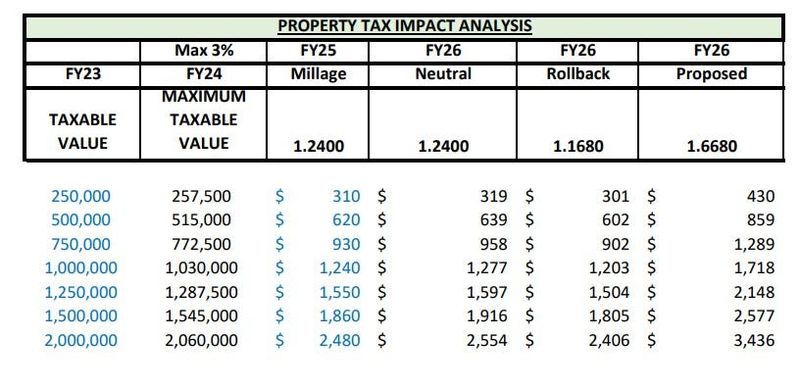
One mill equates to $1 for every $1,000 worth of a property’s assessed, or taxable, value (after adjustments, such as the homestead exemption for primary residents). According to Zillow, the average home price on Marco Island is $$861,713, down 6.4% from this time last year. Under the proposed millage or property tax rate, a homeowner with a $1 million home would pay $1,718, about $478 more in 2026 than in 2025.
“You have the rest of the summer to hammer it out,” McNees told the council. “You have ability to go down, but you don’t have the ability after today to go up.”
What has the property tax rate been historically on Marco Island?
The proposed rate would not be the highest in Marco Island’s history. In 1998, the first year after becoming a city, Marco Island passed a property tax rate of 2.112 mils, according to the ordinance signed by the first City Council chairman, Harry Cowan. In 2000, the rate was 1.5087 mills. In 2008, the rate was 1.4540 mills. In 2009, it went back up to 1.6518 mills.
Council members also are considering keeping the rate the same as this year, at 1.24 mil. It would generate $1.6 million in additional revenue over FY25. That’s not enough to do all the things council members said they wanted during previous workshops, Assistant City Manager Casey Lucius said. In addition to expected $2.4 million in operating expenses, council members said they wanted to add $1 million for emergency reserves, $4 million for capital improvements.
“I don’t want to go over a 1.24 mill period,” Councilman Stephen Gray said. “We should live within a budget of 1.24 mill for ’26.”
Chairman Erik Brechnitz said he wants a detailed list of capital improvements with projects set for the next five years, before he is willing to raise taxes.
“We do need more revenue in 2026 than we got in 2025,” Brechnitz said. “I’m not suggesting we go back to rollback – 1.24 isn’t rollback.”
“I am not opposed to raising more revenue,” said Councilman Darrin Palumbo. “I’m going to be leaning to voting toward some kind of increase.”
Councilman Rene Champagne said the city needs to address the needs and demands of residents.
“The residents have told us meeting after meeting after meeting how dissatisfied they are with everything in the city,” he said. “We’re kicking the can down the road to the extreme. A 1.24 mil is nothing but kicking the can down the road again. … We’ve got to be able to bite the bullet.”
Champagne and councilors Bonita Schwan, Deb Henry and Tamara Goehler voted to set the tax rate limit at the 1.6680 rate. Brechnitz, Palumbo and Gray voted against it.
“For eight years, we have dug a hole so deeply. I didn’t try to get elected to sit here and do nothing,” Goehler said. “I apologize to Marco Islanders for doing this. Raising anybody’s taxes is a bad thing. But if we don’t do it, we will keep going down. Prices are going up and our infrastructure is literally crumbling. … But I promise this will be just for one year. If we get where we get where we need to be, I would love to go for the flat next year, but right now I have no choice. I literally have no choice but do that. And I hope you understand my point.”
This article originally appeared on Marco Eagle: Marco looking to reverse tax rollbacks; city manager cites ‘severe deficit situation’
Reporting by J. Kyle Foster, Naples Daily News / Marco Eagle
USA TODAY Network via Reuters Connect