

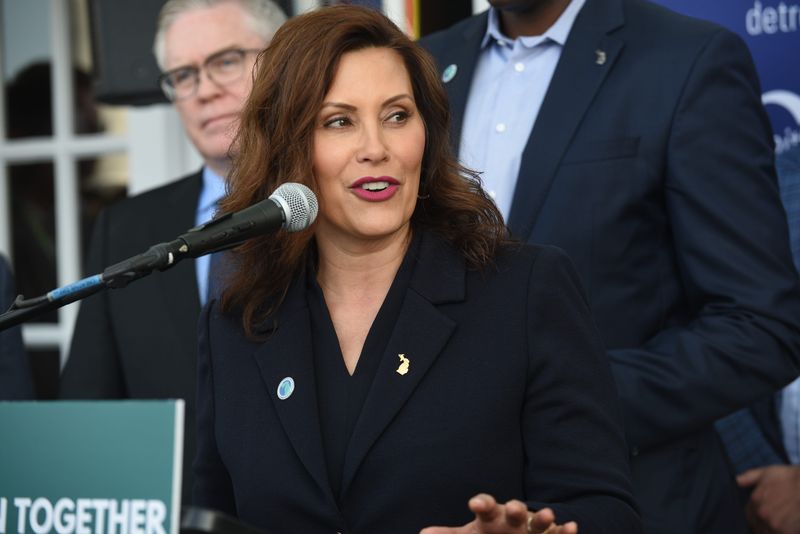
Michigan was promised more than 20,000 new jobs. It got 602. Gov. Gretchen Whitmer offered $2.7 billion in subsidies for eight major projects. The state has already spent $1.8 billion in taxpayer money, all for 3% of the promised jobs.
The results are clear: Subsidy deals cost taxpayers but don’t deliver jobs. The failure to turn deals into employment gains ought to be a lesson to the next governor and for policymakers around the country.

The companies that received these subsidies were supposed to lead the state’s economy. Whitmer described the deals as “historic,” “transformational” and “generational.” They haven’t been any of these. What exists from the deals are two vacant fields, one big, seemingly empty building, ongoing operations at existing auto plants and two battery plants already scaled back from their original plans.
Deals include more than $600 million for General Motors and LG Energy Solution to build a battery plant and an electric truck plant that would employ 4,000 people. The companies collected taxpayer dollars and reported just 408 jobs, four years after the deal was signed. Maybe the battery plant will deliver, but expectations for it have already decreased.
And that’s the most successful the deals have been at producing jobs.
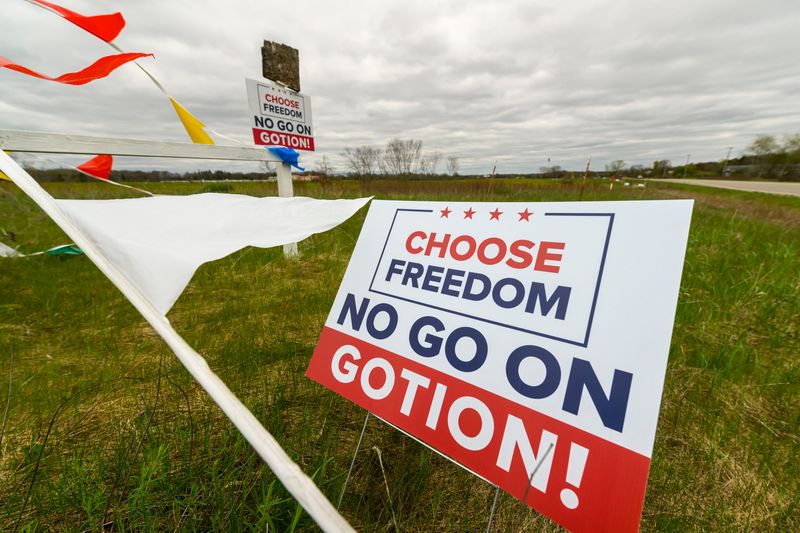
Betting on batteries led to more waste. A deal with Chinese battery component manufacturer Gotion was promised to create 2,350 jobs. It produced none, while $24 million in taxpayer dollars was spent preparing a site for a factory that was never built. Attorney General Dana Nessel says that she’ll try to recover the money. Battery manufacturer Our Next Energy collected $70 million and has produced just 48 jobs.
The state also spent $201 million preparing land around Flint for a semiconductor manufacturer that never came. The local economic development agency promises that it will pay off, even as other sites in Flint have gone unoccupied for years.
A lot of expensive eggs were broken. The omelets never showed up.
Nor should lawmakers, the media that report on these deals, or the people of Michigan expect subsidy deals to accomplish what lawmakers say they will. I reviewed all the major deals the state made from 2000 to 2020 and found that companies delivered just 9% of the jobs that were announced when deals were made. Whitmer’s record has been worse than average, but it’s in the same ballpark. State subsidies overpromise and underdeliver.
It’s not just bad luck in Michigan. Boeing got a huge deal from Washington that has failed to deliver. Foxconn got a huge deal from Wisconsin that fell well short of expectations. Same with Cerner in Missouri. These are some of the biggest state subsidy deals, and they regularly fail to deliver what was promised.
Elected officials like subsidies because the deals allow them to claim economic progress whether or not the jobs materialize.
“With this announcement, Michigan has added nearly 25,000 auto jobs since I took office, and we continue to lead the future of mobility and electrification,” Whitmer said upon authorizing a deal in 2022.
But Michigan had not added 25,000 auto jobs since she took office. The figure came from job announcements, not jobs that actually exist. Announcements didn’t turn into reality, and companies in the industry cut jobs in the state. Jobs in the industry are down by 14,600 jobs from January 2019 to May 2026.
People shouldn’t look at the press releases from economic development agencies as evidence of economic trends. They should look at the state’s real economic performance. Michigan has struggled, increasing employment by just 1% over Whitmer’s term, the eighth-worst performance among the states.
No other governor has approved as many major subsidy deals as Whitmer. Michigan led the nation in $100 million or more subsidy deals since 2019, according to Good Jobs First.
Business subsidies are politically tempting to officeholders, who get to bluster about creating jobs even if their deals fail afterward. People ought to notice that they’re being misled.
Perhaps if they do, lawmakers might stop chasing the latest headline and start focusing on the harder, less flashy policies that actually improve state economic performance.
James Hohman is director of fiscal policy at the Mackinac Center for Public Policy, a research and educational think tank in Michigan. He is the author of “Whitmer’s Major Subsidy Deals: $1.8 Billion for 602 Jobs.”
This article originally appeared on The Detroit News: Michigan’s costly bet on corporate subsidies hasn’t paid off | Opinion
Reporting by James Hohman / The Detroit News
USA TODAY Network via Reuters Connect

By James Hohman | USA TODAY Network
