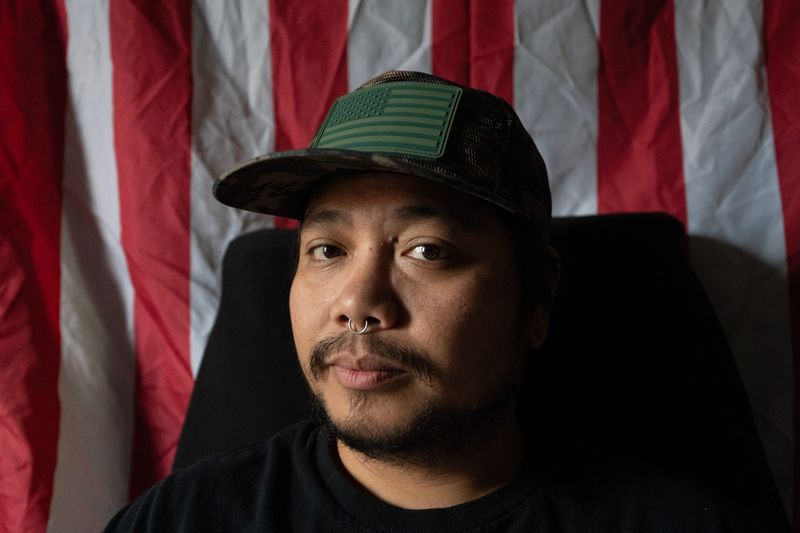
Dave Nungsey sat alongside 20 other veterans and active-duty soldiers from around the world in a multipurpose room on Fort Bliss in a citizenship ceremony. It was the culmination of a process he had begun when he joined the military but had not finished until now.

The 38-year-old veteran became a U.S. citizen on June 9 — just in time to celebrate the nation’s 250th anniversary of independence on the Fourth of July.
Nungsey came to the United States in summer 2011, when he was 24 years old, after his mother sponsored him to come from the Philippines on a green card as part of a family reunification program.
He initially struggled to learn English but eventually mastered it and joined the U.S. Army as a combat engineer after losing his job in Michigan. He was eventually stationed at Fort Bliss.
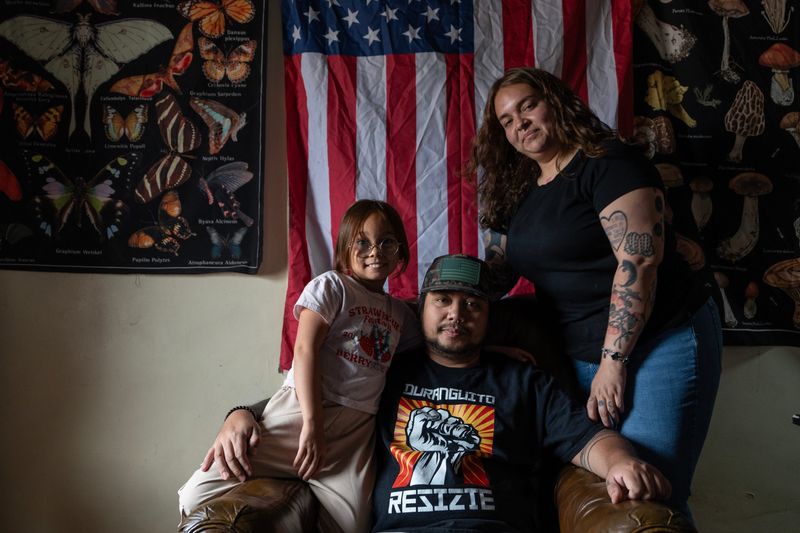
He hadn’t been worried about his immigration status until now, in part, because of the climate created by President Donald Trump and his administration’s increased immigration enforcement policies. He became worried that any police stop could lead to him being separated from his wife, Mariah, and their children, ages 7, 10 and 16.
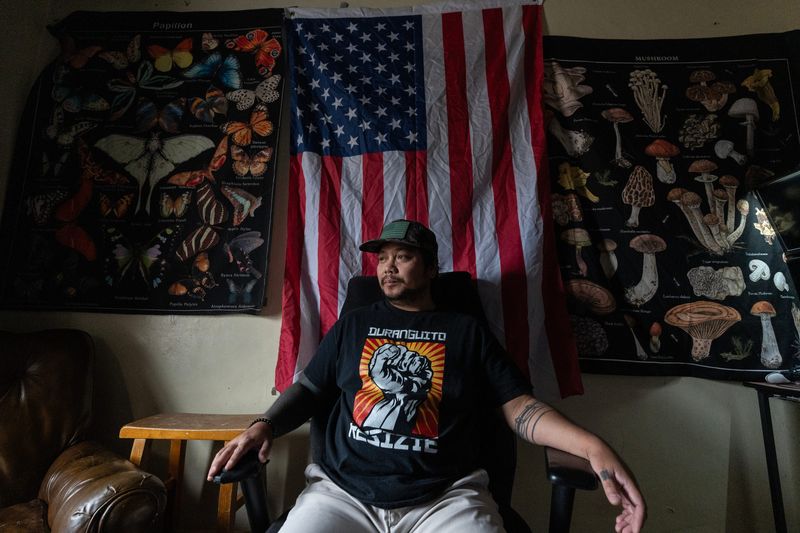
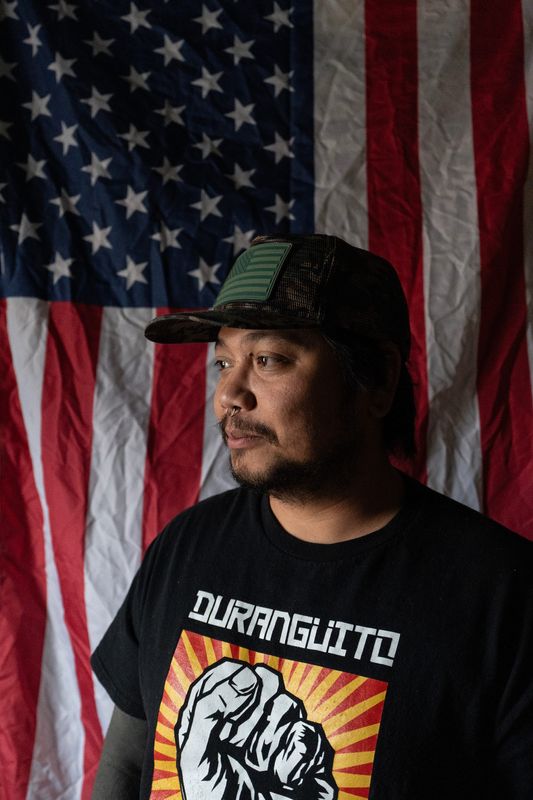
“The first time around was not so bad,” Nungsey said, sitting beside a large U.S. flag that hung from the ceiling in his home. “Now the issues with getting picked up by the side of the road is more front facing now. I don’t even have a traffic ticket, but what is stopping them from saying, ‘Oh, you have a warrant somewhere and you need to be deported.’ That is what I was trying to avoid, because I have kids.”
Declining citizenship applications, rising rejections
Citizenship is the historic culmination of an immigrant’s journey to the United States in search of the American dream.
The ceremonies can be elaborate, with flower arrangements and dozens of immigrants reciting the oath of U.S. citizenship.
Like the Nungseys, the fear of family separation has led many immigrants to seek naturalization. But across the United States, fewer people are applying to become U.S. citizens, United States Citizenship and Immigration Services (USCIS) data suggests.
There were 252,190 applications submitted for naturalization, including for military members, in the first quarter of fiscal year 2026, which starts in October. Of those, 147,200 applications were approved, while over 18,300 were denied.
Kate Angustia, supervisory policy and practice counsel with the American Immigration Lawyers Association, pointed out that the number of applications dropped each month, from a high of over 88,000 applications approved for citizenship in October to only around 38,000 in January 2026.
“There are fewer people applying,” Angustia said. “That was sort of a period of time, last fall, when things were getting a little bit more intense.”
Angustia speculates that this decline could have to do with fear among permanent residents to “invite scrutiny” into their lives. But like Nugsey, she points out that many people submitting applications are doing so to protect themselves.
In comparison, there were 750,000 new U.S. citizens taking the oath in fiscal year 2018. The number of applications approved for citizenship rose to 839,762 in fiscal year 2025, averaging 210,000 approvals per quarter.
A massive backlog of applications remains in the USCIS. There were 620,920 pending applications at the end of December 2025, according to data from the immigration agency.
The agency estimates it currently takes 10.5 months to process a naturalization application.
Immigration attorneys in El Paso, Texas, echo Augustia’s analysis that fear is playing a part in the decision to apply or not to apply — they have seen fewer people applying, but an increase in interest driven by protection concerns.
“There is more interest in applying for naturalization,” Melissa Lopez, the director of Estrella del Paso, an El Paso-based organization that has provided legal representation for immigrants for decades, said. “But then at the same time, there are so many policy changes that make it difficult even to apply for naturalization.”
There were 2,331 applications filed and 1,430 applications approved in El Paso, according to USCIS data. Estrella del Paso has assisted between 100 and 150 people in applying for citizenship in the last year.
USCIS has undergone many changes since Trump took office, creating new barriers to using legal pathways to citizenship. Between making the citizenship exam more difficult and longer, raising costs for naturalization applications from $760 for a paper filing to $1,330 and attempting to limit the granting of citizenship to immigrants from certain countries, the agency has ceased to be a “welcoming” agency, Angustia said.
“USCIS was an agency that’s mission used to be ‘we are a nation of welcome,'” Angustia, who used to work on policy for USCIS, said. “I find it quite disturbing that as soon as this administration took office they took that branding off its website and self-proclaimed itself an enforcement agency.”
‘Long, weird and winding’
Mariah Nungsey said that she had found the unfinished citizenship application in the glovebox after they started dating, just before the first Trump administration. He had started as a member of the army, but it went by the wayside. It frustrated her that he hadn’t done the process, explaining that they were about to have their first child.
The couple initially sought to begin the citizenship process again during the first Trump administration, but there was no sense of anxiety. President Joe Biden’s administration was similar.
“We laid low and we hoped for the best, and then (Trump) was out of office and I was like, ‘Oh, we should do it soon,” Mariah Nungsey, 34, said. “But everything just felt so nice, we thought, ‘Just don’t get in trouble.'”
Trump then returned to office and his administration made immigration enforcement policy a priority on Day 1, shutting down the border and unleashing immigrant raids across the country. The couple immediately began to worry.
They applied in late 2025 — the latest step in a long journey to become a citizen, and there were moments after applying that there were more setbacks than progress.
Dave Nungsey described the process as being “long, weird and winding.”
At one point during the interview process in November, the USCIS agent asked out of the blue whether he owned a firearm, a question that strayed from the traditional questions. He said yes, and the agent requested that he resubmit his 2025 tax return.
He resubmitted the documentation, and days later, he received a notice that he was approved for citizenship, meaning he would receive a notice of his citizenship ceremony in 120 days.
But when the 120 days were up, his status shifted from “approved” to “pending review,” he said. This caused Nungsey and his family great fear and concern, as they did not want to go through the process of submitting biometric data again.
But their attorneys assured them that this was just a glitch, likely because USCIS was using Artificial Intelligence to analyze cases. His case was again approved days later.
Muted citizenship ceremony
Citizenship ceremonies across the United States have historically been well-organized events — a big deal for both the country and the immigrants themselves. Nungsey’s citizenship ceremony felt thrown together, he explained.
The ceremony was uncomfortable, Nungsey explained. The chairs were placed close together, and the two-minute-long video of Trump sitting behind the Resolute desk in the White House was shown, welcoming the new citizens to the “Our national family,” which made many in the room uncomfortable, Nungsey said.
“My fellow Americans, how exciting this is; congratulations,” Trump says in the video. “Today you receive one of the most priceless gifts ever granted by human hands. You become a citizen of the United States of America. What an honor.”
His wife was uneasy throughout the ceremony, afraid that he would be taken away.
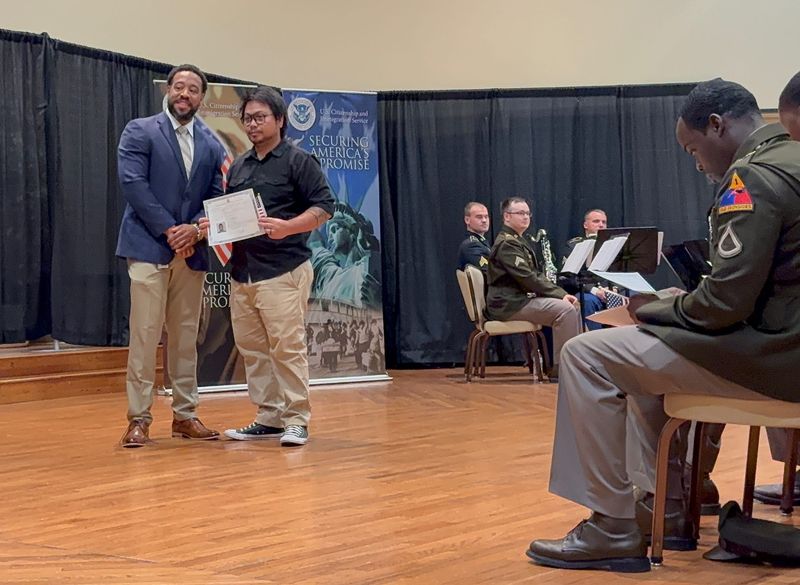
In the end, Nungsey’s name was called and he went up and received his citizenship from the El Paso USCIS director who was overseeing the ceremony. He took his photo, holding his little U.S. flag alongside the other veterans and active duty soldiers who had received their citizenship that morning.
Nungsey says he is still vigilant now that he has received his citizenship. He feels uneasy because they took his green card, and the Real ID is not proof of his citizenship.
But he foresees “smooth sailing” once he has received his passport.
Jeff Abbott covers the border for the El Paso Times and can be reached at:jdabbott@usatodayco.com; @palabrasdeabajo on Twitter or @palabrasdeabajo.bsky.social on Bluesky.
This article originally appeared on El Paso Times: ‘Long, weird and winding’ path to US citizenship for El Paso veteran
Reporting by Jeff Abbott, El Paso Times / El Paso Times
USA TODAY Network via Reuters Connect
By Jeff Abbott, El Paso Times | USA TODAY Network