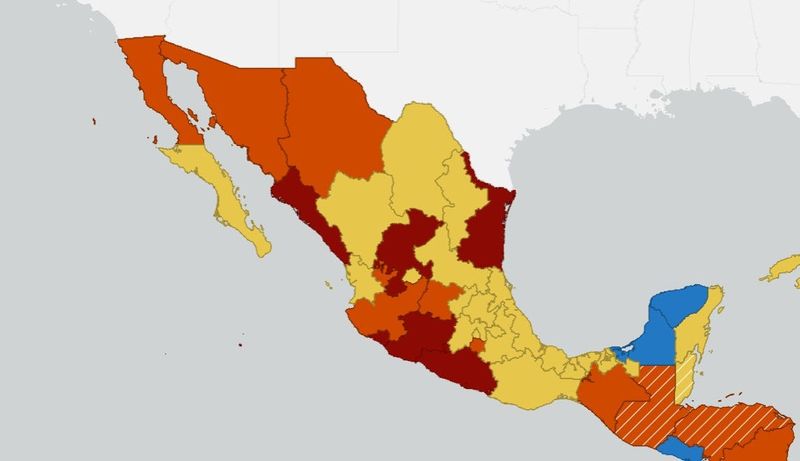
Michiganians heading to Mexico for spring break should know that safety varies widely by state and city, and conditions have been shifting in recent weeks.
What happened in Mexico

After a recent Mexican military operation killed a cartel leader, violence and security operations flared in parts of Jalisco, the state that includes the popular spring break destination of Puerto Vallarta. The U.S. Embassy temporarily urged Americans in some areas to shelter in place because of road blockages, criminal activity and disruptions to transportation. Flight schedules and airport operations in places like Puerto Vallarta and Guadalajara were disrupted for several days but have largely returned closer to normal, with airlines offering waivers and schedule adjustments.
Parts of Mexico with ‘do not travel’ warnings
The U.S. Department of State currently advises Americans not to travel to these Mexican states: Colima, Guerrero, Michoacán, Sinaloa, Tamaulipas and Zacatecas. These areas have high levels of cartel and gang violence, kidnapping risk and limited capacity for U.S. authorities to assist travelers in an emergency. Guerrero includes resort cities such as Acapulco and Ixtapa, which are still covered by the broader “do not travel” advisory despite their tourism profile.
Where travel should be reconsidered
Several states popular with U.S. travelers are under a “reconsider travel” advisory, including Baja California, Chiapas, Chihuahua, Coahuila, Guanajuato, Jalisco, Morelos and Sonora. Jalisco, home to Puerto Vallarta and Guadalajara, is rated Level 3 (“reconsider travel”) due to terrorism, crime and kidnapping risks and the recent cartel-related unrest. In these states, officials urge travelers to carefully weigh plans, stick to well-known tourist zones, travel in daylight on main routes, and remain alert to local conditions.
Safer tourist regions and overall risk
Many of Mexico’s most popular beach areas, such as those in Quintana Roo (Cancún, Playa del Carmen, Tulum) and Baja California Sur (Los Cabos), are under a Level 2 advisory, meaning travelers should exercise increased caution, similar to guidance for countries like France or the United Kingdom. Even in these relatively lower‑risk areas, U.S. officials warn about crime, scams and occasional violence, and stress using reputable transportation, avoiding isolated areas at night, and monitoring local news and official alerts. Analysts and security experts note that cartel power struggles can create short‑term spikes in instability that may affect travelers, even in places that are usually calm.
What spring breakers should do
For Michiganians already in Mexico or traveling soon, the U.S. Embassy’s recent alerts show how fast conditions can change, with sudden calls to shelter in place and temporary curfews for U.S. government staff in parts of Jalisco.
Michigan Sens. Gary Peters and Elissa Slotkin have urged state residents in Mexico to enroll in the State Department’s Smart Traveler Enrollment Program (STEP) so they receive real‑time security updates and can be reached quickly in an emergency. Before departure and while on spring break, travelers should review the State Department’s Mexico travel advisory map, confirm the level for their specific state and route, and stay registered with STEP for the latest guidance.
This article originally appeared on The Detroit News: Is Mexico safe for spring break? What you need to know
Reporting by The Detroit News / The Detroit News
USA TODAY Network via Reuters Connect