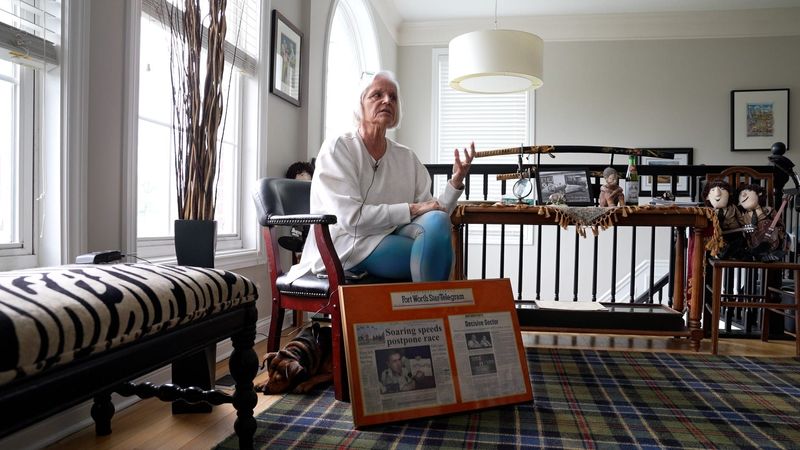
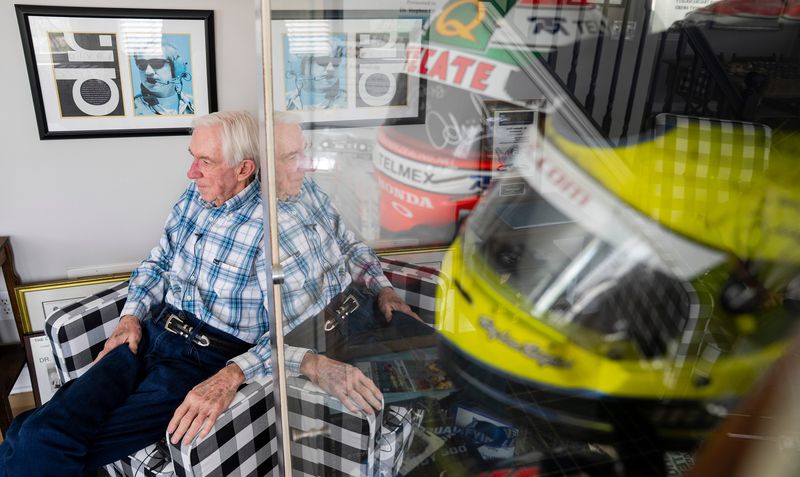
CARMEL — Dr. Steve Olvey is sitting in a black-and-white checkered chair in the front room of his home, surrounded by a makeshift racing museum of newspaper articles, hall of fame relics, helmets and an old photograph of his favorite childhood driver, Bill Vukovich, who crashed into a cloud of smoke and died right in front of his eyes.
Olvey was 10, sitting in the stands of Indianapolis Motor Speedway in 1955 with his dad when Vukovich’s car became airborne, sailed over the backstretch wall and burst into flames. Young Olvey stared in disbelief as the somber voice came over the intercom: Bill Vukovich has been mortally wounded.

Olvey looked up wide-eyed at his father and said, “Oh, that means he’s OK?” No, his father told him, that is not what those words mean at all.
That seemed to be the morbid theme of Olvey’s racing childhood. He would get a favorite driver, and that driver would be killed two weeks later. He would get another favorite driver, and that driver would be killed three weeks later.
There were no safety protocols. There were no paramedics on track. Drivers would stop mid-race, get out of their cars and try to help save a fellow driver from a burning car. The ambulance was nothing more than a hearse with an oxygen tank and a gurney, according to Olvey.
“The drivers would hit the wall and be gone,” Olvey’s wife, Lynne, says. “Before all of Steve’s innovations, those drivers were dead.”
Olvey, a physician who specialized in trauma and critical care, believed he could save every driver’s life — minus a fatal injury — if he could get to them fast enough.
“I’m bragging on him,” Lynne says, “but he deserves to be bragged on.”
As Olvey’s wife of 44 years tells stories about his career, Olvey listens intently and nods. He is 83 and has been diagnosed with Alzheimer’s disease.
The brilliant mind that pioneered the safety of modern-day racing has slipped, but not everything has vanished. Not the emotions.
Memories break through, sometimes
Olvey starts to cry when asked about all those drivers at Indianapolis Motor Speedway who admire him and thank him for his relentless fight to save lives in their sport.
“And he’s doing a good job, because he did the secret type of hard type of play,” Olvey says, in the third person, then continues. “They were really happy letting me teach them how and help them do that.”
Olvey is quieter than he used to be. Much of what he says can only be understood by Lynne, though, in the midst of jumbled words, he will suddenly form a sentence and, usually, it’s about being a pioneer of motorsports safety. Lynne says that is, by far, Olvey’s proudest accomplishment.
It was about six years ago when the signs began appearing that everything Olvey had accomplished was starting to intermittently vanish from his memory. Olvey and Lynne were living in Miami, and he was getting lost on short trips he’d driven countless times before.
Three years ago, as the disease progressed, Lynne needed more help. The two moved back to Indy to be closer to siblings and friends. Olvey didn’t want to leave Miami. In his younger days, he loved to sail, and he was a champion water skier.
Olvey was a force to be reckoned with then, making his name as the first doctor on the track in the 1970s.
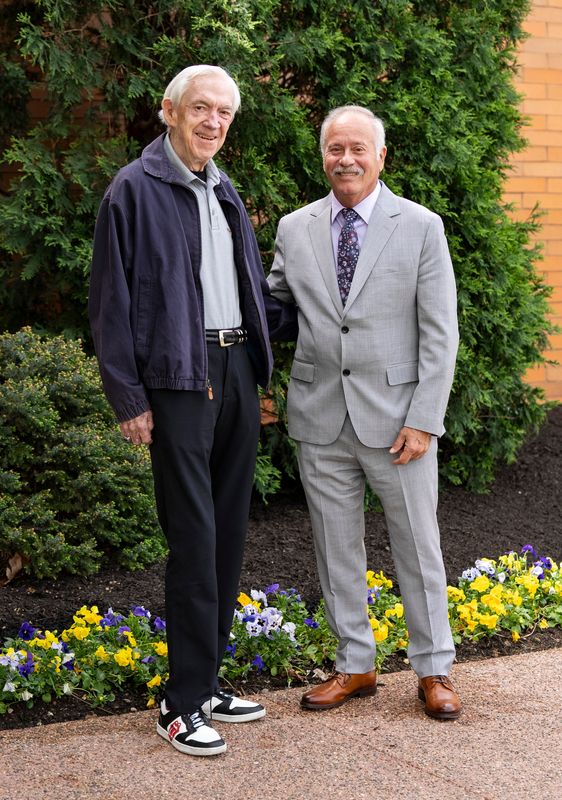
Then, when he joined forces with Dr. Terry Trammell, an orthopedic surgeon in Indy, the two became unstoppable as they fought the status quo and demanded that racing safety take precedence over money and sponsorships.
They started the first U.S. traveling motorsports medical team. They were behind groundbreaking brain testing and the strictest concussion protocols in sport. They innovated advanced on-track medical response, orthopedic techniques for trauma, safety modifications to race cars and barrier technology.
In short, Olvey and Trammell revolutionized motorsports safety, dramatically reducing driver deaths and injuries. Both were inducted into the Motorsports Hall of Fame of America in 2023.
But today, only Trammell is left to continue to fight for what they began more than four decades ago.
Trammell is the voice that Olvey no longer has.
‘Would you like to tell Roger (Penske) that?’
It’s a Friday morning in April, and Trammell has just finished his speech on the history of motorsports medicine and science at the annual meeting of the Indiana Orthopaedic Society in Carmel.
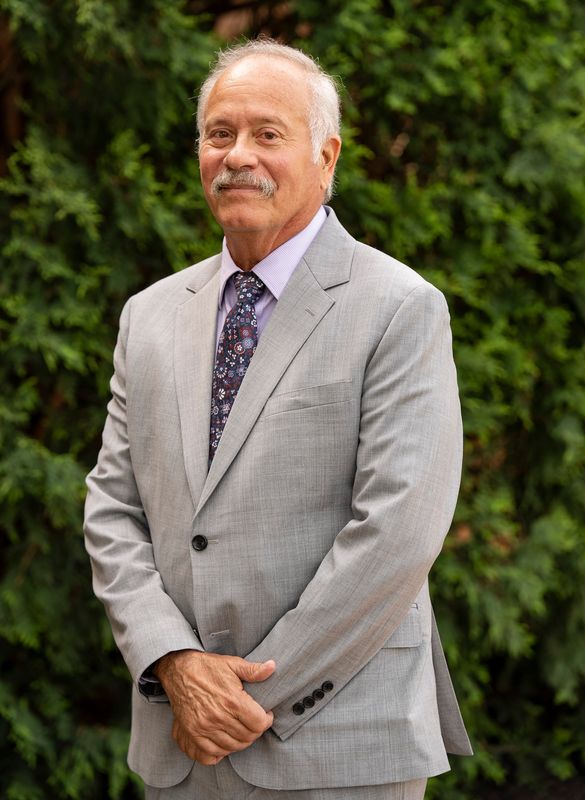
He is in a suit and tie, still pushing this safety thing he and Olvey started more than four decades ago. No longer treating drivers and healing drivers, Trammell considers himself a doctor of prevention, an analyst of crash data and a teacher of all the things he and Olvey learned.
What a ride that was, Trammell says, that partnership between he and Olvey that began, on a whim, more than 40 years ago.
It was the early 1980s. Olvey was director of intensive care, and Trammell was an orthopedic surgeon. Trammell knew Olvey well because many of his patients went to the ICU. Trammell also knew about Olvey’s work in racing, but the two hadn’t crossed paths on track, yet.
Not until September 1984, when Rick Mears’ car hit a guardrail at Sanair Super Speedway in Canada, causing injuries that crushed almost every bone in his feet and tore the Achilles tendon in his right ankle.
“They wanted to amputate his feet. The injury, they said, was unsalvageable,” Trammell says.
Olvey called Trammell and told him he needed to fly to Canada. Trammell, who was on call through the weekend, told Olvey that was impossible.
“And he goes, ‘You figure out that problem because Penske’s plane is on the way to pick you up. You need to be at the airport in an hour,'” Trammell says. “I said, ‘I can’t do that.’ He said, ‘Would you like to tell Roger that?'”
Trammell decided telling Penske that would not be a good idea. He flew to Montreal, walked into the hospital where the head surgeon told him Mears’ feet had to be amputated.
Penske was in the room, arms crossed, staring at Trammell and shaking his head.
“And finally I spoke up and said, ‘He’s not going to lose his feet,'” Trammell says. “And I looked at Roger and said, ‘We will be going back to Indianapolis tomorrow won’t we, Mr. Penske?'”
Mears was flown to Indy, and his feet were saved. Penske decided he needed an orthopedist at every race.
“And that was the beginning of the rest of my life,” Trammell says.
And the official beginning of his partnership with Olvey.
IndyCar deaths drop dramatically
The number of lives he and Olvey saved, Trammell says, is impossible to count, “because they didn’t get hurt badly enough to say that it was a life saved, but those all were saved lives.”
Since 1916, there have been 95 deaths in IndyCar races, most of those occurring in the 1950s, 1960s and 1970s. With safety improvements implemented by Olvey and Trammel in the 1980s and 1990s, only four drivers have died since 2000: Tony Renna, Paul Dana, Dan Wheldon and Justin Wilson.
While Trammell no longer practices medicine, he is still deeply involved in improving motorsports safety.
“One of the things that I’m really dictatorial about is seeing that all that data gets analyzed from every collision, no matter what happens, whether the driver’s injured or not injured,” Trammell says. “Utilizing that data, we’ve been able to pick off trends before they become injuries.
“So somebody gets a scratch, I want to see that scratch, because I want to know why he got scratched, because the next time, it’s going to be a laceration — or worse.”
Being the bad guy
Olvey and Trammell weren’t always known as the good guys around the track. They’ve been the bad guys plenty of times, especially in the early days.
“Probably the biggest triumph was convincing the drivers that I didn’t have the plague,” Trammell says, “When I first started, they would literally see me at the track and go around me, because they didn’t want to be seen talking to the doctor, because it was a sign of weakness.”
Racing was a risky sport, a thrilling sport, and that was the allure, the heroics of surviving unthinkable speeds.
“You were not the macho driver by asking (doctors) all those things,” IndyCar legend Mario Andretti says in the film “Rapid Response,” which chronicles the journey of Olvey and Trammell.
Andretti was one of the first drivers to champion the need for doctors on the track, Trammell says. “Mario gets all the credit for changing that. He made it very clear to drivers that I was somebody that you wanted to know.”
That didn’t mean all the drivers, and owners and sponsors, for that matter, had latched on to the concept of focusing on safety.
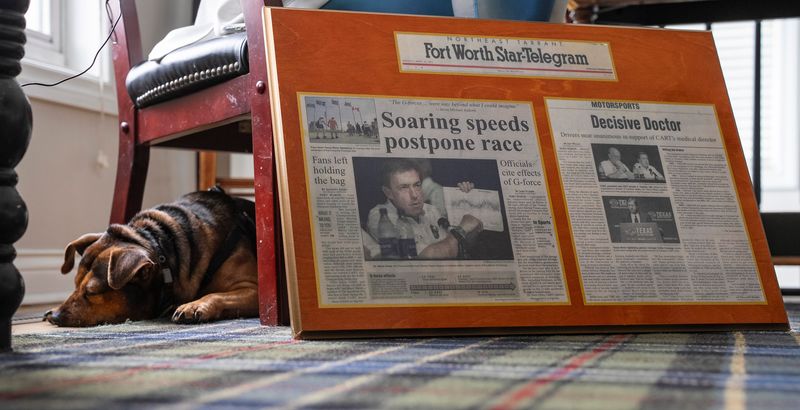
Lynne remembers the race in 2001 when Olvey became the most hated man in Texas.
It was the first year CART was racing at Texas Motor Speedway when the crashes started happening, one after another.
“And we kept going, ‘This is weird,'” Lynne says. “They’re crashing all by themselves. They’re out there and they’re just, all of a sudden, just flying into the wall.”
Olvey’s brain went into overdrive. He talked to Helio Castroneves, who told him he was feeling dizzy when he got out of the car.
“And all of a sudden, Steve says, ‘You’re getting too much G (force), too many Gs. This is what’s causing your blackouts,'” Lynne says. “‘It’s like being, you know, an astronaut. You’re getting blackouts.'”
When Olvey confirmed the banked, short track, with cars going 230 miles per hour, was causing the problem, he met with the drivers. They denied having blackouts until Castroneves spoke up. The rest of the drivers followed.
Next, Olvey had a meeting with the owners. This was Penske’s track, and he wasn’t happy that Olvey wanted to cancel the race. A vote was taken, and Olvey won.
“And, it PO’d everyone off at the racetrack, the promoters, everybody,” Lynne says. “It was Steve’s fault. But the thing is, Steve has always been for speed, always. But you have to have the safety innovations around it.”
‘If only the sport could be safer’
Being a race doctor wasn’t a dream of Olvey’s as a kid, even as he watched his favorite drivers dying on the track, but those memories always stuck with him.
The flames, the blanket of grief that hung over the Speedway after those loudspeaker announcements … mortally wounded.
So, in 1966, when Olvey spotted the flier in the hallway of Indiana University Medical School, it caught his eye. The Indianapolis Motor Speedway was looking for medical students to volunteer. Olvey signed up.
Once on track, this time with an insider’s view, Olvey realized not a lot had changed, safety-wise, since his days watching his favorite drivers meet their tragic fates.
After graduating in 1969, Olvey became the assistant medical director at IMS, and he noticed a lack of speed and resources when it came to treating injured drivers.
“You’ve got 60 minutes to get them into surgery,” Olvey says in “Rapid Response.” “The first response was to bring in the local news helicopter. We had to literally stuff him into the helicopter. The promoters, they didn’t want to spend any money on the safety.”
Not until Olvey became involved. In 1972, he developed the first U.S. traveling motorsports medical team for USAC, traveling to all the tracks and working with medical directors to figure out the logistics of helicopters and ambulances.
In 1979, Olvey became CART’s director of medical affairs. Then came a turning point.
It was the 1984 race at Michigan International Speedway when Chip Ganassi lost control of his car and slammed into the wall, causing severe head injuries.
“Steve thought he was dead, literally, when he got there to the scene. He wasn’t breathing. He was dead,” Lynne says. “And so they resuscitated him, took him by helicopter to the hospital.”
Ganassi lived, but the accident ended his career as a driver at age 25, something Olvey and Trammell found devastating. If only this sport could be safer.
They went to work.
The two started a brain rehabilitation program for drivers, revolutionary computerized testing that was unheard of at the time. When Roberto Guerrero crashed during testing at Indianapolis in 1987 and was in a medically induced coma for 17 days, his future was unknown.
“And when he came out, we were all worried for his brain, what was his brain going to do?” Lynne says. “But Steve immediately put him through these tests, these neuro tests, and he raced again a year later and came in second at Phoenix.”
Olvey and Trammell collaborated, too, to make it mandatory that drivers wore the HANS (Head and Neck Support) device, which restricted violent head movement, preventing severe head and neck injuries.
Like Olvey, Trammell tears up when asked about the impact he’s made on the sport of racing.
“I don’t think either one of us went into this thinking we’d end up doing what we did,” Trammell says. “And that’s kind of the beauty of it. We were just trying to make things safer.”
Follow IndyStar sports reporter Dana Benbow on X: @DanaBenbow. Reach her via email: dbenbow@indystar.com.
This article originally appeared on Indianapolis Star: Speed doctors: A surgeon & trauma doctor collided. Without them ‘those drivers were dead’
Reporting by Dana Hunsinger Benbow, Indianapolis Star / Indianapolis Star
USA TODAY Network via Reuters Connect