Farmers in Wisconsin are optimistic about a new agricultural trade deal with China following President Trump’s meeting with Chinese President Xi Jinping.

The White House announced Sunday that China will purchase at least $17 billion in U.S. agricultural products each of the next three years.
Officials have not said how much of which products are included in that agreement, but Trump told reporters on Air Force One that China is “going to be buying billions of dollars of soybeans.”
This new deal is in addition to a commitment China made in October to buy 25 million metric tons of U.S. soybeans annually.
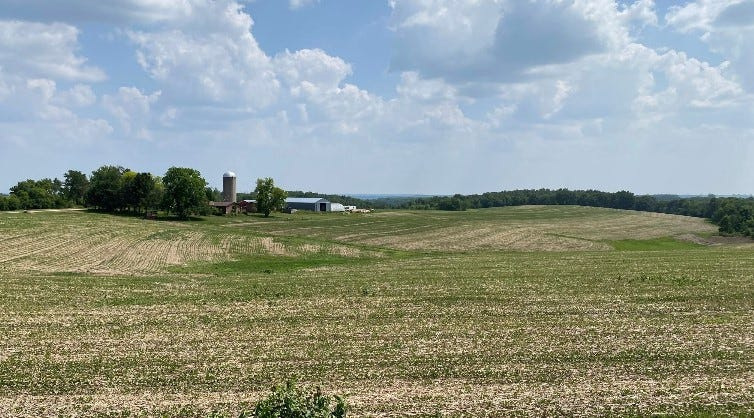
Wisconsin Soybean Marketing Board Vice President Matt Wagenson farms soybeans and corn in Outagamie County. He told WPR’s “Wisconsin Today” that retaliatory tariffs in the ongoing trade war with China have significantly cut into Wisconsin soybean exports.
“If they continue to stay with their commitment, that’ll be a huge help,” Wagenson said. “We’re always looking to increase our free trade across the world, and China is just a crucial part of that free trade.”
Chinese commerce officials said tariff reductions are part of the new agreement with the U.S. Reuters reported soybean tariffs could come down by 10 percent.
Wagenson said China has only been buying about half as much soybeans from him as it used to, but he hasn’t altered his growing plans as tariffs rise and fall.
“As farmers, we’re more rotational and work with what works on our farm, as opposed to chasing a nickel or a dime one way or the other,” Wagenson said. “We’re not going to change because of how the tariffs are affecting us. We’re going to do what’s best for growing a crop on our farm.”
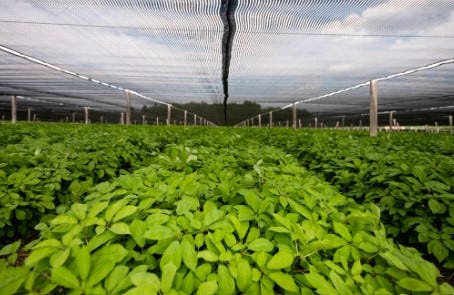
Wisconsin ginseng farmers have faced similar challenges with Chinese trade and limited alternatives.
Ginseng Board of Wisconsin President Bob Kaldunski told “Wisconsin Today” he has heard from an industry consultant that ginseng is part of Trump’s agricultural negotiations with China, but it’s unclear how much was included in the purchase agreement the White House announced.
“Ultimately, 80 to 85 percent of our ginseng ends up in China. That is our market,” Kaldunski said. “It’s actually a traditional Chinese medicine, so it’s a little different than your vegetables and your other commodities.”
China put some of its highest retaliatory tariffs on ginseng, peaking at 117 percent last April. Now, it’s down to 32.5 percent, and Kaldunski is still seeing prices at half of what they were six years ago.
He said 98 percent of all ginseng exported from the United States comes out of Wisconsin, so the state’s ginseng board has been looking for alternative markets in addition to advocating for a trade deal with China.
“We’ve been really looking outside the box,” Kaldunsky said. “We’ve been working in other countries and looking into their market, or working with them and doing a lot of trade missions and different promotions.”
Despite the uncertainty of back-and-forth tariffs and trade deals, both Kaldunski and Wagenson are hopeful better days are ahead for exporting their crops.
Wagenson just planted his soybeans for the year, and he’d like to see China and the U.S. follow through on their agreement by the time he harvests in the fall.
“I’m a farmer. I have to be optimistic. We put a lot of faith in a little seed,” Wagenson said. “China’s a big country, and China needs to feed the machine. We’re part of the machine to feed them.”
This article is republished with permission from Wisconsin Public Radio
This article originally appeared on Wisconsin State Farmer: Wisconsin farmers hopeful for relief from Trump’s new trade deal with China
Reporting by Lorin Cox, Wisconsin Public Radio / Wisconsin State Farmer
USA TODAY Network via Reuters Connect