CANANDAIGUA, NY — Members of Canandaigua City Council’s environmental committee on Feb. 3 are expected to discuss the creation of an ad-hoc tick-borne disease education and prevention committee in response to a continued rise in tick-borne illnesses in the city and Ontario County.
Last fall, Councilmember Doug Merrill, who chairs the committee, sounded the alarm over the public health trend as well as an increasing deer population, which carry the ticks and pose concerns over vehicle crashes.

Lyme disease cases jumped from just 31 in 2020 to 337 in 2025, and anaplasmosis, a potentially more serious illness with a 25% hospitalization rate, increased from one case to 23, Merrill said. This is not an insignificant public health issue, Merrill said.
“Despite strong efforts by public health officials to warn our citizens about the risks, tick-borne disease cases are rising in Ontario County at an alarming rate,” Merrill said. “City Council believes we need to explore additional strategies to better educate and protect our residents.”
The proposed advisory committee, which would sunset at some point in the future, would be led by members of the environmental committee and include community members with relevant expertise.
Its purpose would be to develop evidence-based education and prevention strategies and to advance coordination with Ontario County and state partners to “help figure out how to tackle this problem,” Merrill said at a recent City Council meeting.
What do ticks and deer have to do with Lyme disease?
Lyme disease is the most common disease spread by ticks in New York, and the numbers go up every year, according to Ontario County Public Health.
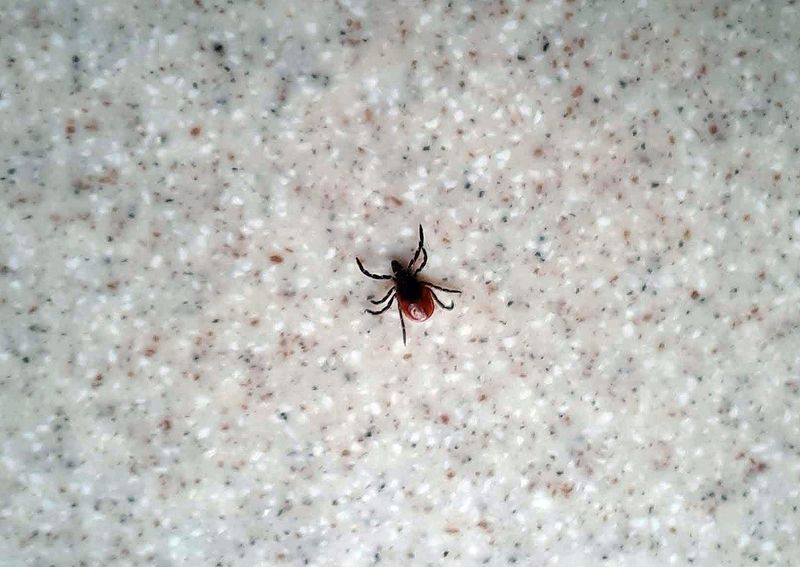
According to information from the state Department of Health, blacklegged ticks, which are commonly known as deer ticks, live in shady, moist areas at ground level. They feed on the blood of animals, such as deer.
They will cling to tall grass, brush and shrubs, usually no more than 18 to 24 inches off the ground. They also live in lawns and gardens, especially at the edges of woods and around old stone walls.
Once a tick gets on the skin, it generally climbs upward until it reaches a protected area such as behind an ear, in an armpit, or in the hair.
Symptoms of Lyme disease
Symptoms of Lyme disease include a bull’s-eye-shaped rash although the rash can take other forms.
Fever, headache, fatigue, chills, and aches and pains are other symptoms.
Many people in the over-60 age group are especially susceptible to Lyme disease because older people tend to have more leisure time to spend outside doing yard work, gardening, hiking, and the like. They may be more apt to own a home and have a yard to maintain.
Other concerns with deer-borne ticks
Ticks transmit other serious diseases, such as babesiosis, anaplasmosis, ehrlichiosis, Rocky Mountain spotted fever, hard tick relapsing fever and Powassan encephalitis, according to the state Department of Health.
Anaplasmosis is less common but can be life threatening for older adults and immune-compromised individuals. Initial symptoms are similar to Lyme, though usually with no rash, making it harder to diagnose early.
How to guard against ticks
The state Department of Health offers a variety of tips to keep in mind.
In tick-infested areas, the best protection is to avoid contact with soil, leaf litter and vegetation. For those who garden, hike, camp, hunt, work or otherwise spend time outside, there are ways of protection.
They include: Wear light-colored clothing with a tight weave to spot ticks easily. Wear enclosed shoes, long pants, and a long-sleeved shirt. Tuck pant legs into socks or boots and shirt into pants. Check clothes and any exposed skin frequently for ticks while outdoors.
Consider using insect repellent with DEET.
Stay on cleared, well-traveled trails. Walk in the center of trails. Avoid dense woods and bushy areas. Avoid sitting directly on the ground, on fallen logs or on stone walls.
Keep long hair tied back, especially when gardening. Bathe or shower as soon as possible after going indoors (preferably within two hours) to wash off and more easily find ticks that may be on you.
Do a final, full-body tick check at the end of the day (also check children and pets) and remove ticks promptly.
To view Canandaigua City Council’s meeting
If you want to go, Canandaigua City Council’s environmental and ordinance committees meet at 6 p.m. Feb. 3 at the Hurley Building, 205 Saltonstall St., Canandaigua. You can also view the meeting at https://us06web.zoom.us/j/82103183289 and https://fingerlakestv.org/live/.
Mike Murphy covers Canandaigua and other communities in Ontario County and writes the Eat, Drink and Be Murphy food and drink column. Follow him on X at @MPN_MikeMurphy.
This article originally appeared on Rochester Democrat and Chronicle: Tick-borne illness cases are rising. Canandaigua leaders look at new response
Reporting by Mike Murphy, Rochester Democrat and Chronicle / Rochester Democrat and Chronicle
USA TODAY Network via Reuters Connect