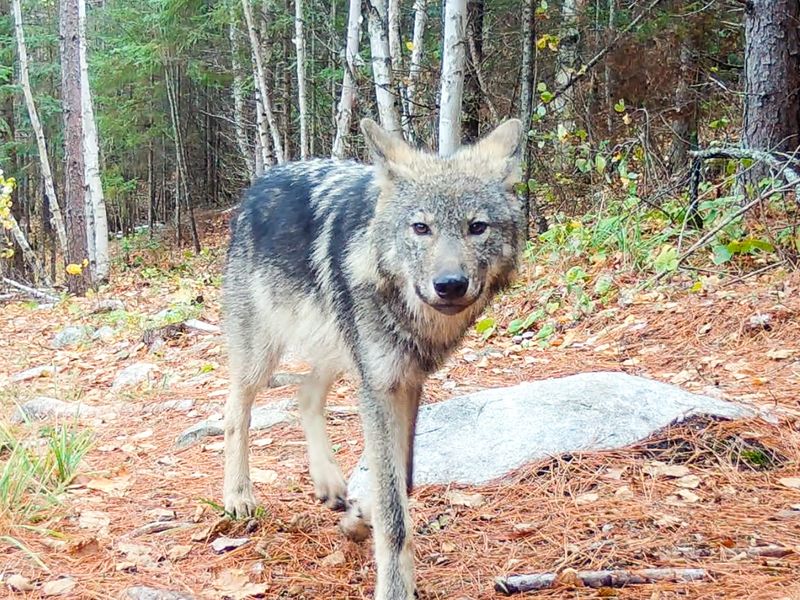
Confirmed or probable gray wolf depredations on livestock and other domestic animals in Wisconsin decreased in 2025, as did the amount of compensation paid, but were both close to the five-year averages, according to data from the Department of Natural Resources.

The agency publishes an annual list of predator-related incidents investigated by DNR personnel or U.S. Department of Agriculture Wildlife Services (APHIS) agents.
The results are categorized as: confirmed or probable wolf depredations; verified wolf harassments or threats; unconfirmed depredations or complaints; confirmed non-wolf depredations or complaints (typically caused by coyotes or domestic dogs).
In 2025, the DNR recorded 77 cases of confirmed or probable wolf depredations in the state, compared to 84 in 2024, 69 in 2023, 49 in 2022, 78 in 2021 and 86 in 2020. The average from 2020-24 was 73.
The state paid $200,864 in compensation for animals killed or injured in those 2025 conflicts with wolves, down from $322,970 in 2024 and up from $171,185 in 2023 and $100,129 in 2022. The average paid out from 2020-24 was $203,604.
The year-over-year decreases occurred as the state’s wolf population declined 7%, according to the DNR’s latest estimate.
Over the last five years, the Wisconsin wolf population estimates were 1,175 in 2021, 985 in 2022, 1,277 in 2023, 1,328 in 2024 and 1,226 in 2025, according to the agency. Over the same time, the number of wolf packs were were 305, 296, 363, 354 and 336, respectively.
The 2025 population estimate suggested the state’s wolf population was reaching an equilibrium around its biological carrying capacity, said Lydia Margenau, DNR wildlife research scientist, at the Sept. 2025 release of the wolf monitoring report.
Of the 77 confirmed or probable wolf depredations in 2025, 42 were on livestock, 31 were hunting dogs (mostly hounds used during training or hunting of black bears, coyotes or bobcats) and four were pets.
Among the animals affected, the conflicts resulted in 31 calves killed, 25 dogs killed and 24 dogs injured, according to DNR records.
Of the 42 livestock, 20 were on “chronic farms,” sites with repeated wolf issues.
There were also 19 verified wolf harassment or threats, 10 to livestock, five to human safety and four to pets. The human safety reports were three Level 3 and two Level 2 HHS complaints.
In addition there were 29 unconfirmed wolf depredation or complaints and 16 confirmed non-wolf depredations or complaints (14 attributed to coyotes and one each to domestic dog and black bear).
Views on wolf management or stewardship continue to vary widely across the nation.
The wolf in Wisconsin and most other states has been under protections of the federal Endangered Species Act since a federal judge decision in Feb. 2022. The status prohibits the use of lethal control measures, including hunting and trapping.
The decision is being appealed by the U.S. Fish and Wildlife Service. In addition, the “Pet and Livestock Protection Act,” legislation to delist the wolf authored by Reps. Lauren Boebert, R-Colorado, and Tom Tiffany, R-Wisconsin, has passed the House of Representatives. However it has not been taken up by the Senate.
Non-lethal predator abatement such as fladry, noise and light lose their effectiveness over time, hence the relatively high number of conflicts in 2025, said Dave Ruid, APHIS supervisory wildlife biologist.
Even when their animals aren’t killed by wolves, livestock producers can experience problems from the predators, including weight loss.
The highest amount paid due to wolf damages in Wisconsin was $336,129 in 2011.
As of April 10, the DNR listed three confirmed wolf depredations in 2026, all to hound breeds used for trailing and hunting, and one probable wolf depredation to a pet dog.
This article originally appeared on Milwaukee Journal Sentinel: Wolf depredations and compensation payments declined in 2025 but remain close to 5-year averages
Reporting by Paul A. Smith, Milwaukee Journal Sentinel / Milwaukee Journal Sentinel
USA TODAY Network via Reuters Connect