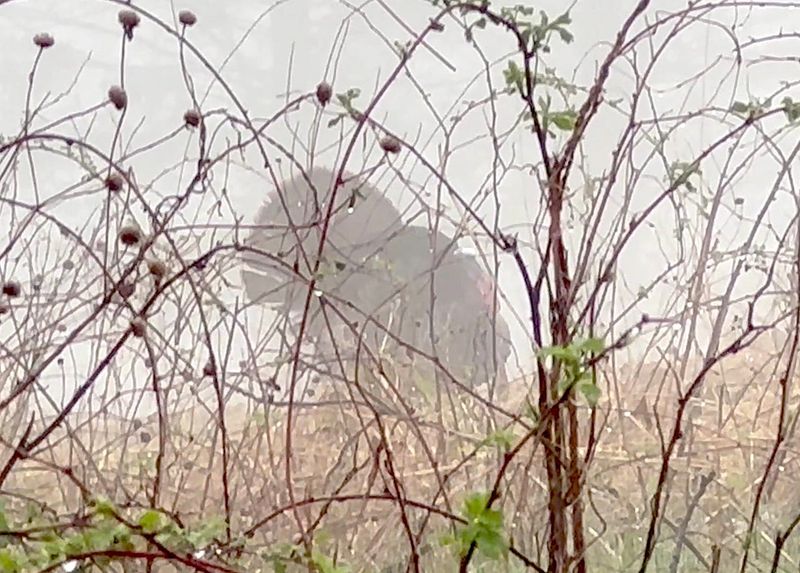
EASTMAN – The clock read 7 a.m. on April 16, 2026. But the scene said London at dusk.
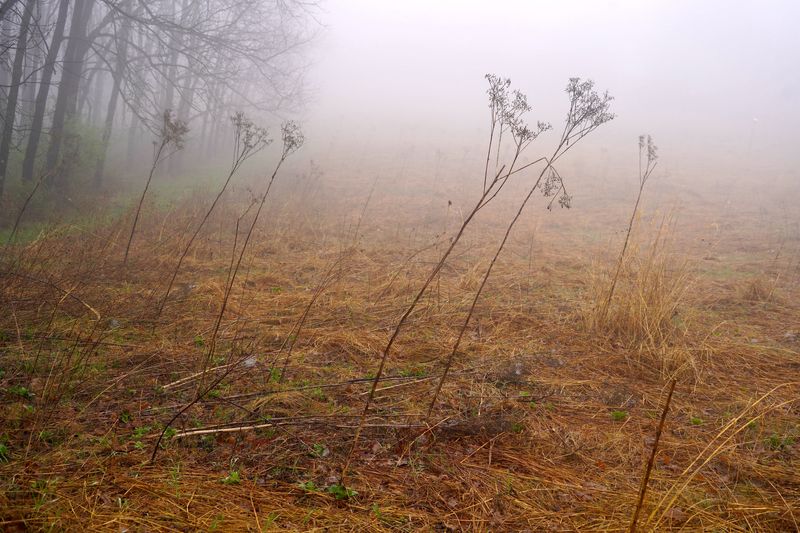
No matter which way I looked from my tent blind on the shoulder of this Crawford County ridge, the view was obscured by thick fog.

It was 40 minutes after sunrise but there was no sign of El Sol.
And although I was in some of the best wild turkey habitat in Wisconsin, the dim, damp and foggy conditions seemingly had thrown a wet blanket on turkey activity.
It was now an hour after legal shooting time started, but I had yet to hear, much less see, a turkey. Not a hen, not a tom, not a peep.
At 7:01, I made a series of soft yelps on a slate call.
A minute later I heard a faint gurgle. But was it my queasy stomach? Or a weak gobble? I’ve been known to mistake creaking tree limbs and farm machinery for turkey talk.
This could be another case of wishful thinking.
There’s plenty of reason for optimism among turkey hunters in spring in Wisconsin. The season brings us out into the greening woods to pursue a native species that, at least most days, talks to us.
It’s a chance to procure wild, free-range protein and partake in one of the state’s strongest hunting traditions.
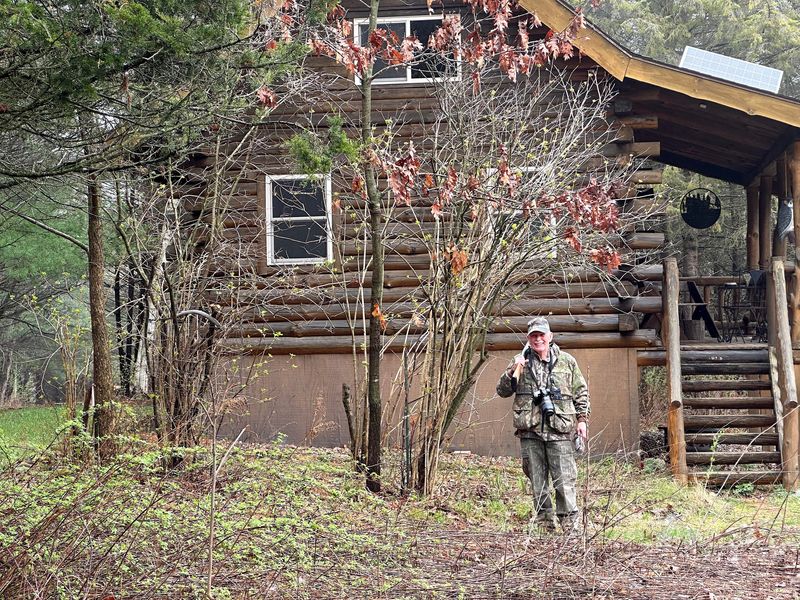
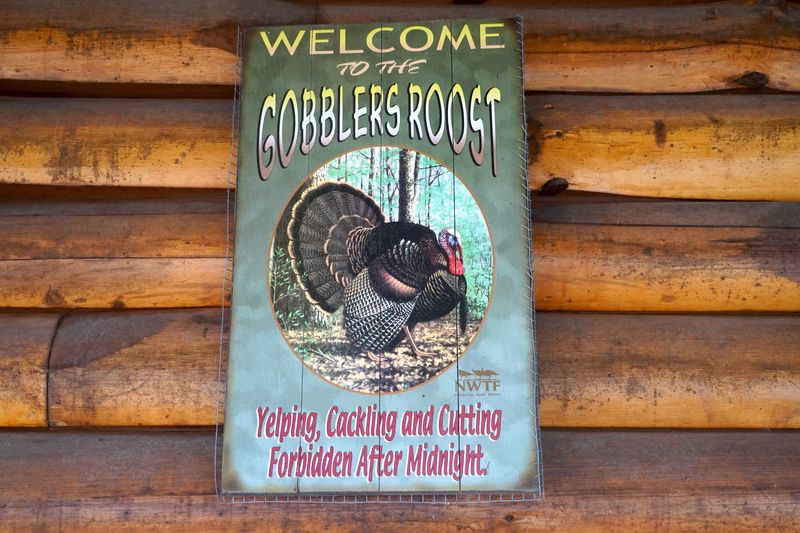
In my case, the 2026 turkey season was also a chance to reconnect with Tim Eisele of Madison, my friend and host of the hunt at Gobbler’s Ridge, the 100-acre property near Eastman he and his wife, Linda, own and manage.
The Eiseles have built a primitive cabin on the site, restored a 20-acre prairie and worked to increase biodiversity throughout the property, including planting native prairie species and removing invasive plants such as garlic mustard and buckthorn.
The ridges and draws are covered with red and white oak, hickory and walnut.
It’s prime habitat for the object of our hunt, the wild turkey.
It’s hard to fathom that for about 100 years there were no wild turkeys here or anywhere in Wisconsin.
The species was native to the Badger State but was depleted through the 1800s by removal of vast areas of timber from southern Wisconsin and high, unregulated turkey harvests by market and subsistence hunters.
By 1860 the birds were rare, and in 1881 the last wild turkey in the state’s original flock was killed near Darlington, according to the Department of Natural Resources’ document “Ecology of Wild Turkeys in Wisconsin.”
Efforts through the early to mid-1900s to bring the species back, mostly through stocking game farm birds, were failures.
But in 1976 the DNR started a new plan based on transferring wild turkeys from the Ozark Mountains of Missouri into the Driftless Area of southwestern Wisconsin.
The initial shipment of 29 wild turkeys was flown Jan. 21, 1976 from Missouri to the La Crosse airport and released by DNR biologists on the farm of Butch and Iva Lee Baumgartner near Romance in Vernon County.
The birds were supplemented by other shipments from Missouri. Within a few years, it was clear it would be a success.
In 1983 the DNR held the state’s first regulated wild turkey hunting season. We’ve had one each year since. In fact, Wisconsin annually ranks among the top states in wild turkey harvest.
Tim Eisele and I are among a large cohort of Wisconsin hunters who were born and grew up in the state when there were no wild turkeys.
“It’s a tremendous opportunity,” Eisele said. “I value it highly, especially to be able to do it on land we own and to be able to share it with friends.”
The week of our tags, April 15 to 21, was spiked with severe weather, including tornado warnings, thunderstorms and high winds.
Fortunately no trees fell on the entrance road and we were both able to drive to the cabin.
On the evening of April 15 Eisele and I dined on walleye fillets and talked about the prospects for the season.
There were birds around, he said, but they seemed to be flocked up more than usual.
At 6:30 p.m. April 15, the clouds parted and the sun cast strong, yellow light across the ridge.
Any thoughts we’d get lucky with the weather sank the next morning. When we woke at 4:30 a.m., the area was buried in thick fog.
At 5 we left the cabin in opposite directions to see what the day would bring. I settled in my ground blind, set in a grove of trees about 15 yards west of the edge of the prairie.
At 5:48 a barred owl called fairly close. Turkey hunters use owl hooters to simulate the barred owl in an effort to draw a “shock” gobble from a roosted turkey.
Sometimes turkeys respond to the real thing, too.
So I listened intently for any gobble in the damp, dim predawn.
All I got was the “thwap” of an occasional dew drop smacking the roof of my ground blind.
At 6:15 a crow cawed, also a sound that will sometimes draw a gobble. Nothing.
Other bird activity, though, was picking up and keeping me company. A golden-crowned kinglet flitted close, and a red-bellied woodpecker called.
At 6:25 I had yet to hear a turkey but decided to make the first few yelps on a slate call.
The only sound that followed was a train traveling on tracks 1 mile west along the Mississippi River. One of the most stunning parts of Gobbler’s Ridge is the vantage – when the conditions are right, you can see the shine of the mighty river through a cleave in the terrain.
That was not the current situation, however. The pea soup allowed me to see only 50 yards.
I called again at 6:40 and 6:50 to no avail. But the sequence at 7:01 either sparked my indigestion or drew a response from a tom.
I waited. At 7:03 I had my answer.
“Gil-obble-obble.”
The sound came from 100 yards to the north.
I craned my neck, looking for the gobbler. Two minutes later a dark form was in sight through the fog.
It was marching in, searching for the source of the yelps. When it was 20 yards away I could see the beard.
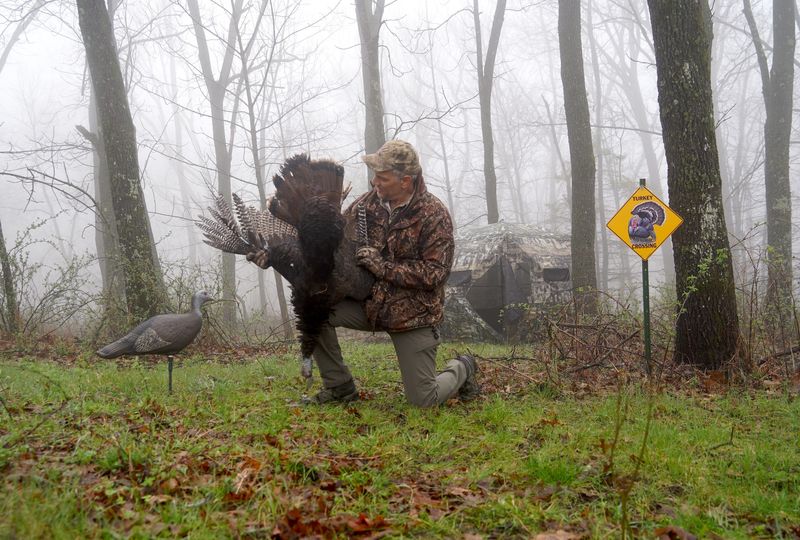
I yelped with my voice, it raised its head, and I pulled the trigger.
I jogged out to pick up the bird, a 20-pound jake, or 1-year-old male turkey. It had a 4-inch-long beard, nubs for spurs and a pretty well formed tail fan. Since it came in solo, was large in size and gobbled like a mature tom, I called it a “super jake.”
As I gave thanks to the bird, I heard another gobble.
I got back in the blind and called, hoping to be able to get photos of the second tom.
It strutted in through the dense fog and stayed about 30 yards away for several minutes, gobbling twice more as I took photos.
Eventually it moved on, spitting and drumming out of sight.
What a rich experience.
The Wisconsin wild turkey reintroduction is celebrating its 50th anniversary this year. When I was a kid growing up in this state, I couldn’t have imagined such a morning would be possible.
But here it is. And here’s hoping future generations of hunters in the Badger State will have similar opportunities.
This article originally appeared on Milwaukee Journal Sentinel: Driftless Area hunt features severe weather and gobbler riches | Paul A. Smith
Reporting by Paul A. Smith, Milwaukee Journal Sentinel / Milwaukee Journal Sentinel
USA TODAY Network via Reuters Connect