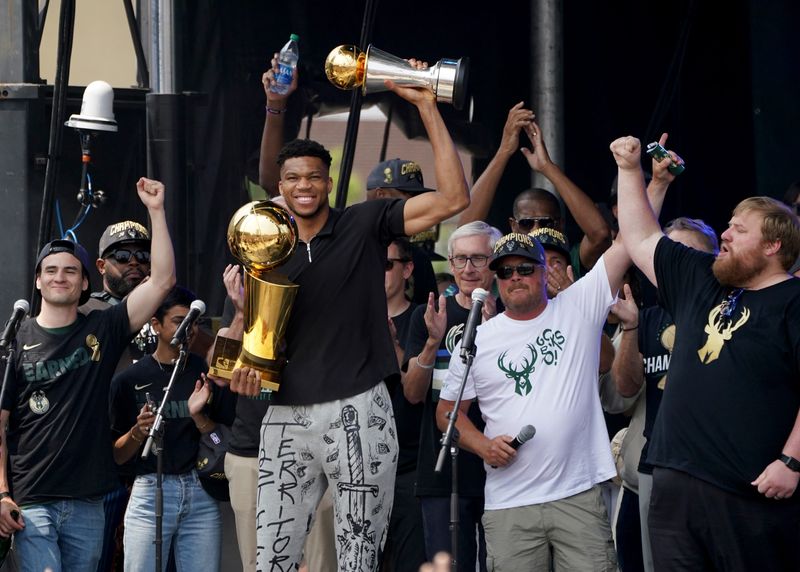
The summer of 2026 will mark the fifth anniversary of the Milwaukee Bucks’ NBA championship victory over the Phoenix Suns, a moment that was five decades in the making after the organization’s first trophy was raised in 1971.
Such sweet symmetry, that 2021 title.

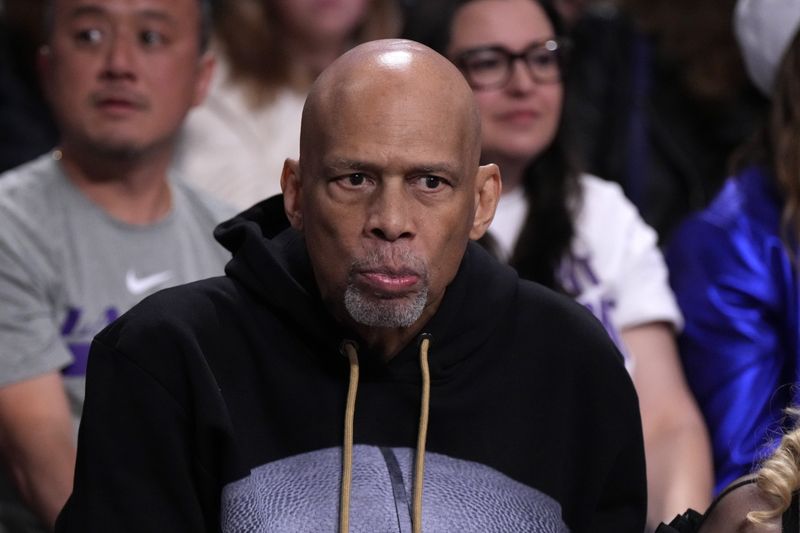
Unfortunately, there appears to be a chance the Bucks will elect to remix the worst moment in franchise history by trading Giannis Antetokounmpo 51 years after they dealt away Kareem Abdul-Jabbar. That decision ushered in a half-century of winter, with too-infrequent bursts of sunshine splashing across the face of Bucks fans.
That 1975 version of the NBA is now just a shadow, but one thing remains the same: Once a team trades that guy, they begin chasing, searching, hoping and, more often than not, failing to catch that guy again. Wisconsin and Bucks lifers know this better than most, after Abdul-Jabbar was traded.
Other organizations and cities are learning this.
It’s been a cold chill for Chicago fans in the 30 years since the Michael Jordan dynasty ended. Houston is more than three decades removed from its back-to-back crowns. Detroit more than 20. Dallas is 15 years out of its lone title, and Miami and San Antonio are closing in that anniversary of their last. Cleveland is 10 years removed from its lone championship.
These are the winners.
Think of all the fan bases, teams, coaches, hall of famers, legends, littered about the wall on a seemingly never-ending night’s watch.
At some point, the great player is no longer great. An organization may no longer be capable of building or financing a championship-level roster. Sometimes, a relationship just ends. Perhaps the Bucks and Antetokounmpo have arrived at this moment.
But the hard reality is that should the two parties separate now, while Antetokounmpo remains a top-5 player in the world, both are likely to wander the gray, unforgiving NBA wilderness for a long time without finding the sun they so desperately seek.
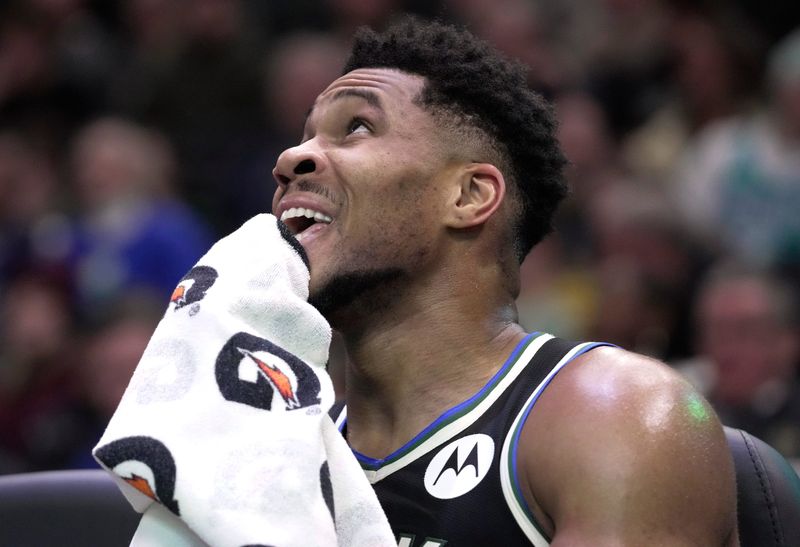
Giannis Antetokounmpo’s legacy is forever changed
“I just sit out there and think about what’s important for me,” Antetokounmpo said at the start of training camp this season. “And every time I come to the conclusion: legacy. What I’m going to be remembered for.”
Antetokounmpo is in the conversation of the greatest players ever but wants to be a bigger part of it. A second championship, in a time when dynasties largely have been legislated out of the league, would elevate his status.
So he’s itchy. At 31 years old, he knows the casing around the windowpane to be that guy on a championship team is creaking.
“How long will my prime be?” he wondered in an interview with the Journal Sentinel on Feb. 3. “From 31 to 35. From 31 to 36, let’s say. I don’t know maybe it could be LeBron James prime, to 41. I don’t know. Let’s say normal. From 31 to 36, let’s say. How old’s KD [Kevin Durant], 37? Let’s say 36. So how many [chances] do I have?”
He has a point. James last won at age 35. Jordan was 34. Stephen Curry 33, Hakeem Olajuwon and Dirk Nowitzki 32. Kevin Garnett was 31, Tim Duncan 30 and Shaquille O’Neal 29 (Duncan and O’Neal won one more title after those ages but were not the primary players for those teams).
The one outlier, as he usually is, was Abdul-Jabbar.
He was the Lakers’ leading scorer and finished fourth in MVP voting in 1984-85 when he led the Lakers to a championship in his age-37 season. He also was the Finals MVP. (Abdul-Jabbar would go on to contribute to titles when he was 39 and 40 years old.)
But it took the Lakers five seasons to advance to the finals and win it after acquiring Abdul-Jabbar from the Bucks. And one could argue that it happened only because in 1979 they drafted Magic Johnson No. 1 overall.
Looking back at how frustrated Antetokounmpo has become over the past few early playoff exits in Milwaukee, does he have five years of patience for an organization he is wholly unfamiliar with?
And, in a scenario where a team trades for him, would that organization have patience with him after mortgaging everything to bring him in?
In the modern NBA, Antetokounmpo’s departure from Milwaukee would ultimately brand him a mercenary. He would add his name to list of former MVPs Durant and James Harden, and fellow top 75 players Anthony Davis and Damian Lillard, who went looking for greener pastures.
That history forecasts Antetokounmpo likely will play for several teams along the way to his stated goal of 20 seasons, gradually becoming a burdensome contract to unload rather than a centerpiece. What might that do for how he’s remembered?
And that’s what the legacy debate really is, isn’t it?
It’s wholly subjective. All of the great, the good, is countered with caveats.
If Antetokounmpo moves on to a new city like James and Durant, he is now just another “ring chaser.” It’s a label he’ll have to accept, even if he accomplishes the goal of capturing more jewelry. It’s almost a no-win situation for him.
And to which team does he go? That also matters.
Following James to Miami or the Los Angeles Lakers makes it hard to stand out. Is adding the 19th banner to the rafters of TD Garden in Boston special? Or securing the eighth for the Warriors franchise, the seventh for Bulls or the sixth for the Spurs?
This is the legacy paradox for Antetokounmpo.
He desperately wants a second title. Yet how special is it − are you − when you’re just another spoke in the historical wheel and not the hub? Hard to say.
What we know, though, is he stands alone in Milwaukee. Infallible.
It’s likely why New York is and has been appealing to Antetokounmpo.
The Knicks have been a mediocre to bad franchise since the Bucks entered the league in 1968, especially after their heyday from 1970-74. New York’s last title was in 1973, and it has missed the playoffs more times (24) than Milwaukee (20) since 1968.
The Bucks also have made more trips to the conference finals (6) than the Knicks (5) since 1980.
Winning a title there would add to Antetokounmpo’s legacy, and likely lead to a longer runway with the franchise as his skills diminished.
The same could be said for going to say, Minnesota, which has not won a championship.
But being traded to Golden State, and not winning in the next three years?
At 33, 34 years old, can the Warriors continue to build around him earning nearly $70 million? What if they fell short?
If he moved out of Milwaukee because the Bucks weren’t winning enough, how could he possibly stay in another losing situation? He’s gotta go, again.
Right?
Because if not, then he is suddenly accepting of losing. And what does that say?
Moving out of Milwaukee would also shift the narrative around him. Initially, will be celebrated, the white knight for his new city. And for the national media, his star finally would be unburdened by his inept employer.
But, in Milwaukee, the organization and coaches have borne the brunt of their failure in the playoffs since 2021. Little is said about the role his lack of availability has played. Somewhere else, if he falls short, he can’t get it done. Why can’t he lift the franchise to a ring?
That’s a different kind of scrutiny and pressure.
Now, you might say wait a minute, what if he does accomplish his goal?
What if he lands in Golden State and the Warriors win two more titles? What if he joins Hakeem Olajuwon as big men who rolled victoriously down the streets of Houston in a championship parade?
Ask the talking heads, and even former and current players, what adding to Curry’s legacy did for Durant’s.
Garnett was dealt out of Minnesota to win his ring in Boston, but he is grouped into a “Big Three” with Paul Pierce and Ray Allen. And, again, they won just another banner in Boston. Do they rate with the likes of Cousy, Russell and Bird? No.
The way James moved from Cleveland to Miami, back to Cleveland and then to Los Angeles in trying to chase Jordan’s six titles created discussion over his place in the “greatest of all time” hierarchy.
Depending who is left on the team he’s traded to, it’s likely Antetokounmpo would have to live with the “ring chasing” and “super team” conversation he has long bristled being a part of.
Since the turn of the century, Antetokounmpo is one of eight league MVPs to also win a title. Durant (five teams), James (three) and Garnett (three) moved around.
Kobe Bryant, Dirk Nowtizki, Tim Duncan and, currently, Curry, Nikola Jokić and Antetokounmpo all played for one franchise.
There is a visceral feeling when ticking off all those final names, and it happens in large part because they played for one team.
Every player feels they’re different, the exception − but when you’re already talking about exceptional players, the truly different, history is a good indicator of the present and future.
Since the NBA-ABA merger in 1976-77, only a dozen of the top 75 players in history have been traded and won a title afterward.
Since unrestricted free agency was introduced in 1988-89, that number shrinks to eight.
Since the luxury tax (2001-02) was incorporated, six.
Since the supermax contract (2017-18) became an option for stars, just two: Kawhi Leonard (2019) and Anthony Davis (2020).
And while Davis was the Lakers’ leading scorer for the “bubble” championship, James was without question the leading man for that team. And the moment the word “bubble” is mentioned, there is an entirely new debate over the true value of that title.
Really, Leonard is the one standing alone in the modern era as a superstar player moving from one team to another via trade and then winning again. And that Toronto title in 2019 is drifting further into the rearview of history.
Philadelphia’s Moses Malone is the only top 75 player to be traded and win an MVP and a title afterward, which he did in 1983 after being acquired from Houston. But like Abdul-Jabbar’s NBA in the 1970s, the league now has scarce resemblance to Malone’s heyday.
What’s more, Malone, Davis and Leonard are the only top 75 players to lead their new team in scoring in the championship season. And all, except for Leonard, had at least one other future Hall of Famer on the team to which they were traded.
Obviously, winning a championship with a new team is possible. But history shows it to be very, very difficult. The point, ostensibly, of Antetokounmpo wanting out of Milwaukee is to win that second title.
The question becomes, though, what happens to an already pristine legacy if he does not?
No haul will be good enough for the Bucks
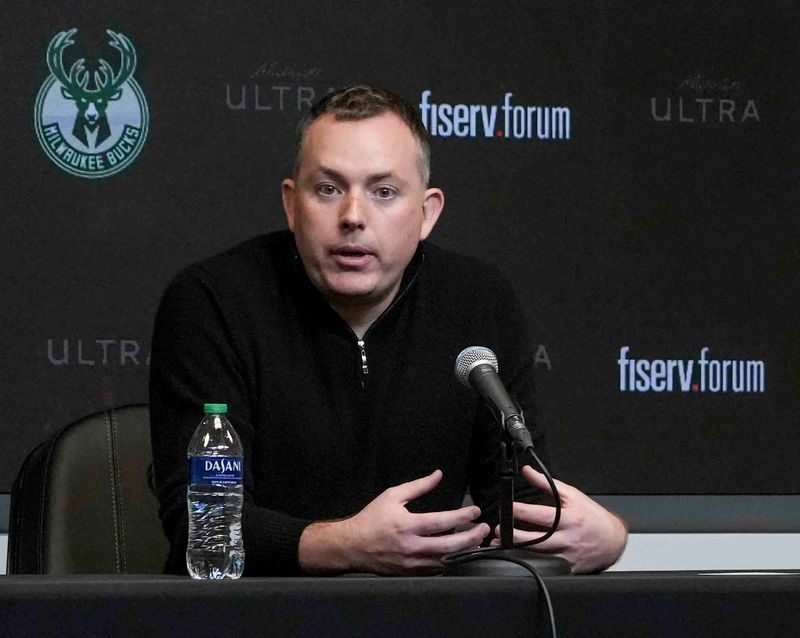
This past offseason, Bucks general manager Jon Horst sat with the Journal Sentinel to talk about rebooting the roster around Antetokounmpo, and he spoke highly of his history in building teams. Rightfully so, too, as the Bucks had won the most games in the NBA from 2018-25 and are one of seven to win a title.
“It’s a goal and an agenda of ours, to constantly try to push the envelope (and) if at all possible be ahead and set a trend or set a style of play or create a strategy that other people want to jump on to because it’s successful,” Host said in the late summer. “You don’t want to do it just to do it and have it fail, but you can’t be afraid of doing it because of failure, if that makes sense. So I think we’ve always kind of pushed the envelope in that way.”
It’s hard to believe, though, Horst wanted to be a trend setter in trading away an MVP.
Since the turn of the century here are the trades of MVPs, at about the same age as Antetokounmpo, and the perceived “hauls” each produced (including protected draft picks that ultimately did not result in a player):
2004: SHAQUILLE O’NEAL, 32 YEARS OLD
Traded by the Los Angeles Lakers to the Miami Heat for:
Result: The Lakers would return the NBA Finals in 2008 and win in 2009-10, ironically, because of the MVP whose trade request they denied in Kobe Bryant. But after 2010, the Lakers missed the playoffs six of the next nine seasons. GM Mitch Kupchak was fired in 2017.
2006: ALLEN IVERSON, 31
Traded by the Philadelphia 76ers with Ivan McFarlin to the Denver Nuggets for:
Result: GM Billy King was fired in 2007. In the 19 seasons from 2006-25, Philadelphia has not advanced out of the second round of the playoffs and became synonymous with tanking with no real positive result.
2007: KEVIN GARNETT, 31
Traded by the Minnesota Timberwolves to the Boston Celtics for:
Result: GM Kevin McHale was fired in 2009. The Timberwolves did not make the playoffs from 2007-17 and just recently became relevant after drafting Anthony Edwards No. 1 in 2020.
2019: RUSSELL WESTBROOK, 30
Traded by the Oklahoma City Thunder to the Houston Rockets for:
Result: The Thunder are widely considered the standard bearer for trading stars, but they missed the playoffs three times and did not advance out of the second round twice from 2019-24 before winning the title last season. GM Sam Presti remains in his role and used trades of other non-MVPs to rebuild the Thunder.
2020: RUSSELL WESTBROOK, 31
Traded by the Houston Rockets to the Washington Wizards for:
Result: The Rockets missed the postseason from 2021-24 before losing in the first round last season. GM Rafael Stone remains in his position.
2021: JAMES HARDEN, 31
In a four-team deal, traded by the Houston Rockets to the Brooklyn Nets for:
Result: GM Rafael Stone drafted Eason and Sheppard, who have been role players for the No. 4 team in the Western Conference this season. The team has not advanced beyond the first round of the playoffs since 2021.
2021: RUSSELL WESTBROOK, 32
Traded by the Washington Wizards with a 2023 second-round pick (Tristan Vukcevic), 2024 second-round pick (Bobi Klintman) and a 2028 second-round pick to the Los Angeles Lakers for:
Result: GM Tommy Sheppard was fired in 2023. The Wizards have not been to the playoffs since 2021 and have “tanked” each of the past three seasons.
Interestingly, the best “hauls” for former MVPs Garnett and Durant came when those two players were 36 and 37 years old, respectively.
Garnett was part of the infamous deal that sent him and Paul Pierce to Brooklyn in 2013 that laid the foundation for Boston’s success this past decade. Durant was jettisoned by Phoenix in 2025 after just one year, accelerating the Suns back into the playoff picture this year with more suitable role players but only one first-round pick.
Durant was also dealt in 2023 when he was 34 years old by Brooklyn to Phoenix for Mikal Bridges, Cameron Johnson and five future draft picks. To date, the Nets remain one of the worst teams in the league.
Is there a win-win scenario?
Perhaps Antetokounmpo has truly lost faith in the Bucks to continue winning. Perhaps co-owner Wes Edens, the current governor and final decision-maker on basketball matters, believes the team is better off trying its hand at a wholesale rebuild.
If either are the case, particularly after the Bucks have gotten worse in wins and playoff finishes since 2023, then a separation makes sense.
But if the longstanding mutual goal remains the same − Antetokounmpo wants his best chance to win another title while cementing a legacy, and Edens et al. want to remain a relevant franchise − then, yes, the short-term, win-win is to continue through another Antetokounmpo extension.
All the single-team greats have had dips. It’s inevitable. But they all reached at least three conference finals and two finals trips. True, Nowitzki has “just” one championship, but that has aged better with time.
Fewer and fewer people remember Bryant’s trade demand. Or the lone title Duncan won in his last nine years. Or even the multiple years Curry’s Warriors have missed the playoffs of late. Legacy is always subjective. History shows that for the Bucks and Antetokounmpo, though, their best chance to reach their common goal is objectively clear.
This article originally appeared on Milwaukee Journal Sentinel: If the Milwaukee Bucks trade Giannis Antetokounmpo now, history shows it’s lose-lose
Reporting by Jim Owczarski, Milwaukee Journal Sentinel / Milwaukee Journal Sentinel
USA TODAY Network via Reuters Connect