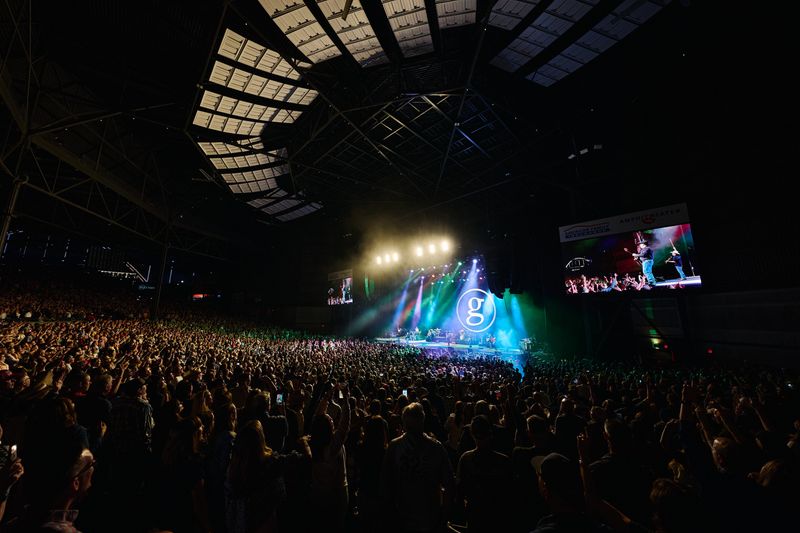
Your favorite singer launches into that song, and suddenly you’re singing loudly while bright lights wash over the stage and out into the audience, thousands of bodies sway in unison and goosebumps spread up your arms. As the song crescendos, you feel connected with those around you, part of a communal experience. It feels like more than just listening to music.
Turns out, it is.

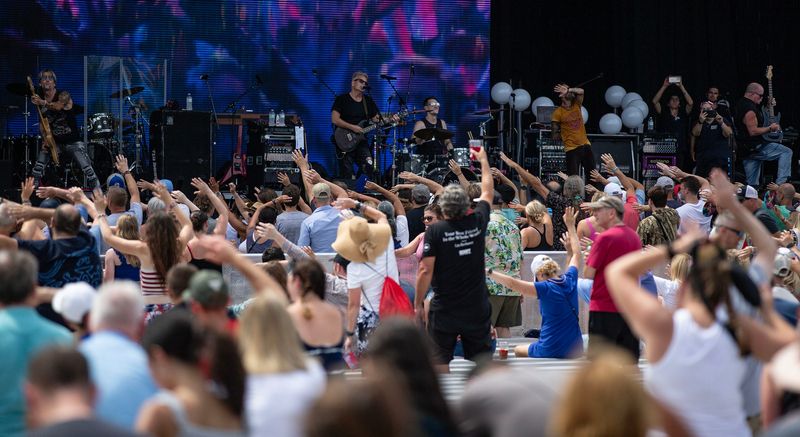
As hundreds of thousands of music lovers descend on Summerfest over the next three weekends, it’s easy to understand the attraction. Multiple stages. Food. Camaraderie. The Lakefront.
But recent neuroscience research suggests that live concerts may “click” for humans because our brain responds differently to music heard during festivals and concerts than to music heard on a streaming service, radio, CD or vinyl. Two factors that may be driving that difference: what one scientist calls “liveness,” and the experience of joint listening.
Scientists already knew that when people listen to music, brain activity increases and decreases in time with the rhythm. This phenomenon, known as phase-locking, is thought to be a fundamental process that helps our brains track beat and make sense of an auditory signal.
Now, a recent study suggests that phase-locking between brain activity and the rhythm of music is stronger when people listen to live music compared to when they listen to recorded music. Additionally, stronger synchrony between brain activity and music tempo is associated with people experiencing more pleasure.
The implication: Live music might be especially pleasurable because our brains track with it more.
In other words, Summerfest and all those other music festivals you might attend – in fact, concerts in general – really can be special experiences.
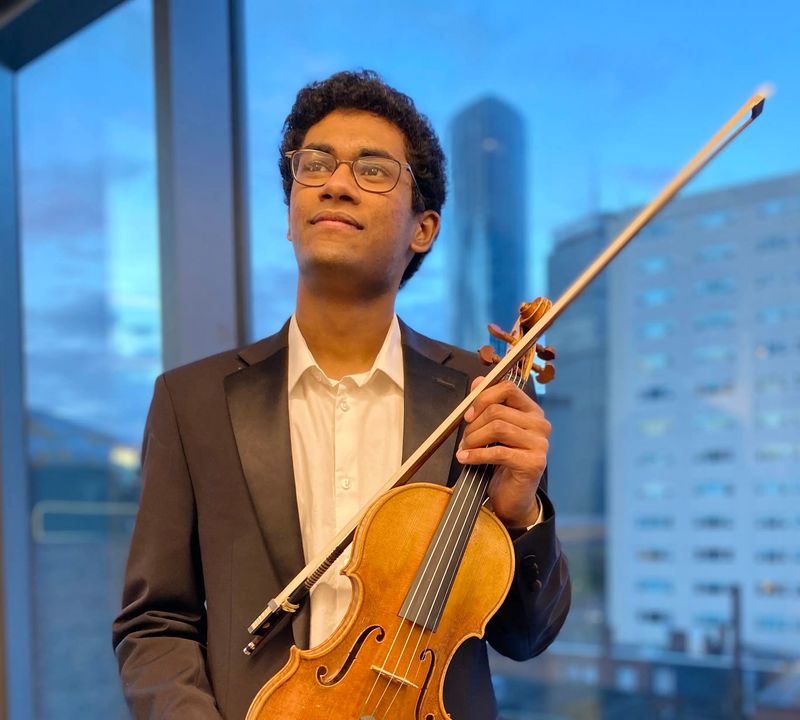
Arun Asthagiri, a doctoral student in the Music, Imaging, and Neural Dynamics Lab at Northeastern University in Boston, became interested in the concept of liveness in music at the beginning of the COVID-19 pandemic. Asthagiri is a lifelong musician and was attending the New England Conservatory at the time.
“Pretty much every musician was impacted in a very deep way, because part of their craft is sharing music,” explained Asthagiri. “And so these questions are circling in my head, and it’s like, what makes music deeply human? What is the social component of music?”
To address these questions, Asthagiri and his adviser, Professor Psyche Loui, developed a study where they recorded brain activity from volunteers while they listened to live and recorded versions of four musical excerpts. Everybody listened to the excerpts alone in a concert hall with their eyes closed. The goal was to isolate the brain-related effects of liveness from other components of a live performance, like seeing the performer and socializing with others.
They found that changes in people’s brain activity aligned more closely with the rhythm of the live versions compared to recorded versions, which was in turn linked to people finding live music more pleasurable.
“It’s the idea that music is being created for you in that moment,” said Asthagiri. “That specifically is this concept that we call liveness, and I think our results point to that being important, and impactful in the way that we listen to music.”
One potential caveat to this study is that all participants did have some musical training, which impacts how brains respond to music. However, Asthagiri remains optimistic that future research will show similar results in non-musicians.
Federico Curzel, a post-doctoral fellow in the MusiCognition lab at the University of Pavia in Italy, noted that Asthagiri’s work also touches on the power of awareness, especially considering that people were listening with their eyes closed.
“Perceptually, maybe the attack of the sound, or there could be some features that created some moments of maybe a bit more engagement,” said Curzel, describing why live music might be producing these brain responses.
Curzel’s own recent work with Laura Ferreri, assistant professor at the University of Pavia and co-principal investigator of the MusiCognition lab, addresses similar questions about the social components of music by looking at another component of the concert experience: joint listening.
Curzel and Ferreri recently published a study showing that when two people listen to music together, their emotional experiences and brain activity align with each other.
The study recruited pairs of friends and measured similarities in their experience of pleasure and brain activity when they listened to the same set of songs alone and together.
When friend duos listened to a song together, their experience of pleasure through its duration became more similar, even though they had no knowledge of each other’s ratings at any point. Brain activity within each pair also became more similar when they listened to a song together compared to when they listened to the same song alone. The more pleasure they experienced, the more in sync their brains became.
Some may think that studying friends adds some bias to the study, but Curzel and Ferreri very purposefully chose to look at friends.
“Listening to music and sharing music with a friend is one of the most common situations,” said Curzel. “So, we wanted to keep this naturalness in the [lab] setting and to replicate sort of a similar situation to real life.”
Both researchers were initially expecting that people would find music to be more pleasurable when they were listening with someone else, but people generally reported that songs produced the same amount – but not experience – of pleasure regardless of whether they were listening alone or with a friend.
The sole exception was that people consistently rated their friend’s favorite songs as more pleasurable when they were listening to it with the friend. (So, if your friend hates your music recommendations, maybe make them sit down and listen to music with you.)
In some ways, Ferreri found this result to be even more interesting.
“[People] were not just saying, I like this more because I’m with you,” she noted. “But when I am with you, because of the fact that we are sharing the situation, my pleasure is more similar to your pleasure.”
Asthagiri also noted that having the pairs listen to the same music separately and together made this study well-equipped to say that the observed similarities in brain activity are truly linked to the social aspect of communal listening.
And since the results are specific to the experience of sharing music, Curzel and Ferreri believe they apply to larger group contexts.
“We have always, or often, this feeling that we are part of something bigger when we are in a festival, and that’s in part maybe due to the fact that we are sharing similar affective and neural patterns,” said Ferreri.
All of which may not be the first thing that comes to mind as you head to Summerfest. But if you feel particularly connected as you scream along with the crowd at some point, you might want to pause for a moment and acknowledge your brain activity.
This article originally appeared on Milwaukee Journal Sentinel: Going to Summerfest? This is what happens in your brain during live music.
Reporting by Donnisa Edmonds, Milwaukee Journal Sentinel / Milwaukee Journal Sentinel
USA TODAY Network via Reuters Connect

By Donnisa Edmonds, Milwaukee Journal Sentinel | USA TODAY Network