Homicides and non-fatal shootings dropped substantially in Milwaukee through the first half of 2026.
Milwaukee has been dealing with years of elevated homicides, beginning during the COVID-19 pandemic, and had bucked a national trend last year where most major cities saw dips. But so far in 2026, the city is seeing significant progress, with 49 homicides occurring in the first half of the year, compared to 70 a year ago.

Non-fatal shootings saw a similar drop, dipping from 272 a year ago to 199 shootings so far this year. Those two statistics join a modest 7% dip in crimes known as Part 1 crime, an FBI category that includes homicide, rape, robbery, aggravated assault, burglary and vehicle theft.
“We’re heading in the right direction,” Mayor Cavalier Johnson said.
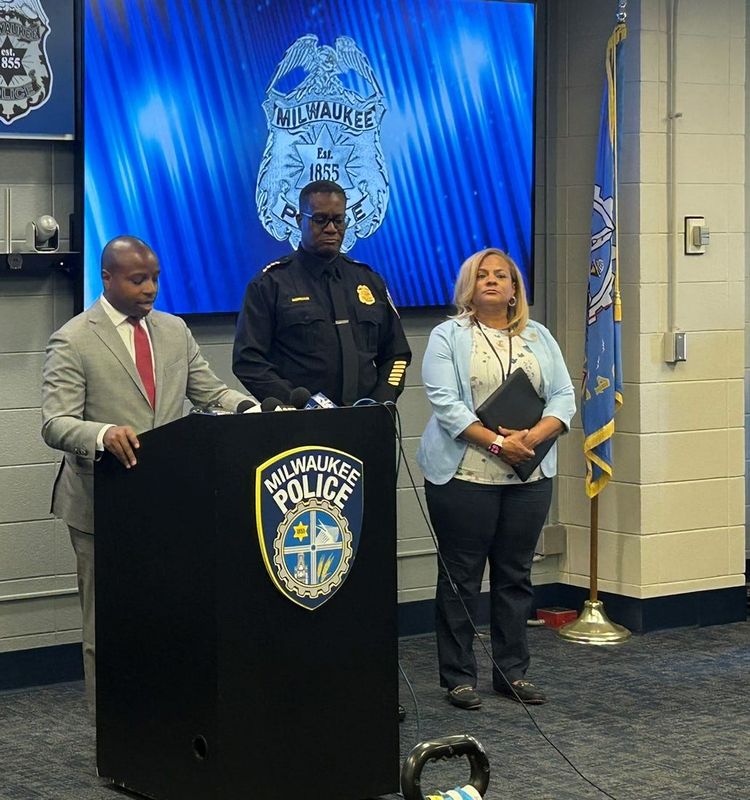
Officials from the city and county highlighted the declining crime statistics at a July 7 press conference at the Milwaukee Police Department headquarters. They pointed to improved collaboration between the agencies and communities as leading to the decline.
Here’s what to know about Milwaukee’s crime so far this year.
Homicides, non-fatal shootings down big
The big takeaway from the year’s crime press conference was that homicides have started to mirror the city’s other crime statistics and national trends.
In 2025, a report from the Council on Criminal Justice, a research group, looked at 35 large cities. It found a 21% decline last year in those places. In Milwaukee, the city went the opposite way, with homicides rising to 142, or 10 more than the prior year.
More confounding to officials was the way non-fatal shootings declined that year, with Johnson calling it “vexing” at the time.
So far this year, Milwaukee’s homicides have caught up to the national trend. Both non-fatal shootings and homicides dipped 27% and 30% respectively. And the homicides are below 2024’s figures as well, when 62 homicides occurred in the first half of the year.
Department data also showed homicides are being solved at a high rate, with the clearance rate for homicides at 98% so far this year.
That figure – which means a homicide investigation ended in an arrest or closed for another reason – includes homicides that occurred this year and can include those that were solved from prior years.
Non-fatal shootings clearance rate was lower, at 41%.
Milwaukee Police Chief Jeffrey Norman said a lack of trust in police and throughout the legal system can complicate those investigations.
Interpersonal conflict continues to lead to violence
Recent shootings in Milwaukee have highlighted a longstanding issue in the city: a combination of arguments and firearms leading to violence.
As an example, Norman said two recent shootings that occurred over disputes over food at a wedding and at a McDonald’s restaurant.
Police data on homicides shows arguments escalating into violence is the most common factor leading to homicides in the city since 2020, with about one third of all stemming from that, according to police data.
“Respect does not come from a gun,” Norman said.
Partnerships between police, community, prosecutors credited
The downturn in homicides and shootings came as crimes dipped across almost virtually every category in the first half of the year. Property crimes dropped 7% and violent crimes dropped 8%.
Johnson and other officials credited the work of each agency – police investigating crimes, violence prevention efforts, and prosecutors’ legal work – with leading to the downturn.
Violence prevention staff mediated 62 conflicts, possibly preventing further violence, said Karin Tyler, the director of the city’s Department of Community Wellness and Safety. Tyler’s office is part of a wide range of programs in the city that includes offerings from Milwaukee County, local hospitals and community groups.
Their work, known as violence intervention or prevention, attempts to address potential violence before it happens, prevent retaliation of crimes and work with those who may be at risk of committing a crime.
“Today we have a message of hope. Milwaukee is making progress and the progress belongs to all of us,” Tyler said.
Milwaukee police statistics can be viewed online at city.milwaukee.gov/police/Information-Services/Crime-Maps-and-Statistics.
David Clarey is a public safety reporter at the Milwaukee Journal Sentinel. He can be reached at dclarey@usatoday.com.
This article originally appeared on Milwaukee Journal Sentinel: Downturn in shootings underscore Milwaukee’s decline in 2026 crime
Reporting by David Clarey, Milwaukee Journal Sentinel / Milwaukee Journal Sentinel
USA TODAY Network via Reuters Connect
By David Clarey, Milwaukee Journal Sentinel | USA TODAY Network