RUDOLPH − When I moved to Wisconsin Rapids in 2000, it wasn’t long before I started hearing about the Rudolph Grotto.
I didn’t know what a grotto was, but I was curious and wanted to explore the area around my new home. One Saturday, I took the short drive from Wisconsin Rapids to Rudolph to explore the Grotto.

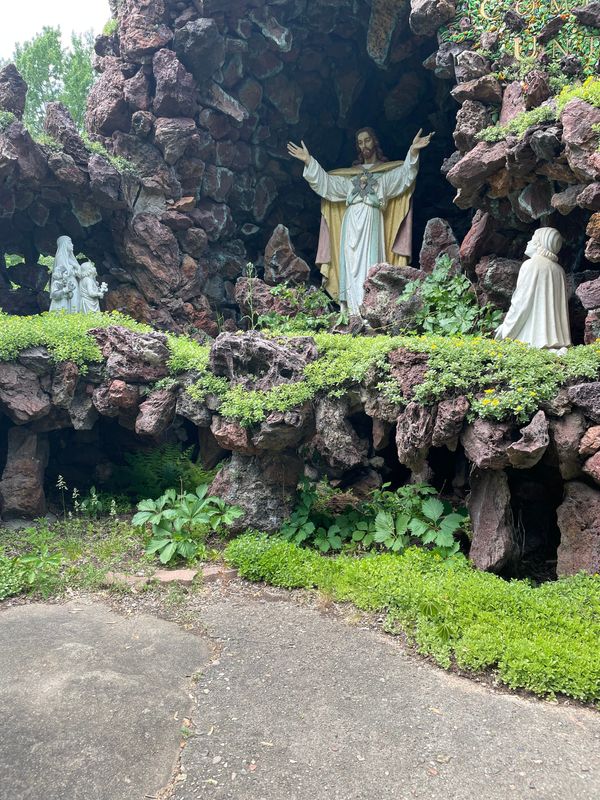
I’m not sure what I was expecting, but it was nothing like what I found. A church picnic was happening at St. Philip the Apostle Catholic Church in Rudolph, so there was plenty of laughter, children playing and food. But, there also was quiet, beautiful spots to sit and think or pray and, to my surprise, a man-made cave.
When my fellow USA TODAY NETWORK reporters in central Wisconsin and I were tasked with finding local “Hidden Gems” for a summer day trips series focused on places families can visit this summer and enjoy without spending a lot of money, the Rudolph Grotto Gardens was the first thing that popped into my mind.
Illness, recovery and promise lead to creation of Rudolph Grotto
Father Philip Wagner was studying in Europe for the priesthood when he became very ill, said Kris Willfahrt, the current groundskeeper for St. Philip’s Church and Rudolph Grotto Gardens. In 1912, he visited the Grotto of Our Lady in Lourdes, France. He prayed and promised to build a shrine in Mary’s honor, if his health was returned.
In 1916, Wagner finished his studies for the priesthood and, in 1917, he was appointed Rudolph’s new pastor at St. Philomena’s Church on Fifth Avenue. In 1918, the decision was made to build a new church at its current location, 6957 Grotto Ave. in Rudolph. While the church was built, Wagner began making plans and diagrams of flower beds and tree arrangements for a grotto. The church’s name later would be changed to St. Philip’s in honor of Wagner.
Wagner began forming his monuments by gathering stones from the area. In an Oct. 23, 1937, Wisconsin Rapids Daily Tribune article, Wagner told a reporter he didn’t know anything about concrete when he started. He would learn as he went and began building monuments that couldn’t be done by rocks alone.
The Opalescent Glass Co. in Kokomo, Indiana, would send Wagner buckets of broken glass, Willfahrt said. He would sort it by color and then put the pieces in a bucket he placed in the church’s furnace to melt the glass into multi-colored masses he would break into small pieces and use to build the Grotto’s monuments.
Two men, one commitment
In 1928, Edmund Rybicki began helping Wagner on a steady basis, Willfahrt said. Rybicki lived on a family farm about two blocks west of the church. His father felt that what Wagner was doing was important and allowed Rybicki to help the priest, instead of working on the farm, Willfahrt said.
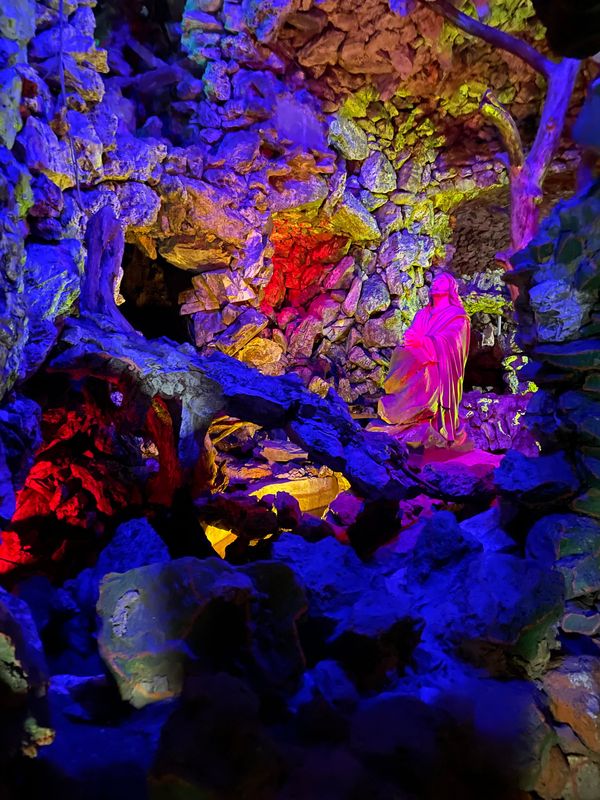
The two would build what is now known as the “Wonder Cave” in 1935. Wagner designed the cave, which is a series of tunnels, rooms and niches, himself. Around every turn, there is a surprise for visitors. The cave contains 26 shrines depicting the life and teachings of Jesus, according to a Rudolph Grotto Gardens book available at the Welcome Center. The largest depicts Jesus praying in the garden and can be seen from above through various openings in the cave walls. The cave would take Wagner, Rybicki and others from the area 20 years to finish.
Rybicki would continue working with Wagner until Wagner died Nov. 1, 1959. After Wagner died, Rybicki continued the priest’s vision for the Grotto. Each priest who came after Wagner was inspired by the Grotto and worked with Rybicki to continue Wagner’s vision. On Friday, Sept. 16, 1966, Rybicki told a Wisconsin Rapids Daily Tribune reporter the 14th and final Station of the Cross would be finished by Sunday.
Wagner made Rybicki the groundskeeper for the church and Grotto when Rybicki was old enough. It was a position Rybicki held until his retirement July 15, 1979, according to a Grotto brochure. Even after he retired, he worked at the Grotto most mornings. Rybicki died Sept. 21, 1991.
The Rudolph Grotto today
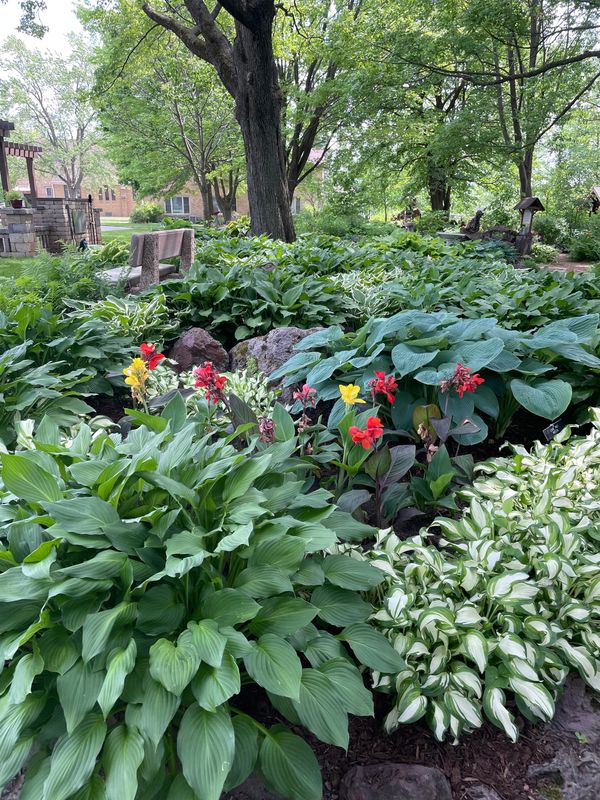
Willfahrt has been the groundskeeper at the Grotto since 1993. She began working for the church and school in 1989. Each year, Willfahrt and volunteers plant about 500 flats of flowers in the gardens. She uses the money the Grotto takes in the previous year to purchase flowers plus several local garden centers donate leftover flowers after the spring planting season ends, Willfahrt said.
When I visited on June 3, the Grotto Gardens were already filled with colorful blooms highlighting the many shrines. The planting continues through most of the summer, but Willfahrt tries to be finished by the first week in August. The large areas of plantings are the last to get done, she said.
The Grotto got national attention on Jan. 5, 1998, when the HGTV show “A Gardener’s Diary” featured it, according to a Daily Tribune editorial. The show made even some local people who had never heard of the Rudolph Grotto aware of it.
Prior to 2020 and the COVID-19 pandemic, the Grotto frequently got visited by busloads of people, Willfahrt said. The workers and church volunteers offer a dinner to larger groups, if there is advance notice, she said. The groups would stop for lunch and spend time exploring its gardens and cave before heading on to their final destination, she said.
Since 2020, the number of visitors has dropped off, Willfahrt said. But, it still is a great family destination for a day out that won’t cost a ton of money. Willfahrt recommends bringing a picnic lunch to have while at the Grotto. There is a lot to see and children can use the playground, she said.
What you should know before you visit the Rudolph Grotto and Wonder Cave
The Wonder Cave is not handicap accessible. During a walk through the Cave June 3, I found I had to duck my head at a couple locations in the cave, even though I’m only 5 feet 1 inch tall. There are some narrow spots and the cave contains 60 steps on the inside and another 60 steps that twist around the outside of the cave after you exit, Willfahrt told me.
The steps are occasionally uneven, but there are handrails throughout the cave. There is a small bench to sit down and rest about halfway through the inside of the cave and another rest area once you get outside the cave.
Colorful lights illuminate the shrines inside the cave. Most of the statues were bought from Europe and are made of Carrara Marble from Italy. There are signs inside, which were made by using a drill to make holes in sheets of metal. The signs also are illuminated, making them easy to read.
Outside, the gardens are more accessible to people who may not want to venture into the cave. There are some steps, but most of the gardens are accessible. There are many benches around the gardens where people can sit and enjoy the flowers and many shrines and meditate or pray.
The museum in the garden is always open and free to visitors. The Wonder Cave, gift shop museum and chapel are open Memorial Day through the last Sunday in October from 11 a.m. to 4 p.m. The cost to go through the cave is $3 for adults, $1.50 for children ages 12-17, 50 cents for children 6-11 and children younger than 6 are free.
Share your favorite ‘hidden gems’ in central Wisconsin?
What are your favorite “hidden gems” in central Wisconsin? Share them with us! We’ll be highlighting some of the lesser-known places to visit and activities to participate in across central Wisconsin this summer. Think of it as your guide to summer day trips as gas prices remain high and the kids are out of school. Suggestions should be within about a 45-mile drive of central Wisconsin communities like Wausau, Marshfield, Stevens Point and Wisconsin Rapids. Places and activities must be family friendly, and we are also looking for places that are cost-conscious. If you know the perfect spot, let us know. You can email me at kmadden@usatodayco.com.
Contact Karen Madden kmadden@usatodayco.com. Follow her on Twitter @KMadden715, Instagram @kmadden715 or Facebook at www.facebook.com/karen.madden.33.
This article originally appeared on Wisconsin Rapids Daily Tribune: Discover beauty and history of Rudolph Grotto Gardens & Wonder Cave
Reporting by Karen Madden, Wisconsin Rapids Daily Tribune / Wisconsin Rapids Daily Tribune
USA TODAY Network via Reuters Connect
By Karen Madden, Wisconsin Rapids Daily Tribune | USA TODAY Network