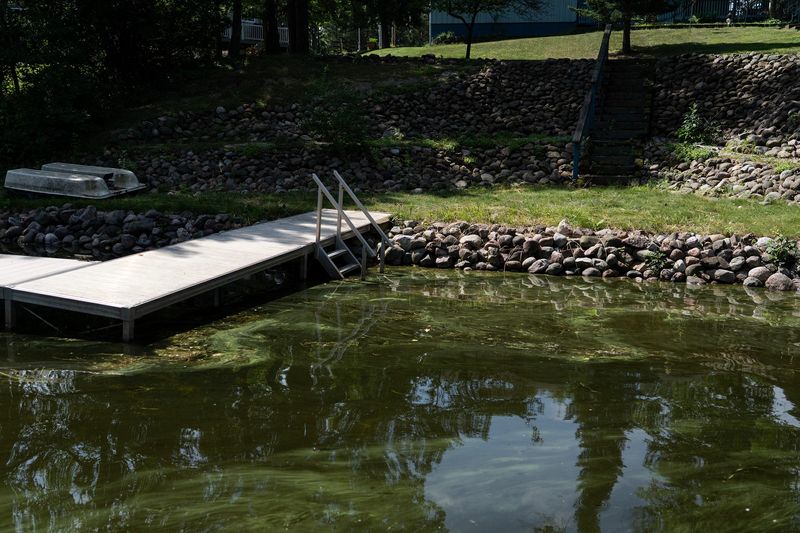
The sight of algae blooms mucking up lakes is a familiar sight for many Wisconsin residents.
And with green algae in the recently renovated Lincoln Memorial Reflecting Pool in Washington, D.C. making headlines nationwide, it begs the question: What actually causes algae to bloom?

Here’s what experts have to say about it.
What causes algae blooms?
The Centers for Disease Control and Prevention says there are five conditions that contribute to algae blooms.
That means fertilizer, sewage or other runoff from cities that gets to a body of water can create a a perfect environment for algae to grow, especially if that water remains still and gets a lot of sunlight.
Algae blooms can last a few days to a few weeks, according to Britannica.
Are algae blooms harmful?
The blooms can be harmful to people, animals and the environment. They use up the oxygen in the water, release harmful gases and make toxins. Wisconsin residents and their pets can get sick if they ingest the bacteria.
Not all algae blooms are harmful, though. Some simply discolor the water and smell bad. Testing the water for toxins is the only way to know if the bloom is harmful, according to the CDC.
How can I prevent algae blooms?
Limiting pollution that fuels this blooms is key, even if there isn’t any water near your home. That means avoiding using too much fertilizer in your yard and maintaining your septic system.
This article originally appeared on Milwaukee Journal Sentinel: As the weather warms, what to know about algae blooms in Wisconsin
Reporting by Blaise Mesa, Milwaukee Journal Sentinel / Milwaukee Journal Sentinel
USA TODAY Network via Reuters Connect
By Blaise Mesa, Milwaukee Journal Sentinel | USA TODAY Network