Considering the 250th anniversary of the United States, I thought it appropriate to discuss the bald eagle.
The bird’s scientific name, Haliaeetus leucocephalus, is a Latin and Greek combination translating as “white-headed sea eagle” which it truly is.

The bald eagle is endemic to North America and is our continent’s sole, native sea eagle; however, a few other sea eagles from northeastern Asia rarely stray to North American shores just as a few bald eagles have been reported from Japan, Ireland and the British Isles.
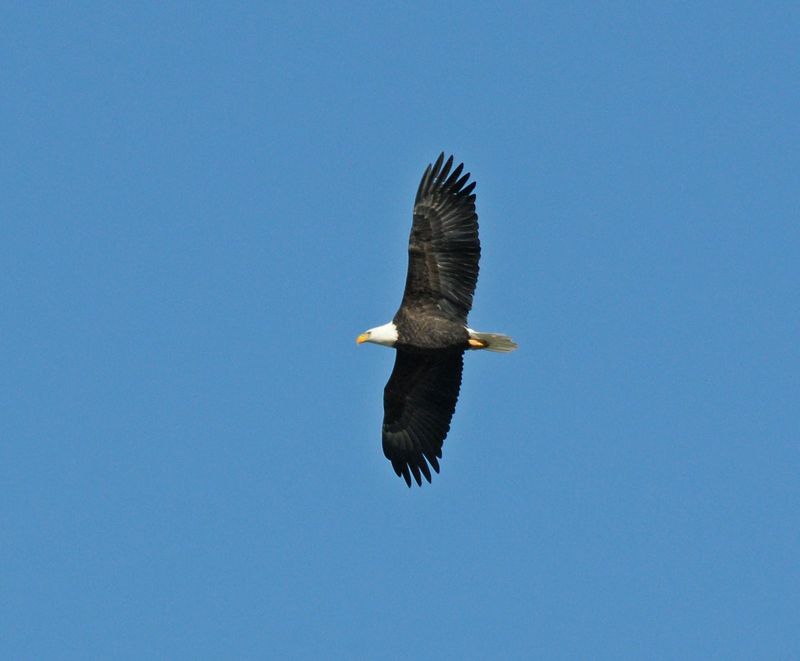
Bald eagle imagery is iconic within the United States and almost everyone is familiar with some of this birds’ characteristics. Bald eagles are one of North America’s largest raptors and have body lengths between 32–40 inches and wingspans exceeding 6 feet.
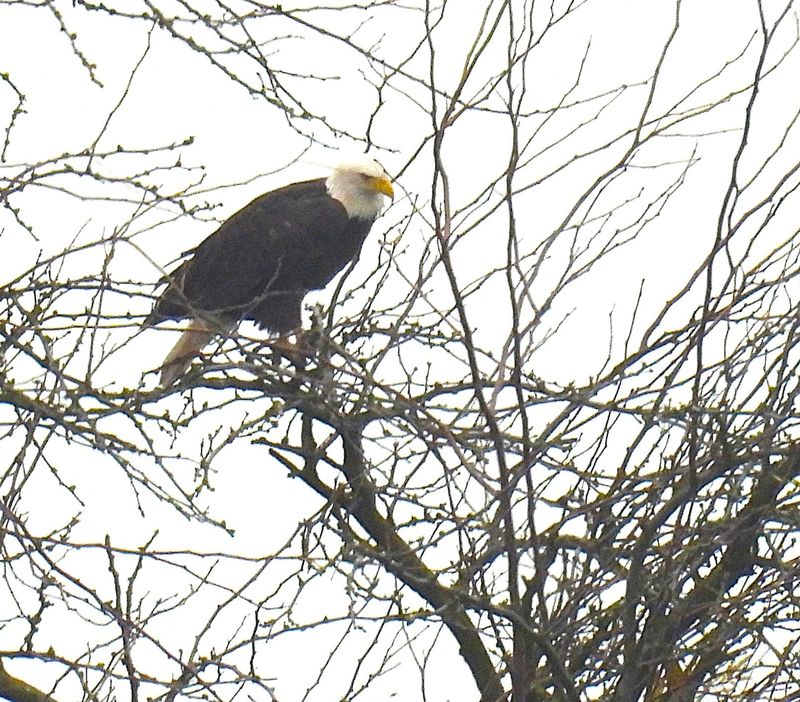
Females are as much as 25 % larger than males, and northern latitude bald eagles are larger than southern latitude populations. Mature adults (approximately 4–5 years old) are easily recognized by their non-bald but instead well-feathered, white heads; white tails; yellow eyes, beaks and feet; and uniform, rich, dark brown body and wing plumage.
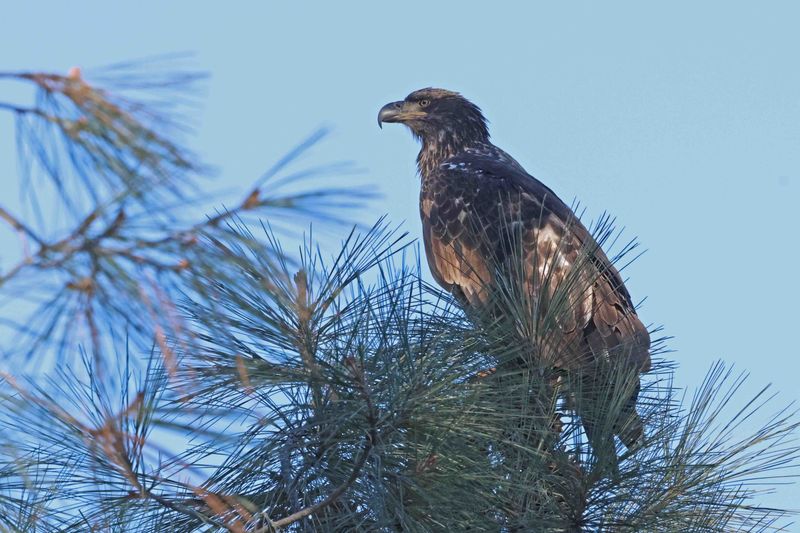
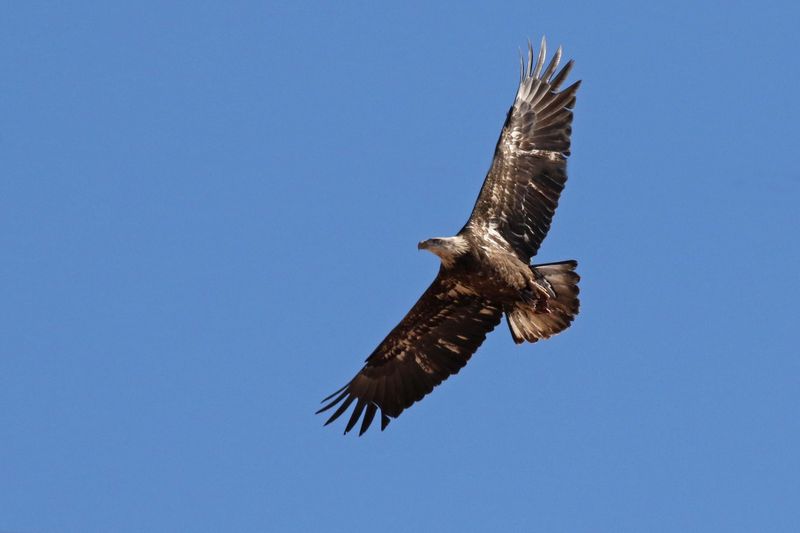
Young, juvenile bald eagles have dark brown heads, bodies, wings and tails with mottled, white plumage in the wings and tail. But older eagles may have a whiter body and wings and a white triangular plumage patch between their shoulders.
Bald eagles usually extend their heads while flying, and calls of this mighty bird are described as repetitive whistles and thin, rather gull-like squeals.
Revered by Native Americans
Many Native American peoples revered bald eagles as symbols of power, nobility and wisdom and messengers from the gods. Eagle feathers have been used in ceremonial regalia and activities. Some tribes used eagles’ feet and wing bones in ceremonies and modified these parts into whistles and musical instruments.
Ceremonial lodges were constructed to partially mimic eagle nests, and eagle feathers were often awarded to individuals for significant accomplishments. The Pawnee tribe considered eagles symbols of fertility, and the Choctaw perceive the bald eagle as a peace symbol.
Bald eagles are no longer considered endangered species. However, the birds are federally protected, and only individuals of certified Native American ancestry enrolled in a federally recognized tribe are allowed to possess eagle feathers or items used in tribal ceremonies.
A bad rap
Conversely, bald eagles were previously and usually unjustly maligned and hunted by European settlers. Bald eagles were blamed for depredation of lambs, calves and occasionally other livestock. Although absolutely no actual evidence exists, bald eagles were even accused of preying upon and carrying off young children!
However, to present a balanced discussion, bald eagles occasionally prey upon domesticated cats and small dogs. For additional perspective on this issue, it is important to remember that most raptors, such as bald eagles, can only effectively carry prey approximately one-third to one-half their own body weights. Most bald eagle prey weigh approximately 3–4 pounds.
It is also important to remember that raptors cannot immediately release prey once striking with their talons; thus, it is extremely dangerous for eagles to attempt predating animals much larger than themselves. The most extreme, documented example is a bald eagle attempting to carry off a mule deer fawn weighing approximately 15 lbs.
However, this eagle was observed mostly dragging the fawn instead of easily carrying it or flying away with ease. Bald eagles usually select prey within sizes and weights which allow the birds to fly away to a safe roost and consume their catch.
What’s on the menu
Bald eagles are opportunistic predators and scavengers. The bird’s principle dietary item in most localities is fish. Second place in a bald eagle’s diet is usually various birds, including American coots, ducks, geese, other waterfowl, herons and other wading birds, and other avians.
The eagle’s diet is rounded out by small mammals and reptiles, including rabbits, rodents, snakes, turtles and others and, lastly, bald eagles are opportunistic carrion feeders. Eagles are known kleptoparasites and steal fish from ospreys and other prey from various predators.
Because of opportunistic scavenging habits, and somewhat unflatteringly, bald eagles are frequently observed near or within urban dumping grounds and animal processing facilities.
DDT’s toll
One reason bald eagles became severely threatened in the United States by the 1950s was their dietary habits. Bald eagles were ingesting prey contaminated with the insecticide DDT which resulted in calcium deficiencies, weak egg shells that broke during brooding and infertile adult eagles.
Subsequent bans upon DDT and federal protection from hunting and prosecution resulted in a remarkable recovery of eagle populations within the conterminous United States.
Bald eagle babies
Because bald eagles prefer fish, the birds are usually found resting in tall trees very near and/or over substantial bodies of water such as large lakes, rivers, wetlands, marshes and reservoirs, and they often construct their large nests within the arbors of tall trees.
Eagles build some of the largest known arboreal nests: often several feet tall and more than a yard in diameter. The eagle pair often mate for life and annually return to their nest in mid-to-late winter to begin repairs and initiate seasonal mating activities.
Both parents brood the eggs for slightly more than one month, and the nestling period of chicks is reported as approximately 56–98 days. As apex predators, adult bald eagles have few natural enemies or threats aside from incidental, human-related encounters and accidents.
Eagle chicks are sometimes prey of more arboreal animals, such as the arctic fox, fishers, raccoons and occasionally other large raptors.
When the bald eagle became the U.S. national bird
Bald eagles are nearly ubiquitous, symbolic animals in the psyche of United States citizens, and little thought is given to their waxing and waning history. Ask almost anyone what the national bird of the United States is, and they’ll likely answer the bald eagle.
In 1782, the second Continental Congress chose the bald eagle as the central figure of the Great Seal of the United States, and the bird is also centrally placed within the Presidential Seal. Not all of the Founding Fathers were delighted with this choice.
Notably, Benjamin Franklin corresponded that, in his opinion, the bald eagle was a bird of bad moral character and rather cowardly. Franklin considered bald eagles lazy predators, often stealing their food and scavenging in unsavory locations.
However, the enlightened Founders admired ancient Greek and Roman ideas and symbols, including eagle standards, and this combined reverence carried the day. However, believe it or not, the bald eagle was not officially designated the United States’ national bird until an act of Congress in 2024!
Bald eagle sightings
Bald Eagles are rare visitors throughout our area but are frequently seen at Lake Arrowhead State Park, Hagerman National Wildlife Refuge and Eagle Mountain Lake, Texas and the Wichita Mountains Wildlife Refuge in Oklahoma and lakes surrounding Duncan, Oklahoma.
Look for migrating bald eagles during winter months, but a few nesting pairs also have been reported at these locations.
As we’ve discussed, the bald eagle’s history is a complicated one. Regardless, enjoy the sight of these almost unmistakable raptors if or when you encounter them!
Jim Goetze is a retired professor of biology and former chairperson of the Natural Sciences Department of Laredo College with an avid interest in all aspects of the natural world. He can be contacted at gonorthtxnature@gmail.com.
This article originally appeared on Wichita Falls Times Record News: The bald eagle, a North American story | Opinion
Reporting by Jim Goetze, Wichita Falls Times Record News / Wichita Falls Times Record News
USA TODAY Network via Reuters Connect
By Jim Goetze, Wichita Falls Times Record News | USA TODAY Network