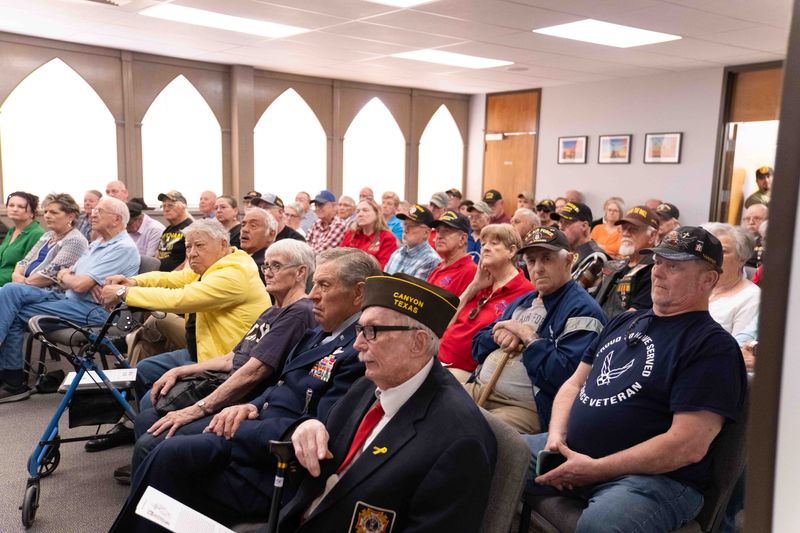
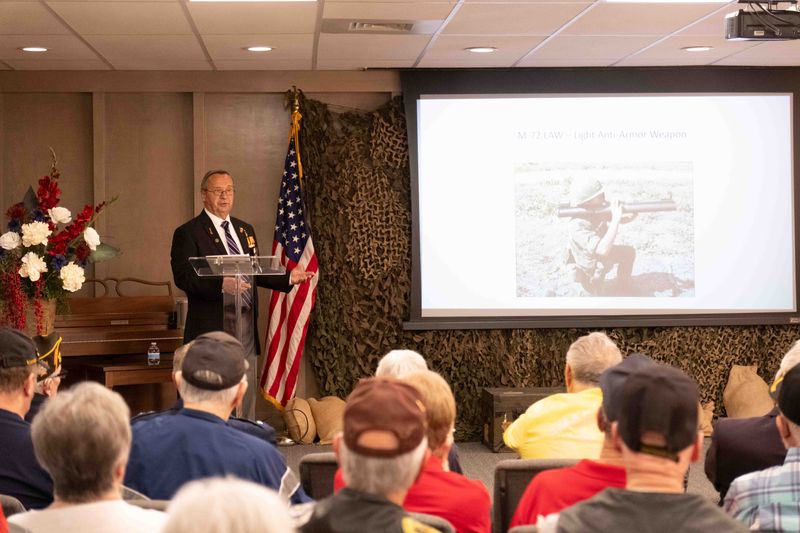
The Texas Panhandle War Memorial Center (TPWM) hosted a poignant ceremony on Saturday, March 29, to honor veterans of the Vietnam War as well as those who served in World War II, Korea, the Gulf War, and the War on Terror.
The event marked National Vietnam Veterans Day, which commemorates the departure of the last U.S. soldiers from Vietnam on March 29, 1973.

The Vietnam War, which lasted from 1955 to 1975, was a conflict that saw more than 2.7 million U.S. service members deployed to Southeast Asia. The war is remembered for its intense and often brutal combat, with U.S. forces facing guerilla tactics from the Viet Cong and heavy conventional forces from the North Vietnamese Army. The war was also marked by widespread protests, controversial political decisions, and immense psychological and physical tolls on veterans. Approximately 58,200 U.S. service members lost their lives, and 304,000 were wounded. Many Vietnam veterans, including those from the Texas Panhandle region, continue to suffer from the long-lasting effects of combat, including exposure to Agent Orange, post-traumatic stress disorder (PTSD), and physical disabilities.
The ceremony began with opening remarks by TPWM board member Mendell Schelin, a Vietnam veteran, and included an invocation, the Pledge of Allegiance, and a reflective moment on the service and sacrifices made by those who served in these wars. Special recognition was given to veterans from each conflict, with a focus on those who served in the Vietnam War, a group that has faced unique challenges, including exposure to Agent Orange and the lasting trauma of battle.
Don Roden, a Vietnam veteran and former U.S. Marine, shared his personal experience during the ceremony. Roden enlisted in the Marine Corps in 1967, after high school, driven by his desire to serve in the toughest military branch. He was deployed to Vietnam in early 1968 and served with “H” Company, 2nd Battalion, 5th Marines, 5th Marine Division. His unit was the first Marine regiment to fly into a combat zone.
Roden recounted the life-changing events of May 2, 1968, when he was severely injured during a night ambush patrol. The ambush mission was typical of the operations undertaken by U.S. forces during the war, where soldiers would go out under cover of night to clear enemy positions, disrupt supply routes, and dismantle Viet Cong and North Vietnamese tunnel complexes. These tunnels, often stretching for miles, were key to the enemy’s ability to avoid detection and resupply.
Roden’s reflections offer a glimpse into the challenges and resilience of a Vietnam veteran. He described his initial decision to join the Marine Corps: “I wanted to be part of the toughest military branch. Growing up on a farm, I had a strong sense of responsibility and wanted to do something challenging. The Marines had a reputation, and that’s what drew me in.”
He continued, “When you’re in that kind of training, you think it’s tough, but you really have no idea what you’re about to face.”
On the day of the explosion, Roden vividly recalled his experience: “May 2, 1968, was a day I’ll never forget. We were out on a patrol, and we hit a booby trap. I was the second-to-last man in the squad. The explosion threw me straight up into the air, and I landed flat on my back. My leg was shattered, and my arm almost got severed. I couldn’t see, and I felt like I was blind. All I could think about was, ‘Am I going to make it?’”
After the explosion, he explained the anxious wait for the medevac: “It took a couple of tries [for the chopper to land] because the area was under heavy fire. I remember thinking, ‘If this doesn’t work, I don’t know if I’ll make it out of here.’”
Roden’s recovery was long and difficult. “After I was stabilized at Da Nang, I was sent to Hawaii for surgery, but it wasn’t over after that. I spent months in recovery. I was transferred to a Naval hospital in Corpus Christi, where I continued treatment and physical therapy. It was a slow process. For the first few months, I couldn’t even move without assistance. Every day was a battle, not just physically, but mentally. I had a lot of time to think, and it was hard at first — coming to terms with what happened and adjusting to life after the injury. It took me a while to even begin to walk again.”
Reflecting on the long-term impact of his injuries, Roden remarked, “I’m still being treated for those injuries today. It’s been 57 years, and I’m still dealing with the effects. But I’m thankful for the care I’ve received. The VA has been a big help in managing my pain and getting me the treatment I need.”
He also expressed how veterans’ support can be crucial.
“There are a lot of veterans who have trouble talking about their experiences, and I get that. It’s not easy to open up. But I think it helps, even if it’s just talking to someone who’s been there,” he said. “When I got back, I didn’t know how to navigate life, but I found my way. That’s why I think it’s so important to have veteran support groups now. We didn’t have them when I first got out, but now there’s so much more help available.”
The war also had devastating impacts on civilians in Vietnam, with millions of lives lost or disrupted. In the Texas Panhandle, 150 service members lost their lives in Vietnam.
The ceremony also acknowledged the contributions of veterans from other wars, honoring those who served in World War II, Korea, the Gulf War, and the War on Terror, with recognition of the Panhandle heroes inscribed on the monuments at the TPWM.
Scott Willis, a retired VA chaplain, and Doug Messer, a retired U.S. Army officer and TPWM board member, also spoke during the ceremony, offering words of gratitude and support for all veterans in attendance.
As the ceremony came to a close, the community was reminded of the significance of the day and the ongoing impact of military service. “Freedom is not free,” Roden said, encouraging everyone to respect their elders and appreciate the sacrifices made by those who served.
Roden’s story, and the stories of so many like him, underscore the enduring cost of war, but also the resilience and unwavering spirit of those who serve. The Texas Panhandle War Memorial Center, a place of remembrance and reflection, continues to honor these heroes — ensuring their stories are told, their sacrifices recognized, and their legacies preserved for future generations. As Don Roden put it, “We may have been soldiers, but we’re also part of a larger story — a story that needs to be told, so people never forget the price of freedom.”
This article originally appeared on Amarillo Globe-News: Remembering the Vietnam War: Stories of sacrifice, courage and resilience
Reporting by Michael Cuviello, Amarillo Globe-News / Amarillo Globe-News
USA TODAY Network via Reuters Connect