Reporting on big data centers invading rural Texas continues – and rightly so.
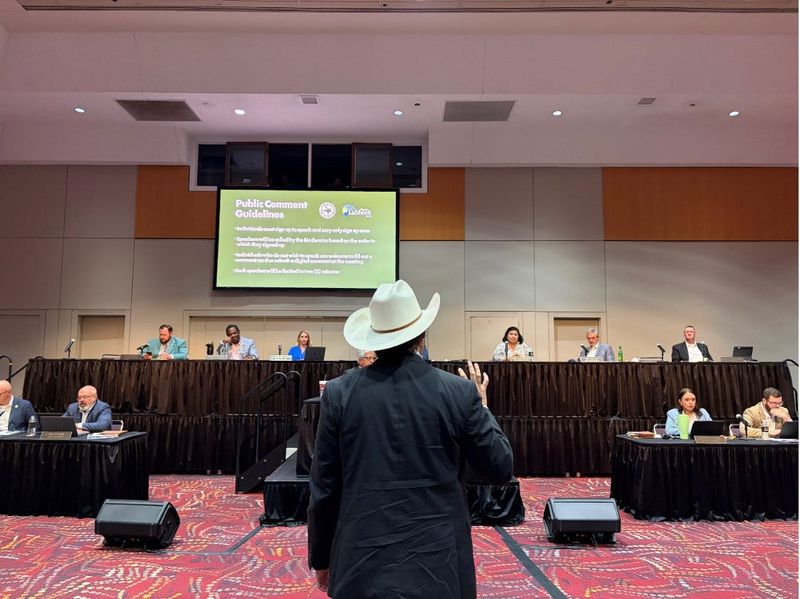
Earlier in the month, there was a city-wide meeting at the Lubbock Memorial Civic Center hosted by the City Council to see a presentation and for citizens to express their concerns about a large-scale data center potentially coming to The Hub City.

As I wrote in mid-May, I oppose the construction of large-scale data centers in rural Texas because their community benefits have not been clearly articulated. Nothing has changed my mind to suggest data centers come to rural areas for the vast, cheap land, to avoid city regulations, for the sweetheart tax deals from Chapter 312 in the property tax code and to pay no sales tax, to take our water, and ramp up our electrical costs.
It seems like most Texans agree with that sentiment. Recent polling from The Texas Politics Project suggests most respondents oppose building a data center in their communities. By “most,” I mean 56 percent specifically. Of the poll participants, 42 percent “strongly opposed” a data center being built in their communities while 14 percent “somewhat opposed” their construction.
There were, however, those in favor of building a data center in their communities. The support for such was well below a third of respondents with 20 percent show “somewhat support” and nine percent “strongly support” their construction. The remaining percent of respondents polled as either not knowing or not having an opinion on the matter. Opposition was strongest from those who lived in the suburbs and rural areas. A total of 62 percent of respondents who identified living in the rural areas opposed the construction of data centers. Moreover, a combined 60 percent of those who identified as living in Texas’ suburbs opposed the construction of data centers.
The opposition to the data center movement is real, loud, and clear. And here is the other vital finding, it is bipartisan. According to the same poll, slightly more respondents who identified as Republican oppose data centers built in their communities than support. Couple this with a resounding majority of Democratic and Independent opposition and the message is clear, as of now, Texans across partisan and ideological lines, rural and suburban areas, oppose data centers being built in their communities than support. The one who took the biggest note from the polling was Governor Greg Abbott. After claiming in 2025 he wanted Texas to be “the epicenter of AI development, where companies can pair innovation with expanding energy,” along with supporting cryptocurrency mining, and arguing lucrative tax breaks would make the state the “mecca” of new tech, the governor did an about-face on the issue shortly after the poll was released, which suggests he took notice of its rising opposition. Governor Abbott now wants to ban data center construction in – wait for it – rural Texas. Panhandle journalist Suzanne Bellsnyder dubbed Gov. Abbott’s political turnaround the John “Kerry shuffle,” referencing John Kerry’s well know change of position in 2004.
While this is true and a fair comparison the governor to the former presidential candidate, the question everyone misses is “why?” Why does the governor – who clearly supported data center construction at one time – now want to ban their construction in rural Texas?
Clearly, the answer appears to be politics. This is an election year, after all, and Governor Abbott needs a large turnout from his supporters living in rural Texas to win an unprecedented fourth term. That may be the main reason he is suddenly and dramatically against the construction of data centers in the rural areas. But the change in heart makes political sense. Democrats have begun campaigning on data center opposition in rural areas, creating a rare issue where they align with rural sentiment. That puts pressure on the governor. Because if his support dwindles, his winning statewide coalition is at risk.
Just because it makes political sense does not mean it makes actual sense.
The governor appears to have abandoned his own moral path for political gain. How else does one explain this switch? The governor’s weathervane changed probably for the clear political incentives.
But, a question to which we may never have a true answer remains: how does he honestly feel about data center construction? From that, some follow ups are necessary. Is he truly led by his own moral guidance or does his stances change as often as the wind? We may never know.
Drew Landry is an assistant professor of government at South Plains College. His views do not necessarily represent those of SPC.
This article originally appeared on Lubbock Avalanche-Journal: Landry on doing the Abbott-Pokey with AI data centers in Texas | Opinion
Reporting by By Drew Landry, special for the Avalanche-Journal / Lubbock Avalanche-Journal
USA TODAY Network via Reuters Connect

By Drew Landry, special for the Avalanche-Journal | USA TODAY Network