Reptiles are the cold-blooded critters that inhabit our West Texas range. With an almost dinosaur-like appearance and fascinating physiology, these creatures have captivated the attention of many.
While numerous reptiles still inhabit the semi-wild spaces that surround developed communities, some have taken up residency in a more posh setting, serving as beloved pets and scaly companions.

But, as it can happen with cats and dogs, sometimes these animals don’t fit in with a family or can become too much to care for, and they end up surrendered or released.
Unfortunately, most animal shelters are unable to take in reptiles, so where do these scaly critters go in a time of need?
That’s where Ray’s Reptile Rescue of Abilene takes action.
As the first dedicated reptile rescue in the state of Texas, Ray’s Reptile Rescue was founded in 2021 as a nonprofit organization focused on rescuing and rehoming domesticated reptiles while educating the public.
“In 2021, I got a phone call from a friend of mine who was a game warden, and they had confiscated two boas that were in terrible shape,” said Ray Bullard, the founder of Ray’s Reptile Rescue. “He brought them to me, and I had no idea what to do with them. So I went looking and digging and trying to find somebody to help, and there was nobody. So my mission was to fill the hole.”
“I just put myself to work, and that’s how the rescue pretty much started,” he added.
Since then, Ray’s Reptile Rescue has grown into a team of seven local people, including a master herpetologist and an exotic animal veterinarian, all dedicated to caring for and protecting reptiles.
“A lot of it is sick animals,” said Bullard. “We deal with a lot of breeders, and when breeders get shut down, we end up with all the sick animals. So our mission, No. 1, is to get them healthy.”
Working with local veterinarians and wildlife rehab groups, the rescue is able to treat malnourished reptiles and even repair broken and cracked turtle shells.
Just last year, Bullard said the organization helped over 300 reptiles.
“We don’t have a facility; we all run this out of our houses,” said Bullard. “So once our houses fill up, we know we have our limit. We don’t take any more in. We don’t overwhelm ourselves.”
Once rescued animals are healthy and ready for a new home, they are eligible to be adopted, and strategically matched with a caretaker the rescue deems fit.
“We have a very strict adoption process,” said Bullard. “Our process includes an hour spent with me where you have to prove your knowledge or be able to learn. I don’t just adopt to anybody.”
Those interested in adopting from the rescue must also provide their own appropriate and safe enclosure for their desired pet.
“I will never tell you no right out the gate, but I may say we need to spend some time together,” said Bullard.
While the goal is for reptiles to be rescued and transferred to a new loving home, not all the reptiles the rescue works with are deemed fit to be adopted. Reptiles with severe health problems or special needs are kept by the rescue where Bullard knows they are receiving proper care.
“We have some that have metabolic bone disease,” said Bullard. “It’s very common in reptiles, but it makes them hard to keep. You have to constantly be watching them, making sure they don’t hurt themselves, stuff like that.”
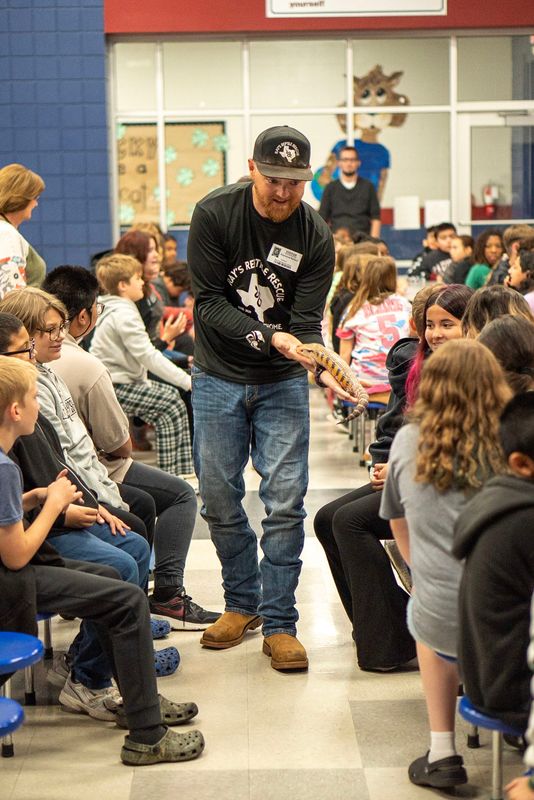
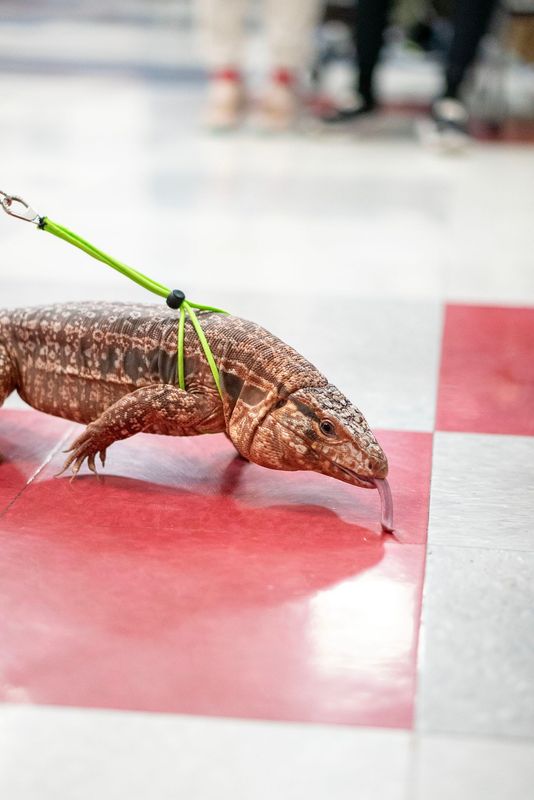
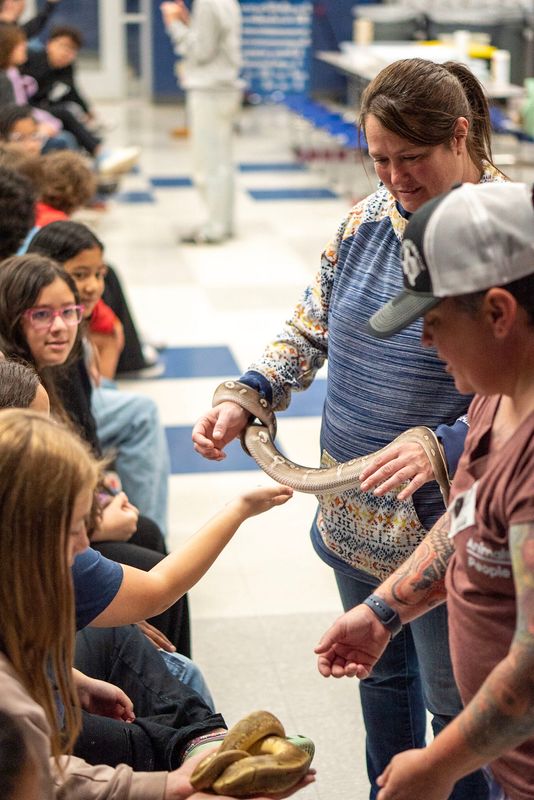
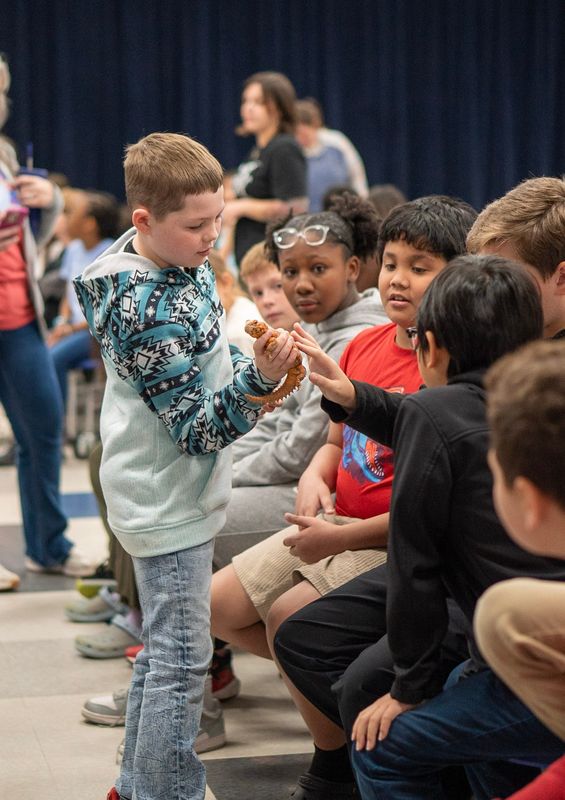
While these animals are not eligible for adoption, some have the opportunity to serve as an animal ambassador for Ray’s Reptile Rescue, traveling with the education team to schools and events.
“They’re animals we trust,” said Bullard. “Some of them have really good stories, and they make for good teaching points: what not to do, how to do it properly, how to prevent this from happening, stuff like that.”
Bullard said he has always had a passion for teaching and went to college with plans to teach history, but he later chose a career in plumbing. Now he’s able to combine his passions by educating the public on reptiles through visiting local schools and other organizations with the rescue’s education team and animal ambassadors.
All animal ambassadors brought to the school are considered legal for the public to own in the state of Texas. Some of the other reptiles the rescue works with, such as reticulated pythons, Burmese pythons, and big constrictors, that are not brought to schools, do require permits to own in Texas.
“Our mission is to eliminate fear,” said Bullard. “You can fear and still respect, and that respect saves lives. So that’s always been mission No. 1.”
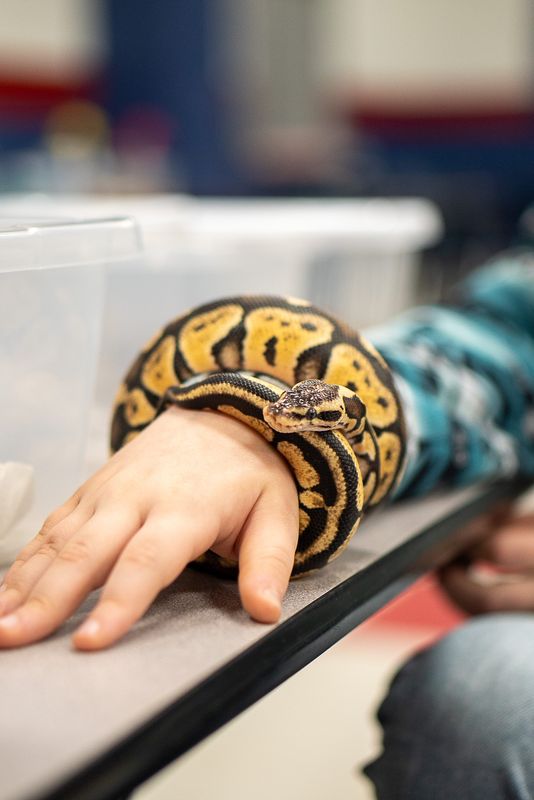
By allowing students to interact firsthand and hold and pet reptiles such as snakes, lizards and turtles in a safe and controlled setting, students can form positive experiences with these often misunderstood and sometimes feared animals.
This article originally appeared on Abilene Reporter-News: How Ray’s Reptile Rescue helps cold-blooded critters find new homes
Reporting by Lauren Dossey, Abilene Reporter-News / Abilene Reporter-News
USA TODAY Network via Reuters Connect