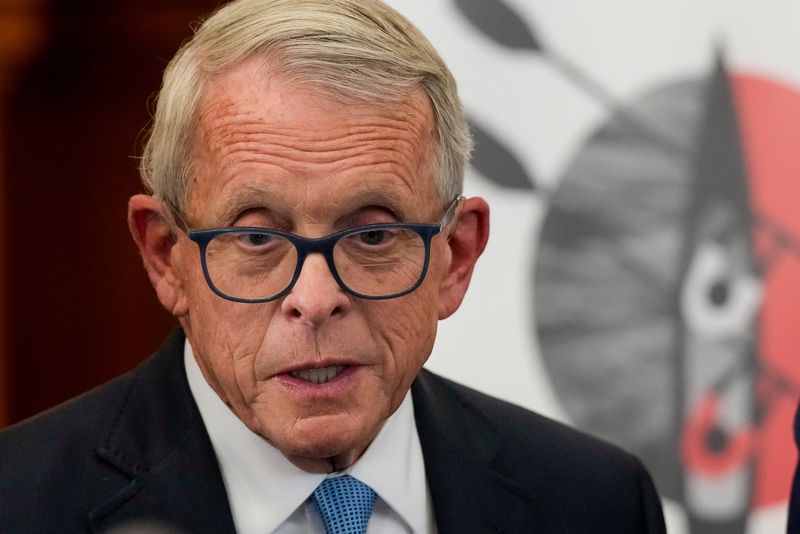
Ohio Gov. Mike DeWine doesn’t publicly disagree often with President Donald Trump, but he did last week when asked about Trump’s campaign to deport Haitian immigrants living in Springfield.

“I think it’s a mistake to tell these individuals you can no longer work and have to leave the country,” DeWine said.
The governor’s hesitance to embrace Trump’s immigration crackdown reflects a hard truth about Ohio’s changing population: The state’s economy increasingly depends on the immigrants Trump is trying to throw out of the country.
Foreign-born Ohio residents accounted for 60% of the state’s population growth between 2014 and 2024, according to an Enquirer analysis of U.S. Census data. Without them, more people would have left the state during the past decade than moved here.
Ohio’s foreign-born residents now represent 5.5% of the state’s 11.9 million people, more than twice as much as in 1990, and have overtaken native-born births as the state’s main driver of population growth.
Most of those immigrants have come from Asia, Latin America and Africa and have settled into jobs in factories, hotels, technology, health care and food service.
“Immigrants are vital,” said Ben Stein, spokesman for Policy Matters Ohio, a left-leaning economic policy think tank. “Removing that number of people who are employed from the economy is a problem for the economy.”
Ohio’s population getting older, growing more slowly
Trump disagrees. He has blamed immigrants for economic woes, job losses, crime, poverty and, in the case of Springfield’s Haitians, he’s repeated unfounded claims that immigrants eat their neighbors’ dogs and cats.
Often, Trump doesn’t distinguish between those here legally and those without legal status. His administration currently is trying to revoke the protected status of Haitians across the country, which would allow their deportation.
“Many have abused the generosity of the American people,” Trump said of immigrants in a January 2025 executive order calling for more deportations. “Their presence in the United States has cost taxpayers billions of dollars.”
DeWine, though, has spoken of immigrants and the demographic shift they have created in Ohio in more hopeful ways. Securing America’s borders is important, he has said, but legal immigration is a good thing for Ohio, where industries have declined, population growth has slowed and the workforce has gotten older.
In 1970, the average age of an Ohio resident was 28 and the population had grown 10% over the previous decade. In 2024, the average age was 40 and the population had grown 2.5% over the previous decade.
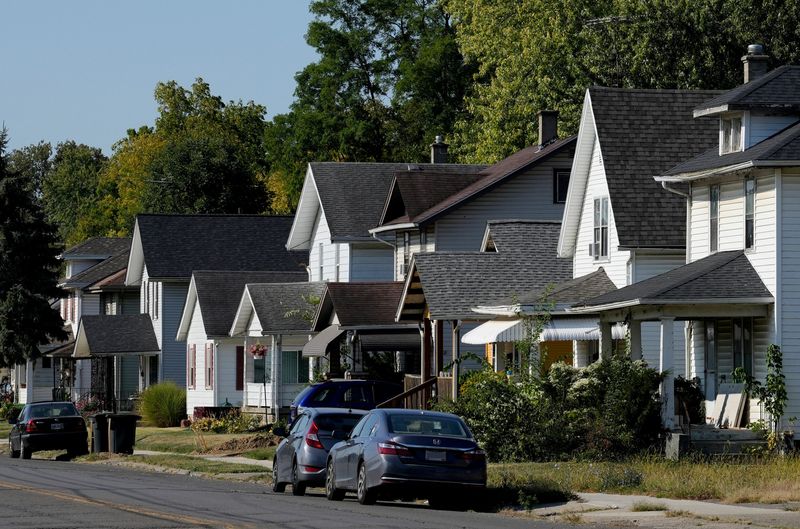
Those changes occurred along with Ohio’s industrial decline, which hit especially hard in blue collar cities like Springfield, which saw factories close and families move away.
More than half the manufacturing jobs in Springfield vanished between 1990 and 2024, according to Policy Matters Ohio. A Pew Research Center study found that by 2016 the economic status of people in Springfield’s metropolitan area had declined more than in any other metro area in the country.
City leaders tried to reverse the downward spiral with a campaign to attract immigrants, though it may have worked too well, too quickly.
The arrival of thousands of Haitian immigrants, most of whom had been granted temporary protected status after fleeing violence in their homeland, transformed the community in the span of just a few years.
The immigrants brought with them challenges for social services and schools, but they also filled vacant homes, started new businesses and went to work at local companies.
“If you waved a wand and every one of the Haitians that came to Springfield was gone, we’d see a lot of our companies that would not have enough people to work,” DeWine said in 2024.
And if that wand removed all immigrants who came to Ohio in the past decade, the Enquirer’s analysis found, the state’s population growth of 2.5% would fall to 1%.
Springfield becomes the center of immigration debate
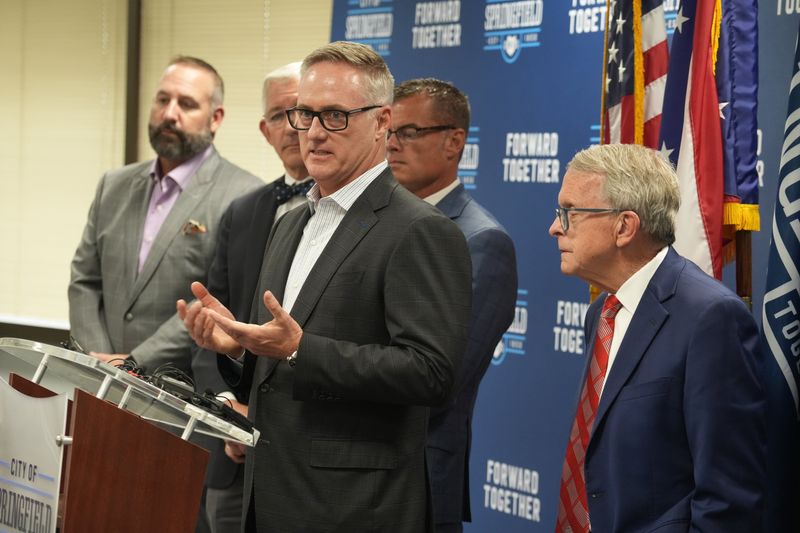
Springfield Mayor Rob Rue, who declined an interview request, has defended the Haitians working in his city while also seeking more state and federal help with the community’s overwhelmed social services.
Rue has asked national politicians to tone down their rhetoric about Springfield, but his community remains a focal point of the national debate over the benefits and costs of immigration.
On one side are those who see Ohio’s slowing population growth as proof the state’s future depends on immigrants, rather than on native-born residents who have been having smaller families and moving to western and southern states in larger numbers.
“The story for Ohio mirrors the national story,” said Julia Gelatt, an associate director at the Migration Policy Institute, a Washington, D.C.-based think tank. “With lower birth rates, immigration is an important driver of growth.”
On the other side are those who argue, as Trump does, that both legal and illegal immigration hurt American workers. In Ohio, about 20% of immigrants do not have legal status, according to the American Immigration Council, a nonprofit in Washington, D.C., that advocates for immigrants.
Researchers at the Center for Immigration Studies, a Washington-based think tank that favors lower immigration rates, said last year that native-born workers could fill many of the jobs immigrants are taking now. They noted that 22% of native-born men are not in the labor force today, compared to 11% in 1960.
“We can either adopt policies designed to get more working-age Americans currently on the economic sidelines into jobs or we can ignore the problem and continue to bring in ever more immigrants,” they wrote.
Some Ohio businesses, however, have said that while they would like to fill jobs with native-born Ohioans, they often must turn to immigrants. That’s why Springfield mounted its campaign to attract immigrant workers in the first place.
It’s also why DeWine has been more measured than Trump in his remarks on immigrants and immigration. When asked last week about the possibility that the Haitians now working legally in Springfield could lose their protected status, forcing them to leave, the governor staked out a position far from the president’s.
“I don’t think it’s in our interest,” he said.
Statehouse politics reporter Haley BeMiller contributed.
This article originally appeared on Cincinnati Enquirer: While Trump cracks down, Ohio relies on immigrants for growth
Reporting by Dan Horn, Cincinnati Enquirer / Cincinnati Enquirer
USA TODAY Network via Reuters Connect