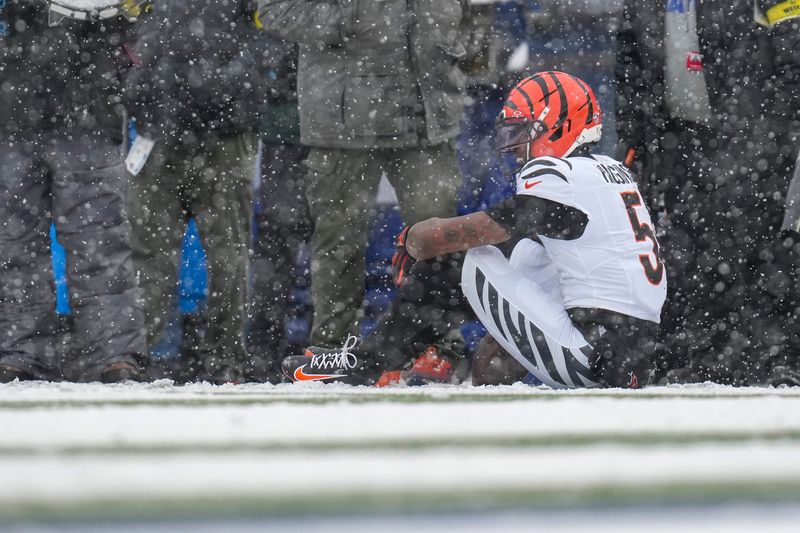
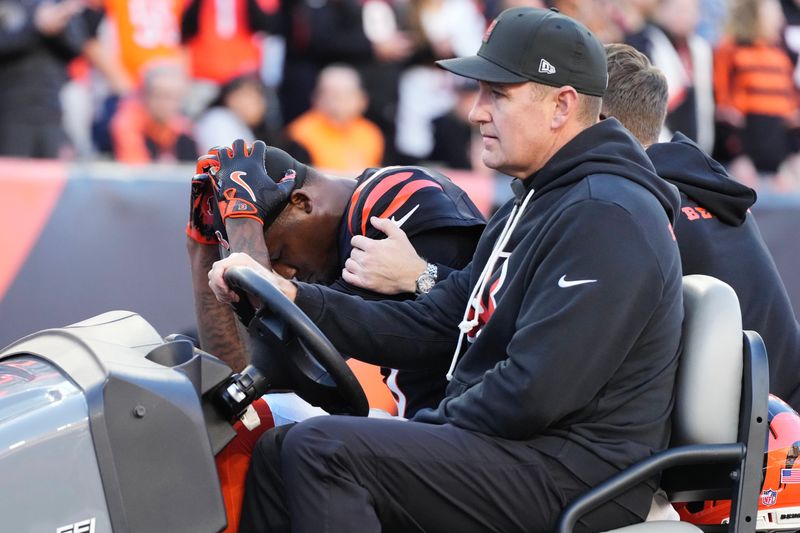
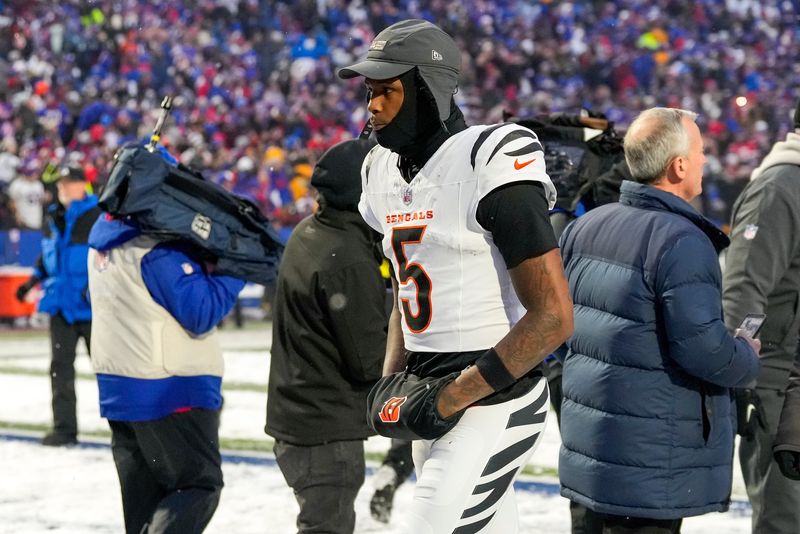
On Sunday, the Cincinnati Bengals faced the Buffalo Bills, and everyone saw the same terrifying sequence. Bengals wide receiver Tee Higgins twisted mid-air to make a spectacular catch, only to come down with the full force of his body driving his head into the frozen turf.

He stayed down, left the field for evaluation, and − minutes later − was cleared to return under the NFL’s concussion protocol. Later, after another hard landing, he was checked again and finished the game. By Monday morning, he didn’t feel right and was placed back into the protocol.
The league’s protocol was built to clear players, not protect them
This is not a mystery. It is the predictable failure of a protocol that pretends concussions can be diagnosed − or ruled out − in the heat of a game. The biology doesn’t work that way. Symptoms often appear hours later, exactly as they did with Higgins. His case isn’t an exception; it’s a textbook demonstration of why the current system cannot protect players. The protocol is designed to get them back on the field, not to recognize what is actually happening inside their skulls.
Meanwhile, football culture keeps cheering the very blows that cause these injuries.
Several weeks earlier, on Nov. 13, the Enquirer highlighted former Pittsburgh Steelers wide receiver JuJu Smith-Schuster describing his concussing hit on former Bengals linebacker Vontaze Burfict as a “legendary moment” in his career. In the rush to revisit a storied rivalry, the piece folded a traumatic brain injury into the sport’s “color,” as if harm were just part of the scenery. Burfict’s own history of reckless hits does not change the fact that on that play, he was the victim of a concussion − and the celebration of that moment reflects what we have come to accept.
A culture that turns brain trauma into spectacle
The science is not ambiguous. Repeated concussions − and even repeated sub-concussive blows that never make a highlight reel − cause lasting neurological damage. The Boston University CTE Center has studied 376 former NFL players’ brains and found CTE in 345 of them. Their brain bank now holds more than 1,700 donated specimens, with over 800 confirmed cases of CTE. This is one of the clearest cause-and-effect relationships in modern medicine: repetitive head impacts lead to degenerative brain disease.
What makes this a national tragedy is not only what happens on Sundays in the NFL. It’s what happens because of Sundays in the NFL. When professional football glamorizes big hits, delayed-onset concussions, and “legendary” knockouts, the message filters directly into youth sports − where the players’ brains are still developing and far more vulnerable. We are celebrating impacts that, in any other context, would send a child straight to the emergency room.
Football has built a culture that normalizes what we would never tolerate anywhere else. We pretend the violence is harmless because we enjoy the spectacle. Yet every part of the Higgins story − the immediate clearance, the delayed symptoms, the next-day diagnosis − shows how fragile the truth actually is.
The league’s concussion protocol failed exactly the way the science says it will. And as long as we treat brain trauma as entertainment instead of medical reality, more players − from NFL stars to children in school leagues − will bear the cost.
Dennis Doyle lives in Anderson Township and is a member of the Enquirer Board of Contributors.
This article originally appeared on Cincinnati Enquirer: Tee Higgins shows how the NFL still misses concussions | Opinion
Reporting by Dennis Doyle, Opinion contributor / Cincinnati Enquirer
USA TODAY Network via Reuters Connect