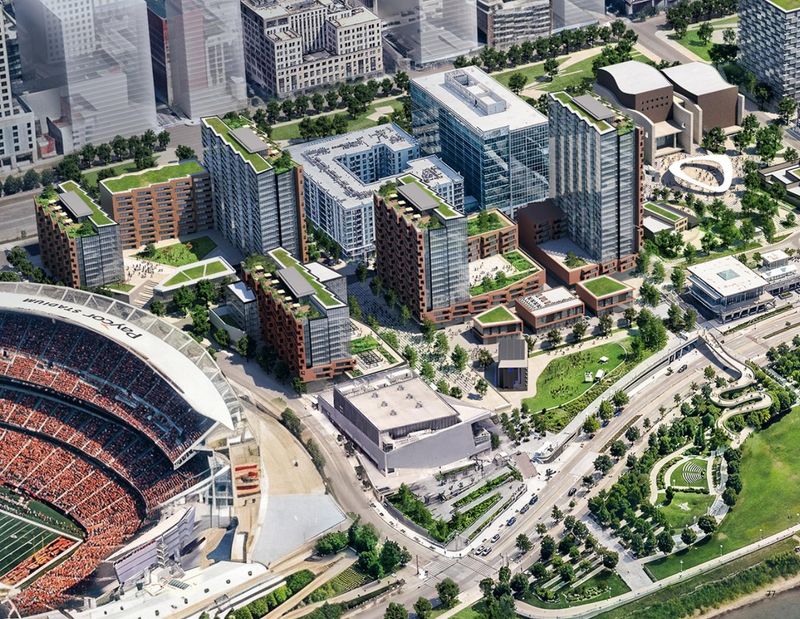
Cincinnati’s riverfront is gearing up for a transformational period of development − and it’s not just about new buildings going up between Paycor Stadium and Great American Ball Park.
The team behind the newly-released Banks Urban Design Plan Update revealed what the district could look like 10 years from now.

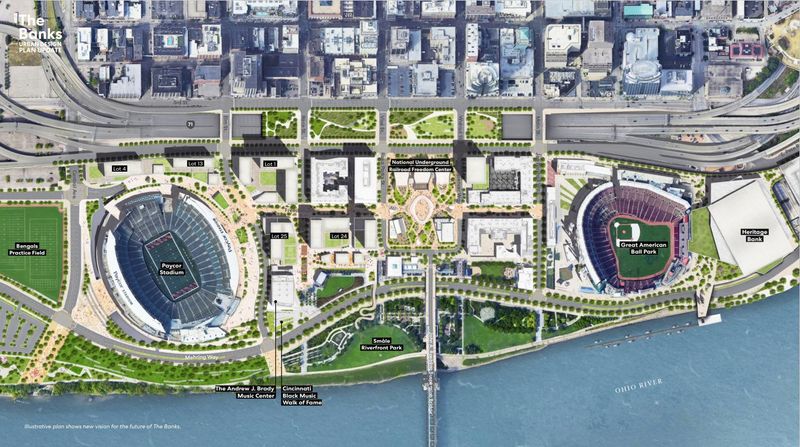
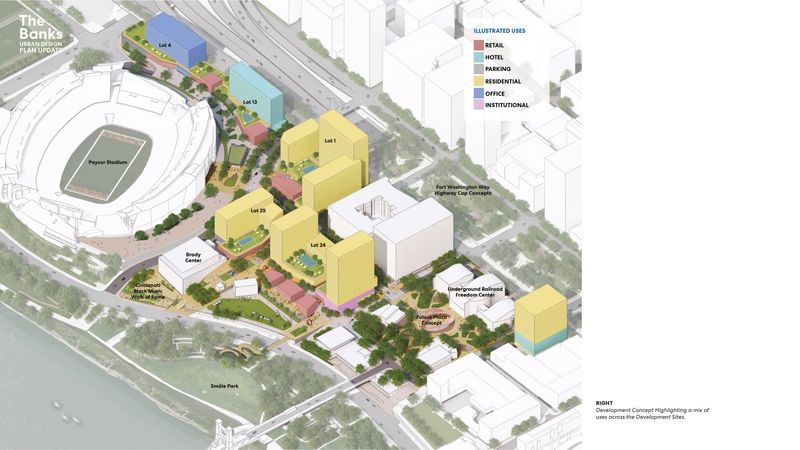
The plan focuses on filling the five remaining lots that have yet to be developed since the Banks was first proposed in 1997. Those lots total over 8 acres of vacant space that’s currently used for parking. The plan also suggests ways to liven up the public spaces throughout the district, from adding trees to public art and shutting down streets to traffic.
Here are seven recommendations from the master plan you need to know about:
One iconic tower and a stepped-up skyline
The master planning team suggests building the tallest structure in the district at Freedom Way and Rosa Parks Street. “The Banks District deserves its own iconic tower,” reads the plan − one that enhances Cincinnati’s downtown skyline.
The plan also calls for mid-rise and high-rise development that steps up in height, the shortest by Paycor Stadium (so there aren’t views looking directly onto the playing field) and the tallest near the National Underground Railroad Freedom Center. The maximum height of any new building would be 285 feet tall, about 24 stories, and would include some exterior step backs, creating dynamic facades and preserving views of the main corridors and buildings that populate Downtown.
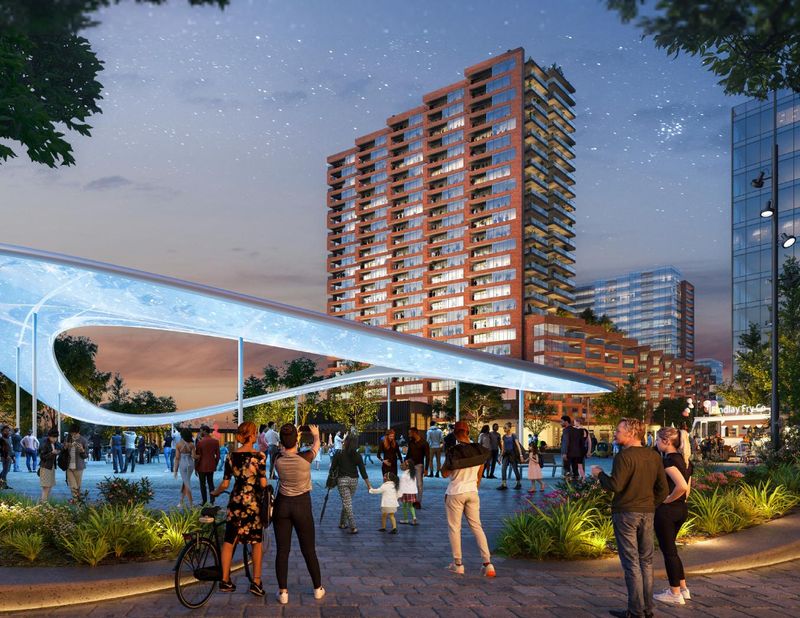
A civic plaza with monumental landmark at the Freedom Center
At the center point of the Banks should be a sweeping civic plaza that elevates the importance of the Freedom Center, per the plan. It would include a sculptural landmark that would be both an anchor point in the district and a place for events and gatherings.
A winding pedestrian bridge to Smale Park
To maximize connections from the Banks to Smale Riverfront Park, a serpentine pedestrian bridge could be built over Mehring Way from Rosa Parks Way. It would serve as sculptural element and a walkway that increases accessibility and removes concerns for vehicle traffic.
Removing the roundabout at the Roebling Bridge
The project team envisions removing the roundabout at the foot of the Roebling Bridge and installing an all-way stop to create more controlled crossings for vehicles and pedestrians.
Building the 42-slip riverfront marina, floating restaurant
A long-planned marina slated for Cincinnati’s riverfront was included in the plan with 42 boat slips and a floating restaurant. The Enquirer previously reported that Cincinnati Parks was planning the project − called The Reef − along with a developer who expected to start construction on it this year.
No standalone parking garages allowed
According to the plan, standalone, above-ground parking garages won’t be built in the future at the Banks, and if a developer wants more parking in their building, it must be minimally exposed to the street through screens or architectural treatments.
Adding housing, a hotel and retail to attract more daily visitors, residents
The five undeveloped lots at the Banks represent a massive opportunity to add more people to the district every day. The master planning team suggests adding up to 1,300 market-rate rental units, 100-160 hotel rooms and between 60,000 and 80,000 square feet of retail.
This article originally appeared on Cincinnati Enquirer: 7 things to know about The Banks’ future: add tower, cut roundabout
Reporting by Sydney Franklin, Cincinnati Enquirer / Cincinnati Enquirer
USA TODAY Network via Reuters Connect