Every time a Black-owned business closes in Avondale, the neighborhood loses more than a storefront. It loses jobs, services, opportunity and another piece of generational wealth.

For years, we have celebrated ribbon cuttings and redevelopment announcements. Too few people are talking about the ribbon closings. Too many Black-owned businesses and community-serving nonprofits open with promise only to struggle or close.
The list is sobering:
The cost of every closure
Each closure has its own story, but together they reveal a pattern no community can afford to ignore.
These are more than names on a list. They represent lost jobs, vacant storefronts and unrealized dreams. Opening a business is only the beginning; the true measure of revitalization is whether it is still thriving 10 years later.
This list is only a snapshot. Over the past two years, the Reading Road corridor has also lost dentists, restaurants, boutiques, salons and other neighborhood businesses. When so many disappear across so many sectors, these are no longer isolated failures. They are evidence of a systemic problem.
The loss must also be the lamp of change.
Much of this stems from one reality: Reading Road functions as a pass-through rather than a destination. The city’s 2014 MLK/Reading Road Corridor Study found that 65% of daily traffic comes from commuters and institutional visitors traveling elsewhere. Corridors that people drive through, but rarely stop in, struggle to sustain local businesses, especially Black-owned businesses, which nationally close at nearly twice the rate of White-owned firms during economic downturns.
Along the Reading Road corridor, Rosemary’s Babies Company, Holloway House & Resource Center, Ladies of Leadership, and The Mothership continue fighting to survive, sustaining their missions through major fundraising efforts.
At the same time, businesses such as Keneice’s Loving Arms Childcare Center & Preschool, Altev Community Pharmacy, Temple Bible College, Chef Nem and Avondale Chiropractic continue serving the community despite significant headwinds. Their resilience deserves to be celebrated, but it should not become the expectation. The goal should not be survival. The goal should be prosperity.
This is personal. I watched one of my own organizations, Petals Playhouse, close its doors. Today, as founder and CEO of Rosemary’s Babies Company, I am leading a $1 million campaign to secure Holloway House & Resource Center. I know both the excitement of opening a business and the burden of keeping one alive.
Economic development cannot be measured by ribbon cuttings alone, or by how many new people move into a neighborhood. Success should be measured by business longevity, profitability, homeownership and how many current residents are able to stay, build wealth, and participate in that prosperity.
Every major investment should ultimately be judged by one question: Does it increase ownership, opportunity and wealth for the people who already live here?
Being intentional about intergenerational vision is vital. Our youth in these neighborhoods must become the next generation of homeowners, entrepreneurs, employers, skilled professionals, civic leaders and investors who choose to reinvest in the communities that raised them.
This proposal is fundamentally about community wealth-building. It is anti-disinvestment, not pro-displacement.
Even with a structured redevelopment plan, the Reading Road corridor, from Avondale through North Avondale, Bond Hill and Roselawn, needs more than a rebrand. It needs a coordinated strategy, developed as one connected economic corridor with shared leadership, investment and accountability.
This corridor was not always defined by loss. Avondale, North Avondale, Bond Hill and Roselawn once supported thriving Black and Jewish middle-class neighborhoods where businesses, homes and generational wealth flourished. Redlining, disinvestment and decades of public policy dismantled much of that prosperity. What was built once can be built again.
Whether one believes this is a generational curse, a leadership problem, or both, producing different outcomes requires different decisions. We need leaders willing to move beyond neighborhood boundaries and short-term thinking to build an economy where businesses prosper, families build wealth, and communities flourish.
No single institution can transform Reading Road alone, but Fifth Third Bank has demonstrated what committed leadership can look like, investing more than $44.7 million directly in Avondale while helping catalyze nearly $63 million in neighborhood investment. I believe the next step is to convene public, private, philanthropic, business, neighborhood, and civic leaders to establish a Reading Road Improvement District.
This is not a new idea. It is an unfinished one
This is not a new idea. It is already written into four separate community plans that all stop at their own neighborhood line.
The Avondale Quality of Life Plan identifies the Uptown Innovation Corridor at Reading Road and Martin Luther King Drive as the catalyst for more than $3 billion in investment and 7,000 jobs. The North Avondale Masterplan picks up immediately to the north, calling for Reading Road streetscaping and a Paddock & Reading mixed-use concept. The Bond Hill + Roselawn Plan calls Reading Road “the heart of both neighborhoods,” and its revitalization was residents’ top-ranked priority out of seventeen community goals. Uptown Consortium’s own renderings already show a three-phase development rising at Reading Road and Martin Luther King.
Now add a fifth commitment: Metro has selected Reading Road as one of the region’s first two Bus Rapid Transit corridors, backed by $300 million in committed investment and a targeted completion by 2027.
Four plans and $300 million in transit investment. One street. No shared strategy to connect them.
The Reading Road Improvement District would simply connect investments already underway into one coordinated corridor with shared leadership and accountability.
The District should focus on:
Customers will not shop where they do not feel safe. Public safety is economic development. Better lighting, environmental design, security technology, and stronger collaboration between businesses, residents, and law enforcement should be foundational investments. A Business Safety Partnership could strengthen reporting, preserve evidence, and support investigations.
The District should also pursue city, county, state, and federal funding by investing in experienced grant writers and government relations professionals to compete for infrastructure, housing, workforce, and economic development dollars.
Government cannot guarantee business success, but it is responsible for creating the conditions that make success possible. Infrastructure, safety, streetscapes, transit, and site readiness are public investments that attract private investment and expand opportunity.
The measure of success is not how many ribbon cuttings we celebrate this year. It is how many businesses are still open 10 years from now.
Reading Road has the foundation to become one of Cincinnati’s premier corridors for Black entrepreneurship, commerce, housing, and culture. What it needs now is coordinated leadership, sustained investment, and the courage to think beyond individual organizations.
I do not offer this as someone with all the answers, or as an outsider critiquing what others have already built. I offer it as a business owner and neighbor along this corridor who has felt the cost of inaction, and who wants to add a voice and a hand to the work already underway.
Reading Road deserves more than investment. It deserves a shared vision, accountable leadership, safe streets, thriving businesses and lasting prosperity. The next chapter will not be written by another study. It will be written by the decisions we make today.
The plans already exist. The investment is beginning. The question is whether we dare to connect them.
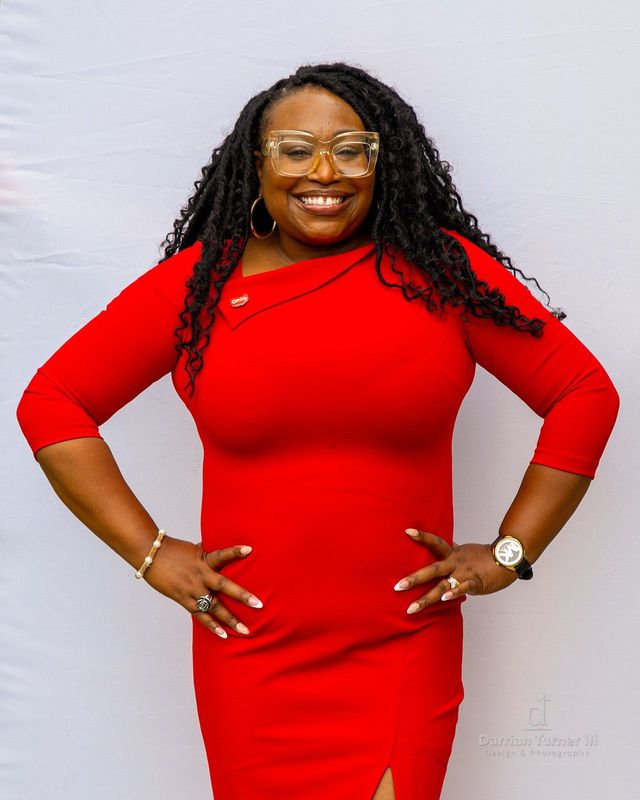
Rosemary Oglesby-Henry is the founder/CEO of Rosemary’s Babies Co.
This article originally appeared on Cincinnati Enquirer: Stop counting ribbon cuttings. Start counting survivors | Opinion
Reporting by Rosemary Oglesby-Henry, Opinion contributor / Cincinnati Enquirer
USA TODAY Network via Reuters Connect
By Rosemary Oglesby-Henry, Opinion contributor | USA TODAY Network