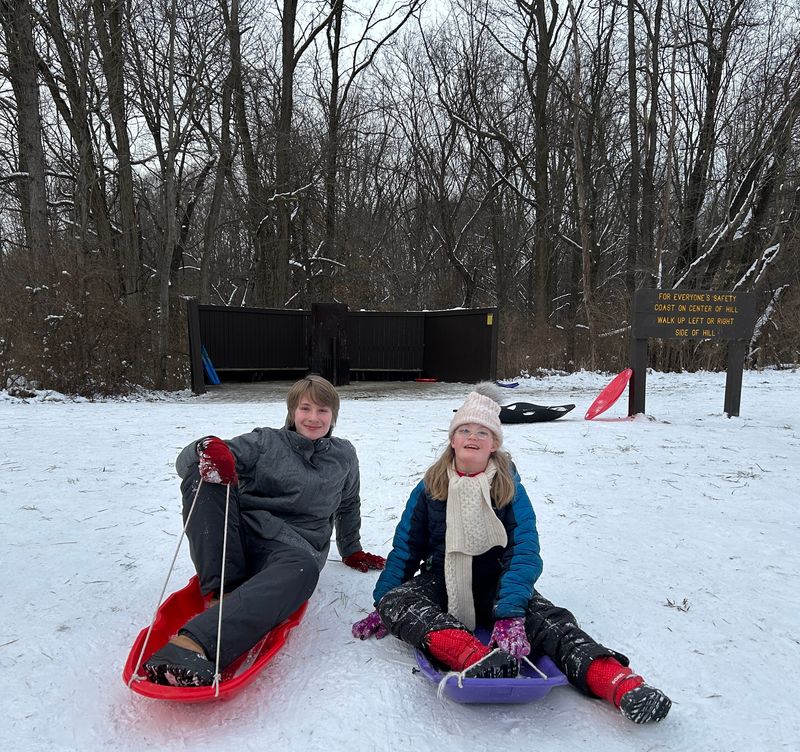
In 2014, my youngest children and I attended a family-friendly party in a sprawling yard where I had a long conversation with a smart and funny woman my age. Nearby, my nearly 2-year-old daughter, Lyra, moved remarkably fast using her newly perfected bear walk.
“She’s so cute, how she crawls on her hands and feet,” the woman said.

“Yeah, it takes children with Down syndrome longer to crawl and walk.”
“Wait, your daughter has Down syndrome?”
“Oh, yes,” I said.
“You are so much stronger than I could have been,” she said, but I disagreed.
“No,” she continued, “I’m telling you that you are stronger than I was. In my late 30s, I was still single and had IVF to get pregnant. When I was pretty far along, they told me the baby had Down syndrome and gave me two days to decide. I couldn’t do it. I would have been alone, I … I didn’t do it.”
“I have no judgment,” I said, knowing this woman made the best decision she could with the information she was given. The features on her face rearranged themselves, her eyes going from narrowed and intense to widely opened.
“But I see your daughter and,” she paused, “it makes me wonder…”
I was reminded of that conversation when I recently learned of a YouTube influencer and his wife who decided to terminate her planned pregnancy. Until then, I had never heard of Jesse Ridgway, whose story-telling videos have earned him over 4 million followers.
Weeks earlier, the Ridgways had shared with the public the exciting news of their pregnancy. Then, on June 3, Ridgway posted on his X account that his wife had undergone an abortion because of a fetal DS diagnosis. Rather than simply asking for privacy and compassion, Ridgway felt the need to justify why they had chosen to end the pregnancy, describing what he believes living with DS to be like, not only for people with the syndrome, but also their families. His post contains both misleading and patently false information, as well as his assessment that “Down Syndome isn’t a ‘blessing’, it is objectively shitty from a health perspective.”
Over a decade ago, I began making an automatic monthly donation to Down Syndrome Diagnosis Network, a non-profit with the primary mission of educating health care professionals on how to give accurate, up-to-date information on Down syndrome at the time of diagnosis. Unfortunately, as Ridgway’s post underscores, the work of the network is far from over.
In his post, Ridgway states the odds of having a baby with DS are 1 in 1,000, which is true if the mother is 28. But at 31, Ashley Ridgway’s chances of having a baby with DS were 1 in 800. When I was pregnant with my daughter at 45, my odds were 1 in 30. For a 20-year-old, it is 1 in 2,000.
Choosing to bring a child into the world always includes the gamble of a diagnosis. But unlike other diagnoses, such as autism spectrum disorder, ADHD, eating disorders, childhood cancer, depression, bi-polar disorder, addiction and many more, DS can be definitively diagnosed prenatally because it is caused by the observable presence of an extra twenty-first chromosome.
Are there challenges raising a child with DS? Of course there are, as there are with any child.
As for health concerns, Ridgway is correct that roughly 50% of newborns with DS are born with heart conditions, the most common of which is atrioventricular septal defect (AVSD). But in the past 40 years, tremendous advances in cardiac care have occurred and, according to the National Institutes of Health, over 95% of newborn AVSD surgeries are successful, including for babies with DS.
Ridgway also mentions hearing challenges and vision problems, yet that is not the same as deafness and blindness. Many hearing problems people with DS have are treatable conditions, such as “glue ear” in which secretions accumulate in the middle ear, something simply solved by regular monitoring and cleaning when needed. Similarly, the majority of vision problems in Down syndrome are the same as those in the typical population: nearsightedness, farsightedness and astigmatism − all of which are easily corrected.
But of all the misleading statements Ridgway made, the most egregiously false is: “I didn’t realize just how rough it is for the child, let alone the family…”
Dr. Brian Skotko, a Northeast Ohio native who is now the director of the Down Syndrome Program at Mass General Brigham in Boston, has conducted several studies on the quality of life for people with DS and their families. He found that “nearly 99 percent of people with DS indicated that they were happy with their lives, 97 percent liked who they are, and 96 percent liked how they look.” He also surveyed siblings of people with DS and 88% said that they are better people for having had a sibling with DS. That finding was surely no surprise to Skotko, who has a sister with DS.
As for parents, a National Institutes of Health study found the divorce rate for couples with a child with DS is lower than in families that have a child with a different birth diagnosis and also lower for those with children that have no identified disability.
I respect the Ridgways’ decision to terminate a wanted pregnancy in the face of a DS diagnosis, just as I respected the choice of the woman I met 12 years ago. But I call him out, particularly as someone whose job is literally to influence people, for using his experience to promote the bigotry of ableism − the belief that those among us without certain IQs, abilities and incomes are strictly a burden, not valued members of society. As with any bigotry or bias − which are always based upon falsehoods− getting to know someone seemingly unlike you often leads to the discovery they are not so different after all.
Contact Holly Christensen at whoopsiepiggle@gmail.com.
This article originally appeared on Akron Beacon Journal: Jesse Ridgway misleads with Down syndrome abortion post | Christensen
Reporting by Holly Christensen, Special to the Akron Beacon Journal / Akron Beacon Journal
USA TODAY Network via Reuters Connect
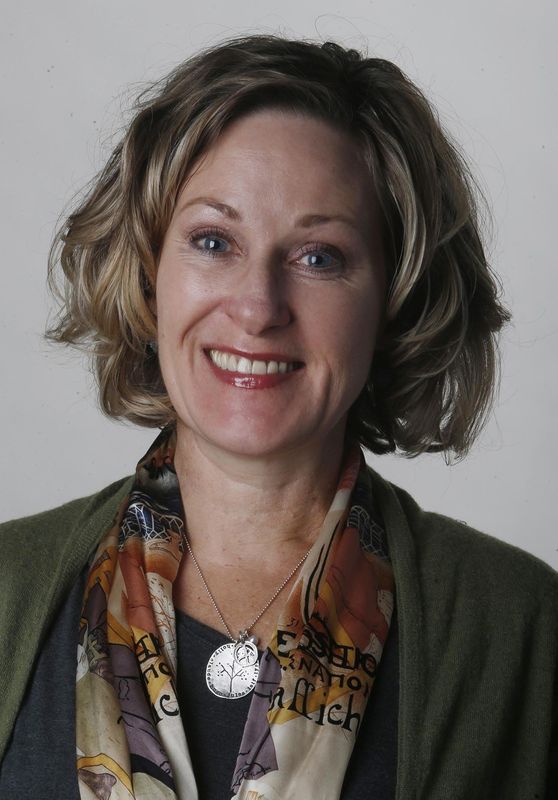
By Holly Christensen, Special to the Akron Beacon Journal | USA TODAY Network